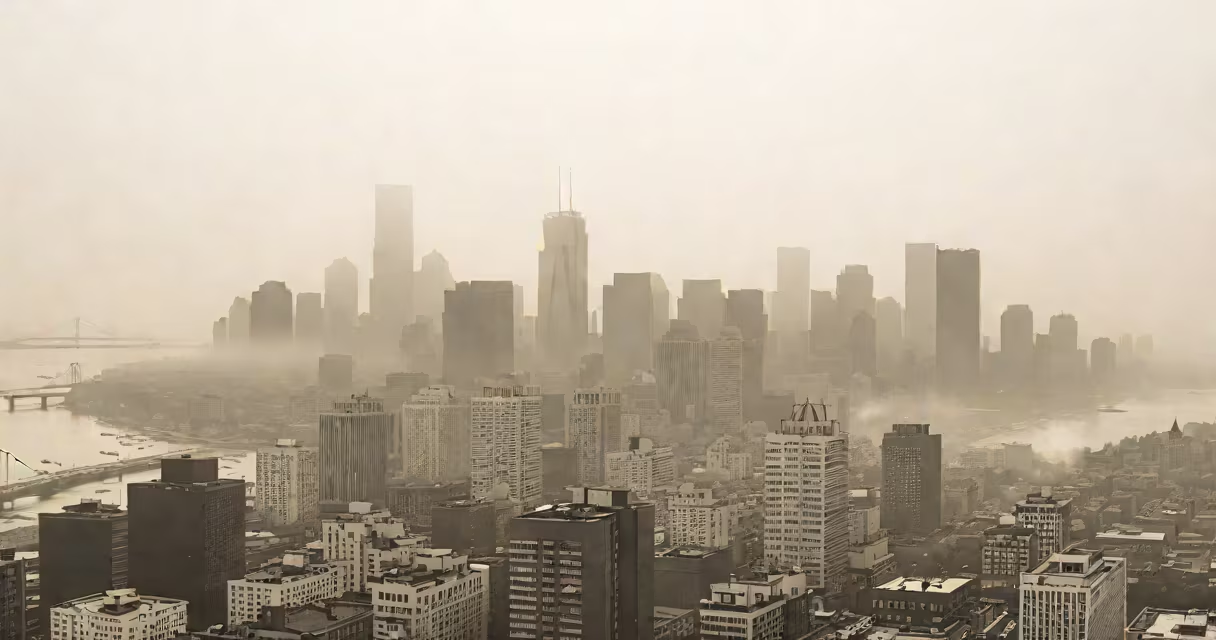
Ground-level ozone, formed when pollutants from vehicles, factories, and power plants react in sunlight, irritates the lungs and worsens respiratory conditions. It is a primary component of urban smog and poses health risks even at moderate concentrations.
Ozone is not emitted directly. Instead, it forms through chemical reactions between nitrogen oxides (NOx) and volatile organic compounds (VOCs) in the presence of sunlight. These precursors come from gasoline-powered engines, industrial facilities, and solvents. Once created, ozone persists in the lower atmosphere, especially during hot, sunny days with little wind.
The Environmental Protection Agency (EPA) classifies ground-level ozone as a criteria pollutant under the Clean Air Act. Its concentration is measured in parts per billion (ppb). Levels above 70 ppb are considered unhealthy for sensitive groups, including children, older adults, and people with asthma or chronic lung disease.
Ozone forms when NOx and VOCs undergo photochemical reactions. Sunlight provides the energy needed to break apart molecules, releasing free radicals that trigger chain reactions. This process peaks between 11 a.m. and 6 p.m., especially in summer months.
Urban areas experience higher ozone levels due to dense traffic and industrial activity. However, wind can carry polluted air hundreds of miles. For example, ozone levels in rural areas downwind of cities often exceed safety standards despite low local emissions.
A 2021 study by the American Lung Association found that 43% of Americans live in counties with unhealthy ozone levels. In California's Central Valley, ozone frequently exceeds 100 ppb during summer, leading to emergency health advisories.
Inhalation of ozone causes inflammation in the airways. It reduces lung function by narrowing bronchial passages and increasing mucus production. Symptoms include coughing, chest tightness, and shortness of breath.
Long-term exposure is linked to permanent lung damage. A 2019 longitudinal study published in *The Lancet Planetary Health* tracked 10,000 adults over 15 years. Participants exposed to average ozone levels above 60 ppb had a 15% greater decline in forced expiratory volume (FEV1), a measure of lung capacity, compared to those in low-ozone areas.
Children are especially vulnerable. Their developing lungs absorb ozone more efficiently. A 2020 CDC report noted that emergency room visits for asthma in children increase by 12% on high-ozone days in major U.S. cities.
People often confuse ground-level ozone with stratospheric ozone. The latter, located 10-50 km above Earth, protects life by absorbing UV radiation. Stratospheric ozone is beneficial. Ground-level ozone is harmful.
Another misconception is that ozone is only a problem in large cities. While urban centers have higher peak levels, rural regions downwind of industrial corridors also face elevated ozone. In the Midwest, agricultural operations release VOCs from fertilizers and fuel use, contributing to regional ozone formation.
Some believe air purifiers eliminate ozone. Most consumer models do not remove it effectively. Ionizing air purifiers may generate ozone as a byproduct, worsening indoor air quality. The EPA warns against using such devices indoors.
In August 2022, Los Angeles recorded a 24-hour average ozone level of 125 ppb-well above the EPA's 8-hour standard of 70 ppb. The episode coincided with a heatwave and stagnant air. Hospitals reported a 28% rise in asthma-related ER visits over three days.
Local authorities issued a "Red Alert" for air quality. Schools canceled outdoor activities. The city activated its Emergency Response Protocol, urging residents to limit driving and avoid strenuous outdoor exercise.
After the event, researchers analyzed satellite data and ground monitors. They confirmed that vehicle emissions contributed 62% of NOx and 41% of VOCs in the region. Industrial sources accounted for 22% of NOx and 18% of VOCs. Reducing traffic during peak hours cut ozone formation by nearly 15% in model simulations.
| Pollutant | Primary Sources | Role in Ozone Formation |
|---|---|---|
| Nitrogen Oxides (NOx) | Vehicle exhaust, power plants, industrial boilers | Reacts with sunlight to form nitrate radicals, initiating ozone chemistry |
| Volatile Organic Compounds (VOCs) | Fuels, paints, cleaning products, solvents | React with NOx to produce ozone; some VOCs degrade slowly, prolonging exposure |
| Sunlight | UV radiation (especially UV-A and UV-B) | Provides energy to break molecular bonds and drive photochemical reactions |
I once monitored air quality during a field study in Phoenix. On a clear July afternoon, ozone spiked to 110 ppb within two hours of sunrise. We collected data from five sites across the city. The highest readings were near highways and commercial zones. Even at rest, participants reported throat irritation and eye watering. The experience confirmed that ozone is not just a statistic-it affects breathing in real time.
Understanding that ozone is harmful to breathe requires recognizing its origins and effects. It is not a natural phenomenon but a product of human activity interacting with sunlight. Reducing emissions of NOx and VOCs remains the most effective way to lower ozone levels.