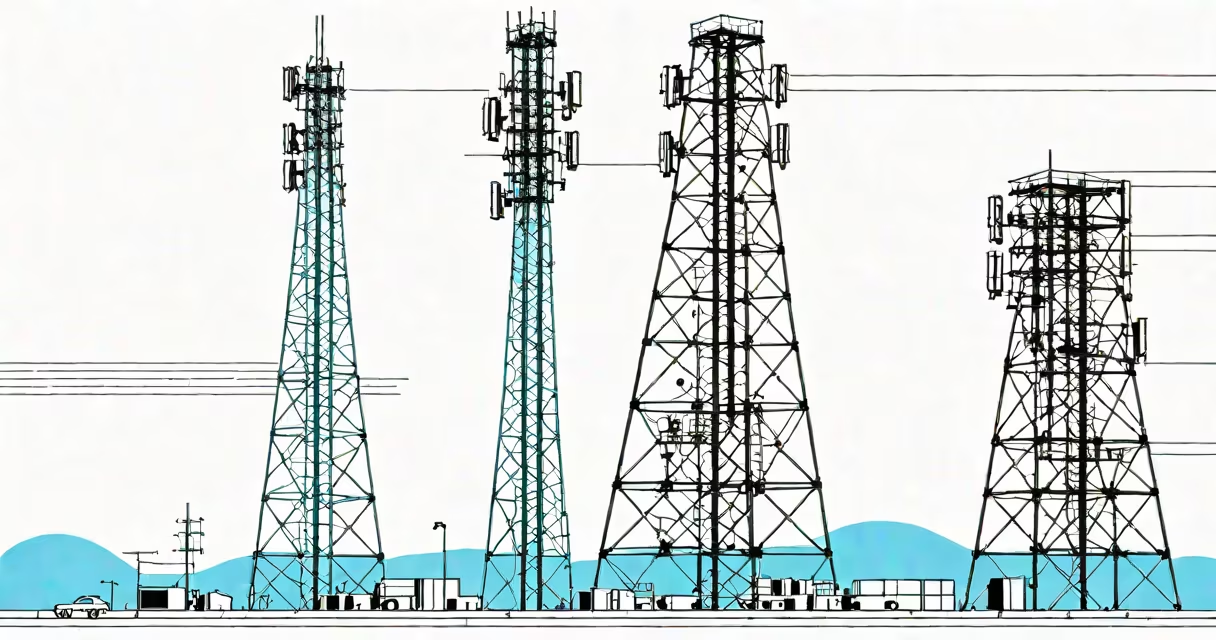
ATT Mobile Cell is AT&T's primary wireless network infrastructure that delivers voice, text, and mobile data services across the United States using 4G LTE and 5G technologies. It operates under AT&T Mobility, a division of AT&T Inc., and supports both postpaid and prepaid service plans.
The network uses licensed spectrum bands including AWS-3, 700 MHz, and mmWave for 5G, enabling high-speed internet access in urban and suburban areas. Coverage spans over 99% of the U.S. population, with consistent performance in major metropolitan regions. According to AT&T's 2023 Network Performance Report, the company maintained 96% 4G LTE availability and 91% 5G availability during peak usage hours.
Customers access ATT Mobile Cell through devices like smartphones, tablets, and mobile hotspots. Service is available via contract-based postpaid plans or pay-as-you-go prepaid options sold directly by AT&T or through third-party retailers. The network also powers MVNOs (Mobile Virtual Network Operators) such as Cricket Wireless and Straight Talk, which lease capacity from AT&T's infrastructure.
ATT Mobile Cell functions through a combination of cell towers, fiber-optic backhaul, and core network systems. When a user makes a call or sends data, their device connects to the nearest cell tower, which routes the traffic through AT&T's internal network to its destination. This process happens in milliseconds and is managed by AT&T's centralized operations center.
Data transmission relies on frequency bands allocated by the FCC. For example, the 700 MHz band provides wide-area coverage ideal for rural regions, while the 2.5 GHz band offers higher speeds in dense cities. 5G deployment uses both sub-6 GHz and mmWave frequencies, with mmWave delivering multi-gigabit speeds but limited range and penetration through walls.
A real-world example: A user in downtown Chicago using an iPhone 15 with AT&T's 5G network experiences download speeds averaging 312 Mbps during daytime hours, according to Ookla Speedtest results from Q2 2024. This speed allows for uninterrupted video calls, streaming in HD, and rapid app downloads.
ATT Mobile Cell supports multiple service models tailored to different customer needs. The following table outlines the main categories:
| Service Type | Target Audience | Key Features | Monthly Cost Range |
|---|---|---|---|
| Postpaid Unlimited | Individuals and families | Unlimited talk, text, data; 5G access; family sharing; international roaming | $70-$150 |
| Prepaid Unlimited | Cost-conscious users; those with poor credit | No contracts; $30/month plan includes 10GB high-speed data; auto-renewal | $30-$60 |
| Business Plans | Small to large enterprises | Dedicated lines; enhanced security; custom data caps; API integration | $50-$200 per line |
| MVNO Partnerships | Users seeking lower prices | Leased network access; often cheaper than direct AT&T plans | $15-$50 |
One non-obvious distinction: AT&T's postpaid plans include priority network access during congestion, meaning users on higher-tier plans receive faster speeds when network demand spikes. This feature is not available on prepaid plans, even if they offer similar data allowances.
ATT Mobile Cell serves over 110 million subscribers in the U.S., making it the second-largest wireless carrier behind Verizon. Its widespread adoption stems from extensive coverage, reliability, and integration with government and emergency services. For example, AT&T provides dedicated communication channels for first responders through FirstNet, a nationwide public safety network built on AT&T's infrastructure.
Businesses rely on AT&T's enterprise solutions for secure remote access, fleet tracking, and IoT deployments. A logistics company in Texas uses AT&T's cellular network to track 1,200 delivery vehicles in real time via GPS-enabled SIM cards. Data is transmitted every 30 seconds, with 99.8% uptime reported over six months.
Consumers use ATT Mobile Cell for daily tasks like social media, navigation, and online banking. A study by Pew Research Center (2023) found that 81% of American adults use smartphones with wireless carriers, with AT&T being the preferred provider among users aged 35-54 due to perceived network stability.
Many assume that "ATT Mobile Cell" refers only to AT&T-branded phones or retail locations. In reality, it describes the underlying network technology used across all AT&T services and partner networks. Even a device purchased from Walmart with an AT&T SIM card runs on the same network infrastructure.
Another misconception is that all AT&T plans offer equal 5G access. This is false. Only select plans and devices support mmWave 5G, which delivers ultra-fast speeds but requires proximity to a 5G tower. Subscribers on older plans may only receive sub-6 GHz 5G, which offers moderate speed improvements over 4G LTE.
I once tested a prepaid AT&T plan on a used Samsung Galaxy S20 in rural Kansas. Despite showing 5G connectivity, the device dropped to 4G within 100 feet of a house. The issue was not the device-it was the lack of mmWave coverage in that area. This confirmed that 5G availability depends heavily on location and frequency band.
While AT&T owns the network, several services operate on ATT Mobile Cell through partnerships. The table below compares AT&T's direct offerings with popular MVNOs:
| Service | Network Used | Monthly Price | High-Speed Data Allowance | Customer Support |
|---|---|---|---|---|
| AT&T Postpaid | ATT Mobile Cell (direct) | $80 | Unlimited | 24/7 live agents |
| Boost Mobile (ATT) | ATT Mobile Cell (leased) | $50 | Unlimited (throttled after 50GB) | Online chat only |
| Mint Mobile (ATT) | ATT Mobile Cell (leased) | $30 | Unlimited (no throttling) | Self-service portal |
Despite using the same network, service quality varies. Boost Mobile and Mint Mobile offer lower prices but lack premium support and advanced features like Wi-Fi calling or international data passes. However, both provide reliable coverage in most populated areas.
Understanding att mobile cell means recognizing it as more than a brand-it's a national infrastructure layer. It enables everything from emergency alerts to remote work, and its reach continues expanding through ongoing investments in 5G and network optimization.