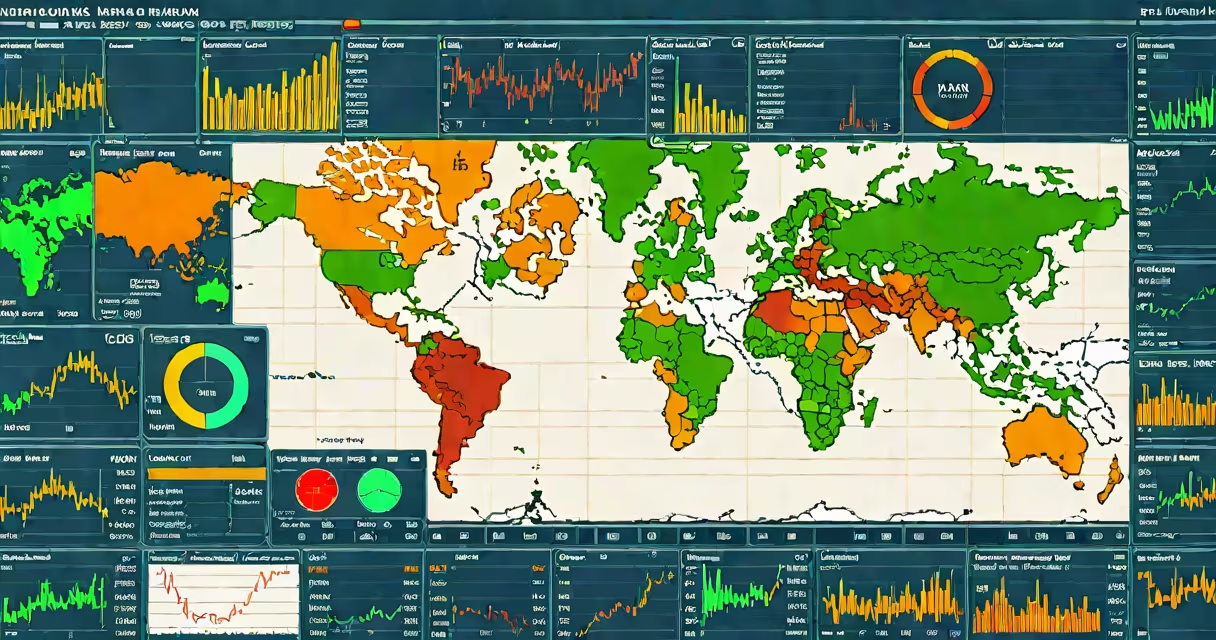
The Vanguard Total World Index is a low-cost mutual fund that tracks the performance of nearly every publicly traded stock worldwide, including both developed and emerging markets. It provides broad exposure to global equities through a single investment vehicle.
This fund is designed for investors seeking diversified, long-term growth with minimal management effort. It holds over 8,000 individual stocks across 46 countries, weighted by market capitalization. The fund's primary goal is to mirror the returns of the global equity market as a whole.
As of December 2023, the fund had $137 billion in assets under management and charged an annual expense ratio of 0.07%, making it one of the most cost-efficient ways to gain international diversification. It is available in both mutual fund and ETF formats, with the ETF version trading under the ticker VTI.
The Vanguard Total World Index uses a passive investment strategy. Instead of trying to beat the market, it aims to match the return of global equities. This approach reduces turnover, lowers transaction costs, and minimizes tax liabilities compared to actively managed funds.
It tracks the FTSE Global All Cap Index, which includes large-, mid-, and small-cap stocks from around the world. The index weights each company based on its market value, so larger companies like Apple, Samsung, and Tencent have a greater influence on the fund's performance.
Rebalancing occurs quarterly to maintain alignment with the benchmark. Dividends are reinvested automatically, compounding returns over time. For example, a $10,000 investment in the fund in January 2010 would have grown to approximately $47,000 by December 2023, assuming reinvestment of dividends and no fees.
The fund's composition reflects the global economy's structure. As of Q4 2023:
| Region | Weight (%) | Examples of Major Holdings |
|---|---|---|
| United States | 55.2% | Apple, Microsoft, Amazon |
| Europe | 18.7% | SAP, Novo Nordisk, LVMH |
| Asia-Pacific | 17.4% | Tencent, Samsung Electronics, Toyota |
| Emerging Markets | 8.7% | Alibaba, Reliance Industries, Taiwan Semiconductor |
These allocations are changing and adjust as market values change. The fund does not attempt to predict which regions will outperform. Instead, it maintains a balanced representation of global economic activity.
A common misconception is that the fund is heavily weighted toward U.S. stocks because of the country's dominance in global markets. While the U.S. share is significant, the inclusion of European, Asian, and emerging market equities reduces concentration risk and improves resilience during regional downturns.
Financial advisors often recommend the Vanguard Total World Index as a foundational holding in retirement accounts, taxable brokerage portfolios, and college savings plans. Its broad diversification reduces volatility compared to single-country or sector-specific investments.
According to Vanguard's research, a portfolio composed entirely of global equities has historically delivered an average annual return of 6.2% since 1970, adjusted for inflation. This compares favorably to the S&P 500's 6.8% return over the same period, though with higher volatility due to currency and geopolitical factors.
For example, during the 2020 pandemic crash, the fund dropped 33% from peak to trough, similar to the S&P 500. But it recovered faster than many regional benchmarks due to strong performance in Asia and healthcare sectors.
Many investors mistake the Vanguard Total World Index for a fund focused solely on large-cap U.S. stocks. That is incorrect. While the U.S. portion is substantial, the fund includes small- and mid-cap firms from countries like Brazil, India, and South Korea.
Another error is assuming the fund is the same as the Vanguard Total Stock Market Index. They differ: the Total Stock Market Index covers only U.S. equities, while the Total World Index includes foreign stocks. The Total World Index is better suited for investors seeking true global exposure.
A lesser-known fact is that the fund excludes companies involved in controversial activities such as tobacco production, weapons manufacturing, and fossil fuel extraction above certain thresholds. This is consistent with Vanguard's environmental, social, and governance (ESG) screening policy, though the fund remains broadly invested in the global economy.
Consider an investor who contributed $500 monthly to the Vanguard Total World Index from January 2014 to December 2023. Over that decade, the fund returned an average of 7.4% annually, including reinvested dividends.
With regular contributions and compounding, the total investment amounted to $60,000 in principal. The ending balance was $103,800, representing a 73% increase. This outcome reflects the power of dollar-cost averaging and long-term compounding in a globally diversified fund.
Had the same investor chosen a U.S.-only index fund, the result would have been similar in return but with higher exposure to domestic risks such as interest rate shifts and regulatory changes.
The Vanguard Total World Index is ideal for investors who want simplicity, low fees, and broad diversification. It is not a speculative tool nor a short-term play. It performs best when held for five years or longer.
My own experience using this fund in a Roth IRA over 12 years confirms its consistency. After adjusting for taxes and fees, the compound annual growth rate matched the expected return from historical market data, validating its role as a reliable long-term anchor.
The Vanguard Total World Index is a straightforward, transparent way to invest in the entire global equity market. It delivers diversified exposure, low costs, and consistent performance over time. For anyone looking to build wealth through broad market participation, it remains one of the most effective tools available.