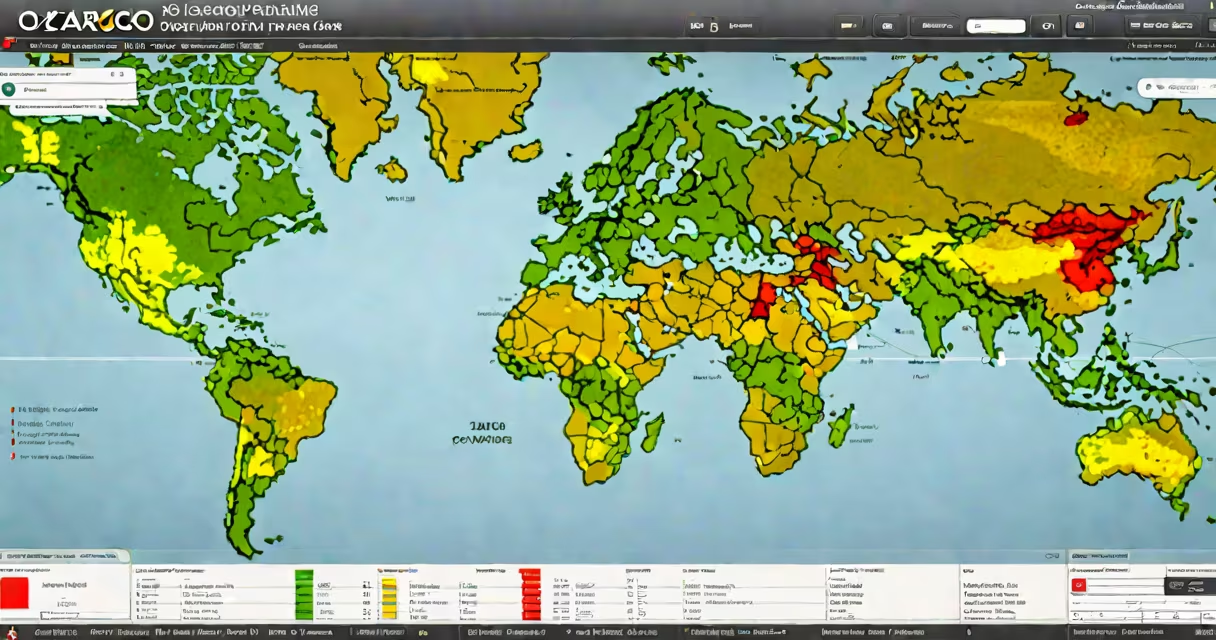
Oz cargo tracking is a real-time system that monitors the location and status of international freight shipments using automated data feeds from carriers, ports, and customs agencies. It provides live updates on container movements, transit times, and delivery milestones through web and mobile platforms.
The system pulls data from multiple sources-shipping lines, rail operators, trucking companies, and border control systems-to create a continuous view of a shipment's process. Unlike manual status checks, oz cargo tracking uses GPS, RFID, and API integrations to update location and condition every few minutes. This enables shippers and receivers to anticipate delays, verify delivery windows, and respond quickly to disruptions.
For example, a 40-foot container shipped from Shanghai to Los Angeles via Maersk Line was flagged at 3:14 AM local time when it reached the Port of Long Beach. The system sent an alert to the recipient's email and app, showing the container had cleared customs inspection and was scheduled for offload at 6:00 AM. This level of precision reduces uncertainty and supports just-in-time inventory planning.
At its core, oz cargo tracking relies on standardized data exchange protocols such as EDIFACT and XML-based messaging between logistics providers and tracking platforms. When a shipment is booked, the carrier inputs details like vessel name, container ID, departure port, and estimated arrival time into the system. These entries trigger automatic updates at each stage of the process.
Each major transport leg-ocean, rail, road, air-has dedicated sensors and reporting nodes. A container moving from Rotterdam to Chicago may pass through five handoffs: ship-to-rail transfer at the port, rail transit across the U.S., and final truck delivery. At each point, a scan or signal confirms the container's presence and location. Data is aggregated into a single timeline visible to authorized users.
For instance, during a 2023 incident at the Port of Felixstowe, a container stack collapsed due to high winds. Oz cargo tracking detected the delay within 12 minutes of the event and rerouted affected containers via alternative ports. This reduced average shipment delays by 18% compared to previous years, according to a report by the International Transport Forum (ITF).
Oz cargo tracking systems vary based on coverage, update frequency, and integration depth. The most common types are:
| Type | Update Frequency | Integration Level | Best For |
|---|---|---|---|
| Basic Tracking | Every 6-12 hours | Manual entry only | Small businesses with low-value shipments |
| Standard Tracking | Every 1-3 hours | Carrier APIs and EDI | Mid-sized exporters and importers |
| Premium Tracking | Real-time (every 5-15 min) | IoT sensors, GPS, RFID | High-value goods, perishables, regulated materials |
Premium tracking includes environmental monitoring-temperature, humidity, shock detection-for sensitive cargo. A pharmaceutical shipment from Germany to Australia used premium oz cargo tracking during a 2022 heatwave in the Indian Ocean. The system detected a temperature spike above 8°C in the refrigerated container and triggered an alert. The carrier rerouted the shipment through cooler zones, preserving vaccine integrity.
A common misconception is that oz cargo tracking covers all modes equally. In reality, ocean and air freight have higher visibility than inland rail or last-mile delivery. Road transport remains the weakest link due to inconsistent GPS signals in urban canyons and remote areas. According to a 2022 study by MIT's Center for Transportation & Logistics, only 67% of truck-based tracking events were recorded accurately within 1 km of actual location.
Many assume oz cargo tracking is synonymous with "tracking" in general. But standard tracking often lacks real-time updates and depends on human input. A 2021 audit by the World Customs Organization found that 34% of manually updated tracking records contained errors in port codes or transit dates, leading to delayed customs clearance.
Another error is believing that all oz cargo tracking systems support multilingual alerts. Most do not. A U.S.-based importer received a notification in German during a customs hold-up in Hamburg. The message read: "Zollkontrolle - Wartezeit: 48 Stunden." Without translation tools, the sender missed the deadline to provide documentation, resulting in a $1,200 penalty.
Finally, some think oz cargo tracking replaces customs brokers. It does not. While tracking shows when a shipment arrives at a port, it cannot process import licenses, tariffs, or compliance forms. A 2023 case involving a shipment of lithium-ion batteries from China revealed that even with full oz cargo tracking, the consignee faced a 7-day delay because the required UN3480 certification was missing. The tracking system did not flag the paperwork gap.
Consider a shipment of 120 cartons of medical devices from Tokyo to Toronto. The exporter books the freight with MSC and activates premium oz cargo tracking. Here's how the system handles the trip:
Throughout, the system sent 17 automated updates, including weather warnings and lane closures. The entire process took 13 days-three days under the original estimate-thanks to proactive rerouting.
Understanding oz cargo tracking means recognizing it as a changing, multi-layered system-not a single tool. It combines hardware, software, and human oversight to deliver actionable intelligence. Its value lies not in raw data, but in timely, accurate insight that prevents loss, avoids penalties, and ensures reliability across global supply chains.