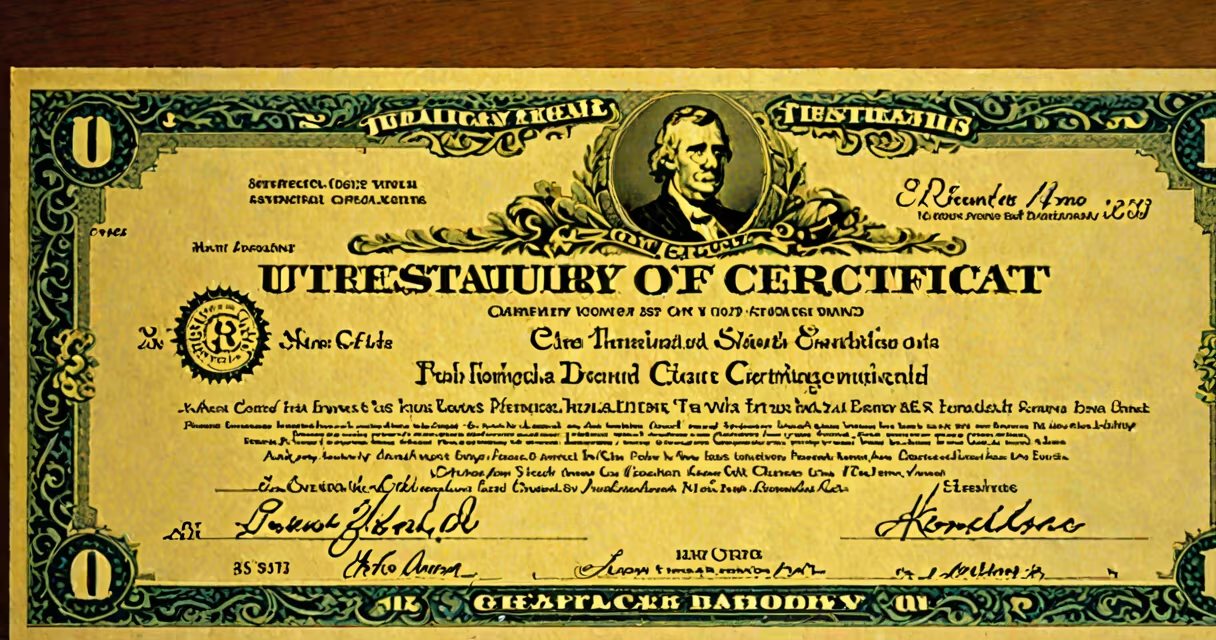
US bond stock refers to debt instruments issued by the U.S. Department of the Treasury, sold to investors to finance federal spending. These are not equities; they represent loans to the federal government with fixed interest payments and maturity dates. Unlike stocks, they do not confer ownership in a company.
These securities are traded on secondary markets through brokers and are categorized by maturity: Treasury bills (less than one year), notes (2-10 years), and bonds (over 10 years). They are backed by the full faith and credit of the United States government, making them among the safest investments globally.
The term "bond stock" is misleading. Bonds are debt; stocks are equity. Confusing the two leads to misaligned risk and return expectations. For example, a $10,000 Treasury note paying 4.5% annually returns $450 yearly, regardless of economic conditions. A stock in the same period may pay nothing yet rise 15% in value-or fall 20%.
When the U.S. government issues a bond, it borrows money from investors. In return, it promises to repay the principal at a set date and make periodic interest payments. These payments are fixed and known at purchase. For example, a 10-year Treasury note with a $1,000 face value and 3.2% coupon pays $32 annually in two installments of $16 each.
Bond prices fluctuate inversely with interest rates. If rates rise, existing bonds lose value because newer issues offer higher yields. Conversely, falling rates boost bond prices. This changing makes bond trading sensitive to Federal Reserve policy changes.
U.S. Treasury securities are auctioned weekly. Primary dealers bid on behalf of institutional clients. Retail investors access them via TreasuryDirect.gov or through brokerage accounts. The minimum purchase is $100 for most issues.
U.S. Treasury securities fall into three categories based on maturity:
| Type | Maturity | Interest Payment | Example Yield (June 2024) |
|---|---|---|---|
| Treasury bill (T-bill) | 4 weeks to 1 year | None (sold at discount) | 5.1% (1-year) |
| Treasury note (T-note) | 2, 3, 5, 7, or 10 years | Semiannual | 4.7% (5-year) |
| Treasury bond (T-bond) | 20 or 30 years | Semiannual | 4.4% (30-year) |
Investors choose based on time horizon and yield preference. Short-term T-bills suit cash management. Long-term bonds offer higher yields but greater price volatility during rate hikes.
A non-obvious distinction: inflation-linked Treasury securities (TIPS) adjust principal for CPI changes. A $1,000 TIPS with a 2% real yield pays interest on the adjusted principal. If inflation hits 3%, the principal rises to $1,030, and interest becomes $20.60. This protects purchasing power.
U.S. Treasury securities serve as the global benchmark for risk-free rates. Financial models, including the Capital Asset Pricing Model (CAPM), use the 10-year Treasury yield as the risk-free rate. A 4.2% yield implies that investors demand 4.2% for taking no default risk.
Portfolios often allocate 10-30% to Treasuries for stability. During market downturns, bond prices typically rise while stocks fall-a hedge effect. In March 2020, S&P 500 dropped 34% while 10-year Treasuries gained 12% due to flight-to-safety demand.
For context, the average annual return on U.S. stocks since 1926 is 10%. Over the same period, 10-year Treasuries returned 5.3%. Stocks deliver higher long-term growth but with higher volatility. Bonds provide income and capital preservation.
Many assume "US bond stock" means a stock issued by a company called "U.S. Bond." That's incorrect. There is no publicly traded company named "U.S. Bond." The term refers exclusively to U.S. government debt.
Another error: treating bonds as safe in all scenarios. While default risk is near zero, reinvestment risk exists. If you hold a 2-year T-bill maturing at 4% and rates drop to 1% upon renewal, your income falls sharply. This is especially relevant in low-rate environments.
I once held a 5-year T-note during a rate hike cycle. Despite steady coupons, the market value dropped 11% over six months. I sold early to lock in gains, but the loss was real. This illustrates that bond prices move-just not in the same way as stocks.
Consider a $100,000 portfolio split as follows:
After one year, the equity portion grows to ~$44,000. The Treasury notes generate $1,350 in interest. Corporate bonds return $1,240. Total return: ~6.8%. This mix balances growth and stability.
If the same investor had replaced Treasuries with high-yield stocks, returns might have been higher-but losses during recessions would also be steeper. The bond allocation reduced volatility.
Individuals can buy U.S. Treasury securities directly via TreasuryDirect.gov. Accounts allow automatic reinvestment and direct payment processing. Institutions trade through broker-dealers.
Market data appears on Bloomberg, Reuters, and Yahoo Finance. The 10-year Treasury yield is reported daily and influences mortgage rates, savings accounts, and corporate borrowing costs.
Understanding US bond stock is essential for building resilient portfolios. It is not a stock, not a speculative asset, and not a guaranteed return. But it is a foundational instrument in modern finance-backed by the U.S. government, priced transparently, and accessible to retail investors.