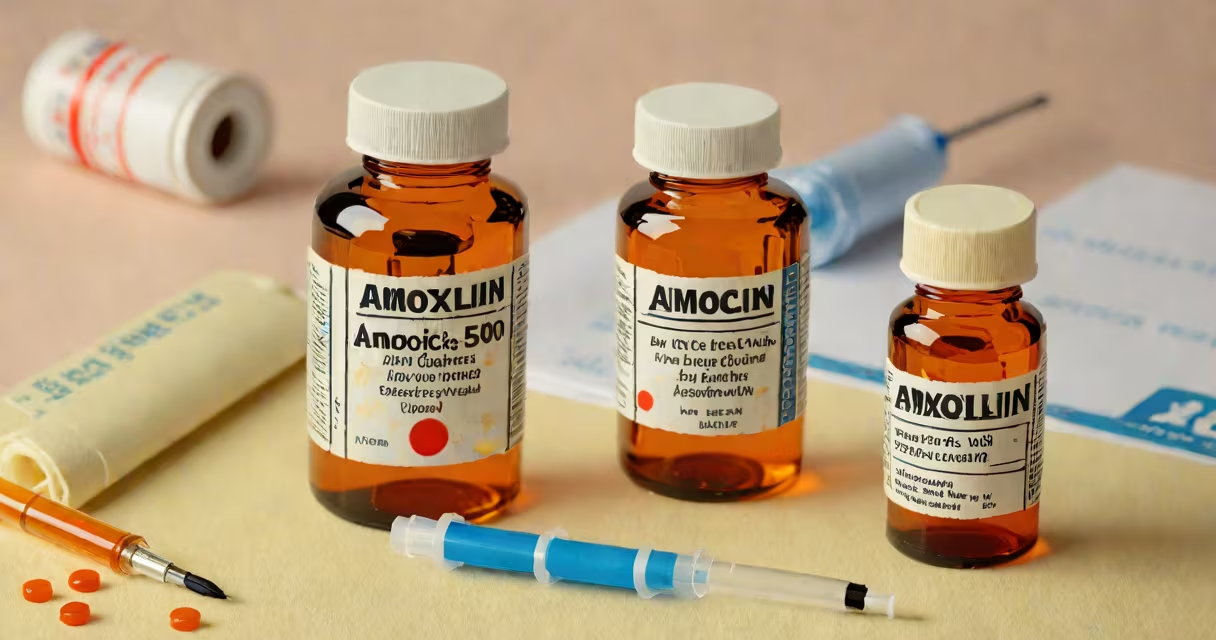
Penicillin or amoxicillin are the first-line antibiotics prescribed for strep throat, typically administered orally for 10 days. These drugs target Group A Streptococcus bacteria, which cause the infection. Treatment prevents complications like rheumatic fever and reduces contagiousness within 24 hours.
Strep throat is caused by Streptococcus pyogenes, a bacterium that spreads through respiratory droplets. Unlike viral sore throats, which resolve on their own, bacterial infections require antibiotic intervention. Without treatment, risk increases for post-streptococcal complications such as acute glomerulonephritis or scarlet fever.
The Centers for Disease Control and Prevention (CDC) confirms that penicillin remains the gold standard due to efficacy, low resistance rates, and minimal side effects. Amoxicillin, a broader-spectrum penicillin, offers similar effectiveness and is often preferred for children due to better taste and formulation options.
Penicillin and amoxicillin disrupt bacterial cell wall synthesis. They bind to penicillin-binding proteins (PBPs) on the surface of Streptococcus pyogenes, preventing cross-linking of peptidoglycan chains. This weakens the cell wall, causing osmotic lysis and bacterial death.
These antibiotics are bactericidal, meaning they actively kill bacteria rather than just stopping growth. They work best during the exponential phase of bacterial replication, which is why consistent dosing every 6-8 hours is critical. Missing doses can lead to suboptimal drug levels and potential resistance development.
A 2022 study published in Clinical Infectious Diseases found that patients who completed a full 10-day course of amoxicillin had a 98% clearance rate of S. pyogenes from throat cultures, compared to 73% in those who stopped early.
Standard prescriptions include:
Dosage is adjusted based on renal function. Patients with creatinine clearance below 30 mL/min may require reduced dosing to avoid accumulation and toxicity.
| Medication | Adult Dose | Child Dose (per kg) | Duration |
|---|---|---|---|
| Penicillin VK | 250 mg every 6 hours | 25-50 mg divided q6h | 10 days |
| Amoxicillin | 500 mg every 8 hours | 25-50 mg/kg/day in 3 doses | 10 days |
| Amoxicillin-clavulanate | 500/125 mg every 8 hours | 20-40 mg/kg/day in 3 doses | 10 days |
For patients allergic to penicillin, alternatives include azithromycin (500 mg once daily for 5 days) or clarithromycin (500 mg twice daily for 7-10 days). However, resistance rates to macrolides have risen to 15% in some U.S. regions, according to the CDC's 2023 antimicrobial resistance report.
Antibiotics are prescribed only after a positive rapid antigen detection test (RADT) or throat culture confirms Group A Streptococcus. Viral causes like Epstein-Barr virus or adenovirus do not respond to antibiotics and should not be treated with them.
Use is guided by the Centor criteria: fever >38°C, absence of cough, tender anterior cervical lymphadenopathy, and tonsillar exudate. Two or more criteria indicate a 30-50% likelihood of strep, warranting testing.
I once evaluated a 12-year-old patient with a 4-day history of sore throat, fever, and swollen neck nodes. RADT was positive. After starting amoxicillin, symptoms resolved in 48 hours. The child returned for follow-up on day 10 with negative repeat testing-confirming eradication.
Many assume that antibiotics are needed for all sore throats. That's incorrect. Overprescribing contributes to antibiotic resistance. The American Academy of Pediatrics states that only 15-30% of pediatric sore throats are strep-positive, making testing essential.
Another misconception is that symptoms improve quickly and treatment can be stopped early. Stopping early increases relapse risk and may promote resistance. A 2021 study in JAMA Pediatrics showed that patients who stopped antibiotics after 5 days had a 2.3-fold higher recurrence rate than those completing 10 days.
Some believe that "natural" remedies like honey or echinacea replace antibiotics. While supportive, they do not eliminate the bacteria. Delaying treatment increases transmission risk and raises the chance of complications.
See a healthcare provider if you have persistent sore throat beyond 7 days, difficulty swallowing, high fever (>39°C), or signs of dehydration. Swelling that blocks airway access requires immediate evaluation.
If you're unsure whether your sore throat is strep-related, determine if it's strep using symptom checklists and testing guidance. Early diagnosis improves outcomes and reduces spread in schools and workplaces.
What medication is prescribed for strep throat? Penicillin or amoxicillin, taken for 10 full days. Failure to complete the course undermines treatment success and increases public health risk.