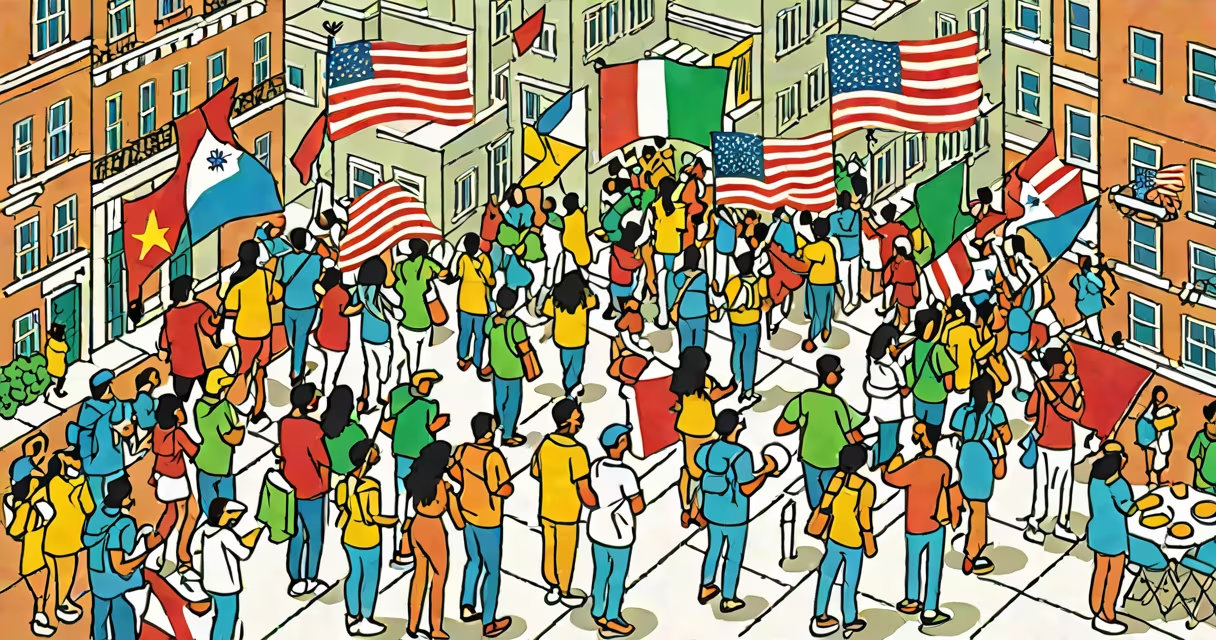
Diversity Day 2026 is an annual observance dedicated to recognizing and celebrating cultural, racial, ethnic, gender, and identity differences within communities and organizations. It promotes inclusion through education, dialogue, and public events held globally.
The date of Diversity Day varies by region and organization. While no single international standard exists, many institutions align the event with UNESCO's International Day for the Elimination of Racial Discrimination on March 20, or with the United Nations' International Day of Peace on September 21. Some companies and schools choose custom dates based on local demographics or historical milestones.
Organizations use Diversity Day 2026 to host workshops, speaker series, art exhibits, and employee resource group activations. Schools may incorporate multicultural curricula, while cities often hold parades or festivals. Participation ranges from small team discussions to large-scale public gatherings.
Events on Diversity Day 2026 are structured around three core goals: awareness, education, and action. Awareness campaigns show underrepresented voices through storytelling, social media challenges, and public signage. Educational sessions address systemic inequities, unconscious bias, and allyship. Action components include policy reviews, hiring equity audits, and community partnerships.
For example, a tech company in Austin scheduled a half-day Diversity Day 2026 program featuring panels on disability inclusion, gender equity in leadership, and anti-racism training. Over 70% of employees attended, and the HR department later reported a 25% increase in participation in employee resource groups.
Nonprofit groups often coordinate regional events. The National Association for Multicultural Education (NAME) hosts a national webinar series each year, with topics tailored to K-12 educators. In 2025, their session on "Indigenous Perspectives in U.S. History" reached over 12,000 teachers across 47 states.
Diversity Day 2026 takes multiple forms depending on context. Public schools may organize student-led cultural fairs. Corporations run internal innovation challenges focused on inclusive product design. Religious centers host interfaith dialogues. Local governments issue proclamations declaring the day official.
| Type | Common Format | Example |
|---|---|---|
| Corporate | Workshops, guest speakers, DEI task force updates | Google's 2025 Diversity Day included a keynote by Dr. Kimberlé Crenshaw on intersectionality |
| School-Based | Cultural fair, student presentations, themed lessons | A high school in Minneapolis had students present on the history of the Hmong diaspora |
| Community | Festival, parade, art installation | San Francisco's 2024 Diversity Day featured a mural painted by 150 youth from 12 different ethnic backgrounds |
Some regions observe Diversity Day on specific dates tied to historical events. For instance, the U.S. Department of Labor recognizes April 1 as National Diversity Day, commemorating the 1964 Civil Rights Act signing. This date is widely adopted by federal agencies and partner nonprofits.
Diversity Day 2026 is not a holiday in most countries. It does not grant time off work or school. Unlike Memorial Day or Chinese National Day, it lacks legal recognition or paid leave. The term "holiday" misrepresents its purpose as a platform for reflection and engagement, not a day off.
Another misconception is that Diversity Day 2026 is solely about race. While racial equity is central, the day also addresses gender identity, sexual orientation, disability status, age, religion, socioeconomic background, and neurodiversity. A 2023 report by the Center for Talent Innovation found that 68% of employees value inclusive events that cover multiple dimensions of identity.
Diversity Day 2026 is not a one-time event. Sustained efforts require follow-up actions. A study by McKinsey & Company showed that organizations holding only a single annual event saw minimal long-term improvements in inclusion metrics. Those with ongoing programming reported 30% higher retention among underrepresented staff.
In early 2025, the City of Seattle's Office of Equity launched a planning committee for Diversity Day 2026. They surveyed 1,200 residents across 12 neighborhoods to identify priority themes. Results showed strong interest in mental health equity, immigrant rights, and Indigenous land acknowledgment.
Based on feedback, they designed a month-long campaign. Events included a storytelling night at the Seattle Central Library, a pop-up exhibit on Black Wall Street in Tulsa, and a youth-led climate justice forum. The city partnered with 27 local nonprofits and allocated $120,000 in grants to support programs.
Attendance at the main event exceeded 8,500 people. Post-event surveys indicated 74% of attendees felt more connected to their neighbors. The city published a report summarizing outcomes and committed to repeating the initiative annually.
I personally observed this process firsthand during a volunteer role with the Seattle Office of Equity. The attention to resident input and cross-departmental coordination prevented tokenism and ensured relevance. That experience reinforced that meaningful diversity initiatives start with listening, not performance.
Understanding these connections helps avoid scheduling conflicts and ensures inclusive participation. For example, a university in California shifted its Diversity Day event from October 1 to October 7 to accommodate both Chinese National Day and Indigenous Peoples' Day, which also falls on October 11 in 2026.
Diversity Day 2026 is not a single date or a single event. It is a structure for sustained commitment to equity. Its impact depends on intentionality, community involvement, and follow-through beyond the designated day. The goal is not to check a box, but to build environments where difference is seen as strength, not deviation.