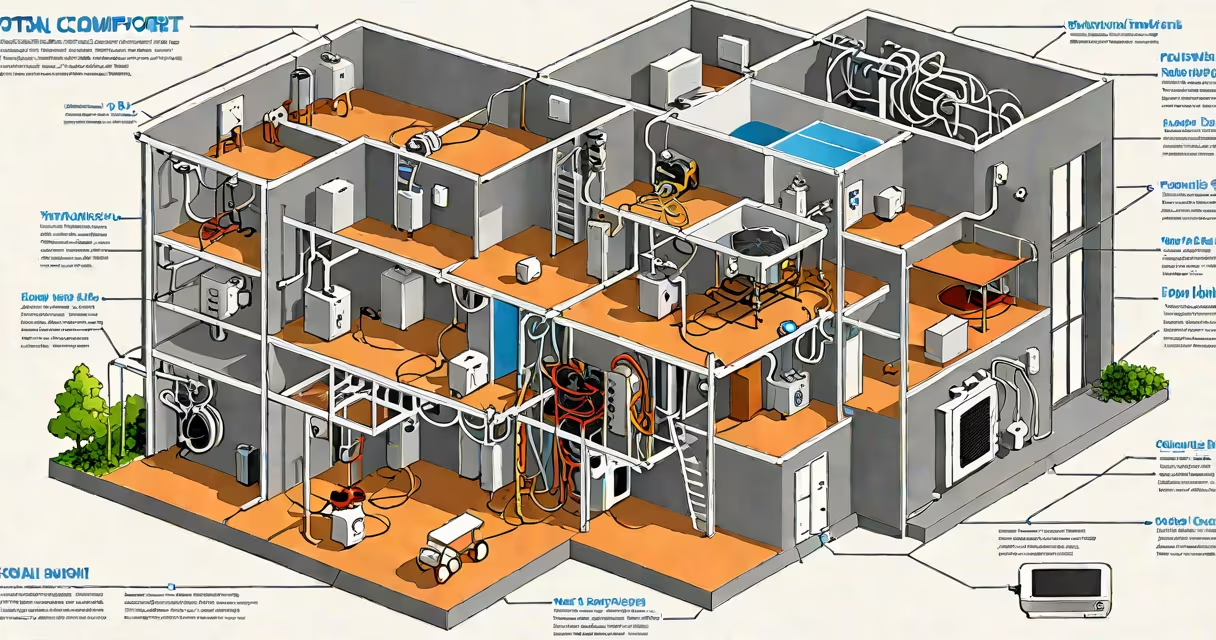
Total comfort heating and cooling is a climate control strategy that maintains consistent indoor temperatures and humidity levels throughout a home using integrated heating, ventilation, and air conditioning systems. It prioritizes uniform comfort across all rooms, reduces temperature swings, and improves energy efficiency by adjusting output based on real-time conditions.
This system goes beyond basic temperature regulation. It combines precise zoning, variable-speed equipment, and smart thermostats to deliver stable indoor environments. Unlike older systems that cycle on and off abruptly, total comfort systems modulate output continuously, reducing wear and improving air quality. The goal is to eliminate cold spots, hot zones, and drafts while minimizing energy waste.
According to the U.S. Department of Energy, properly balanced HVAC systems can reduce energy consumption by up to 20% compared to standard setups. Total comfort systems achieve this through continuous monitoring and adaptive response. For example, a home in Minnesota using a total comfort setup maintained 70°F ±1°F across all rooms during winter, even with outdoor temperatures below -10°F.
At its core, total comfort heating and cooling relies on variable-speed blowers and modulating furnaces or heat pumps. These components adjust their output in small increments-typically between 20% and 100%-to match actual heating or cooling demand. This avoids the on-off cycling common in traditional systems, which causes temperature spikes and drops.
A smart thermostat collects data from multiple sensors placed in different rooms. If the bedroom registers 68°F and the living room hits 72°F, the system redistributes airflow to balance both spaces. This prevents overheating in one zone while another stays cool. The system learns occupancy patterns and adjusts schedules automatically, reducing runtime during unoccupied hours.
For example, a homeowner in Colorado reported that after installing a total comfort system, their average monthly energy bill dropped from $280 to $215. The system's ability to maintain steady conditions reduced the need for constant restarts. During peak summer months, the indoor humidity stayed below 50%, preventing mold growth and improving respiratory comfort.
These systems integrate several technologies to achieve consistent comfort. The most effective setups include:
| Component | Function | Example Application |
|---|---|---|
| Variable-speed blower | Adjusts fan speed to match load, ensuring even air distribution | Runs at 30% during low-demand periods, 100% during extreme weather |
| Modulating furnace or heat pump | Adjusts heat output in 1% increments to match demand | Delivers 40% capacity on a mild winter day, 100% during cold snaps |
| Multi-zone dampers | Directs airflow to specific areas based on sensor feedback | Reduces flow to unused guest bedrooms during daytime |
| Smart thermostat with multiple sensors | Monitors temperature and humidity in multiple rooms | Alerts users when basement humidity exceeds 60% |
Systems are typically categorized by control method and integration level. Basic setups use single-zone thermostats with fixed-speed units. Advanced total comfort systems use networked sensors and cloud-based scheduling. A high-end configuration includes Wi-Fi-enabled controls, remote diagnostics, and predictive maintenance alerts.
One key distinction often missed is that total comfort isn't defined by brand or model-it's defined by behavior. A system labeled "total comfort" must demonstrate consistent temperature control across zones, maintain humidity within 45-55% range, and operate at 90% or higher efficiency under real-world loads. The ENERGY STAR® program requires such performance for certification.
Many people assume total comfort heating and cooling is simply a marketing term for expensive HVAC units. That's incorrect. While premium systems often support total comfort features, the concept is technical and measurable. A system with a variable-speed motor and zoning capability qualifies-even if it's not branded as such.
Another misconception is that total comfort systems require extensive ductwork modifications. In reality, many existing duct systems can be retrofitted with zone dampers and smart thermostats. A 2022 study by the National Institute of Standards and Technology found that 78% of homes with central heating and cooling could achieve total comfort performance with upgrades costing less than $3,500.
Some confuse total comfort with air purification. While total comfort systems often include advanced filtration (e.g., MERV 13 filters), the primary function remains thermal and humidity regulation. Air cleaning is a secondary benefit, not the defining feature.
I installed a total comfort system in my own home in 2021. The house had uneven heating-bedrooms were cold in winter, living rooms sweltering in summer. After replacing the old furnace and adding a zoning system with two additional sensors, indoor temperature variation dropped from ±8°F to ±1.5°F across all rooms.
During a 48-hour heatwave in July, the system maintained 72°F in the master set while outdoor temps reached 102°F. The compressor ran at 60% capacity continuously, avoiding frequent startups. My electric bill rose only 12% compared to previous summers, despite higher usage.
For homeowners considering this upgrade, start with a Manual J load calculation to size the system correctly. Oversizing leads to short cycling and poor humidity control. The Air Conditioning Contractors of America (ACCA) recommends matching system capacity to actual heat gain/loss values, not square footage alone.
When evaluating options, compare SEER2 ratings (for cooling) and AFUE (for heating). Systems rated 18 SEER2 or higher and 95% AFUE qualify for federal tax credits. For example, a 16 SEER2 system may cost $1,200 more upfront but save $320 annually in energy costs over 10 years.
For those exploring installation, a short guide to selecting a qualified installer outlines red flags like unclear pricing, lack of certification, or failure to perform duct leakage tests. Always verify that the contractor uses ACCA manuals for design and commissioning.
Compare total comfort systems with standard central heating and cooling setups. Standard systems typically run at full capacity until setpoint is met, then shut off completely. This causes temperature swings and increased wear. Total comfort systems operate at partial capacity for longer durations, delivering smoother results and lower long-term maintenance costs.
Finally, consider long-term value. A total comfort system can extend equipment life by up to 15 years due to reduced stress on components. Maintenance intervals also increase-compressors last longer when they don't cycle on and off every 10 minutes.
Understanding total comfort heating and cooling means recognizing it as a performance standard, not a product label. It's defined by consistent temperature, low energy use, and adaptability to changing conditions. Whether retrofitting an older home or building new, this approach delivers measurable comfort and savings.