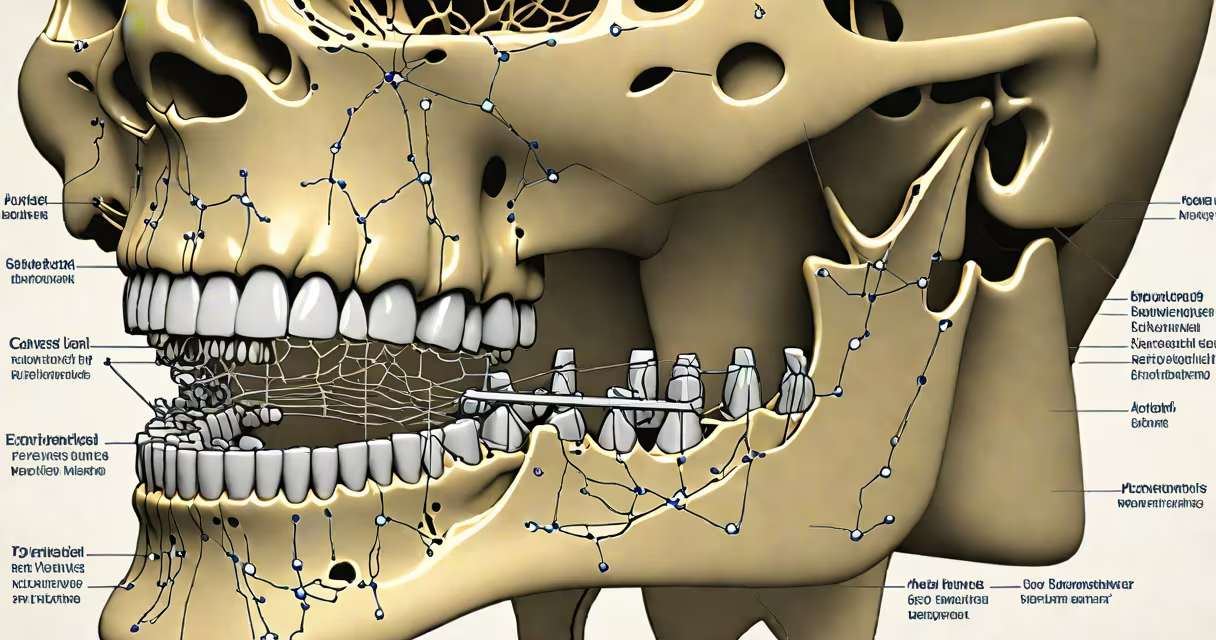
TMJ meaning dental refers to the connection between temporomandibular joint disorders and oral health issues such as malocclusion, bruxism, and tooth wear. This condition involves pain and dysfunction in the jaw joint and surrounding muscles, often worsened by dental factors.
The temporomandibular joint connects the skull to the lower jaw. It allows movement during speaking, chewing, and yawning. When this joint becomes inflamed or misaligned, it causes discomfort that may originate from dental habits or structural issues in the mouth.
Dental professionals identify TMJ symptoms through clinical exams and imaging. Common signs include clicking sounds, limited mouth opening, and tenderness around the joint. These symptoms often correlate with bite irregularities or nighttime teeth grinding, both treatable through dental intervention.
TMJ problems arise when the jaw joint fails to function smoothly due to muscle strain, joint damage, or occlusal imbalance. Occlusion-the way upper and lower teeth meet-plays a direct role. A misaligned bite forces certain teeth to bear excessive pressure during chewing, leading to muscle fatigue and joint stress.
Bruxism, or unconscious teeth grinding, especially during sleep, increases tension in the jaw muscles. Over time, this habit wears down enamel, alters tooth position, and strains the TMJ. Studies show that 8-10% of people with chronic TMJ pain report bruxism as a contributing factor, according to the American Academy of Orofacial Pain.
A 2021 study published in the Journal of Oral Rehabilitation found that patients with severe tooth wear had a 3.6 times higher risk of developing TMJ disorders compared to those without wear. This suggests that untreated dental erosion can lead to joint instability and pain.
Not all TMJ issues stem from the same cause. Dental professionals classify TMJ-related conditions based on their origin. The most common types linked to dental health include:
| Type | Primary Cause | Dental Link | Prevalence |
|---|---|---|---|
| Myofascial pain | Muscle tension from clenching | Bruxism, poor posture during eating | ~60% of TMJ cases |
| Internal derangement | Disc displacement in the joint | Joint trauma, long-term misalignment | ~25% |
| Osteoarthritis | Joint degeneration | Tooth loss affecting bite balance | ~15% in adults over 50 |
Internal derangement is particularly relevant to dental care. When the articular disc shifts out of place, it disrupts joint motion. This condition often develops after years of uneven biting forces caused by missing molars or poorly fitted crowns.
One non-obvious fact: TMJ pain can mimic toothache. A patient may visit a dentist complaining of aching teeth, only to find no decay or infection. The real issue lies in the joint. The trigeminal nerve supplies sensation to both teeth and the TMJ, creating overlapping pain signals.
Many assume TMJ means "jaw pain" in general. But the term specifically refers to the temporomandibular joint. Other conditions-like sinus headaches or ear infections-can mimic TMJ symptoms, leading to misdiagnosis.
Another confusion: TMJ disorders are not always caused by stress. While stress can trigger clenching, research shows that anatomical factors like joint structure and genetics play a larger role in persistent cases. The National Institute of Dental and Craniofacial Research notes that genetic predisposition accounts for up to 40% of TMJ disorder risk.
Some patients believe that jaw surgery is required. In reality, 90% of TMJ cases improve with conservative treatments like splints, physical therapy, and behavioral changes. Surgery is reserved for rare cases involving irreversible joint damage.
Consider a 34-year-old woman who reported chronic jaw pain and difficulty opening her mouth wide. She had no history of injury. Her dentist noticed heavy wear on her lower molars and recommended a night guard. After six weeks of wearing the device, her pain decreased by 70%, and her jaw opened 25% wider.
An MRI confirmed mild disc displacement. The dentist ruled out arthritis and referred her to a physical therapist specializing in TMJ rehabilitation. After eight sessions focusing on jaw relaxation techniques and posture correction, she regained full function and stopped using the guard.
This case illustrates how dental interventions-such as occlusal splints-can resolve TMJ symptoms without surgery. It also highlights that dental TMJ management requires a multidisciplinary approach.
If jaw pain lasts more than two weeks, especially with clicking, locking, or difficulty chewing, consult a dentist experienced in TMJ disorders. Early diagnosis prevents progression to chronic pain or joint remodeling.
Signs that dental involvement is likely include worn teeth, jaw muscle tenderness, and a history of grinding. A dentist may take a panoramic X-ray or perform a joint auscultation to detect abnormalities.
Understanding tmj meaning dental clarifies how oral health impacts well-being. Addressing bite issues and grinding early reduces long-term complications. The goal is not just pain relief, but restoring normal joint function through targeted dental care.