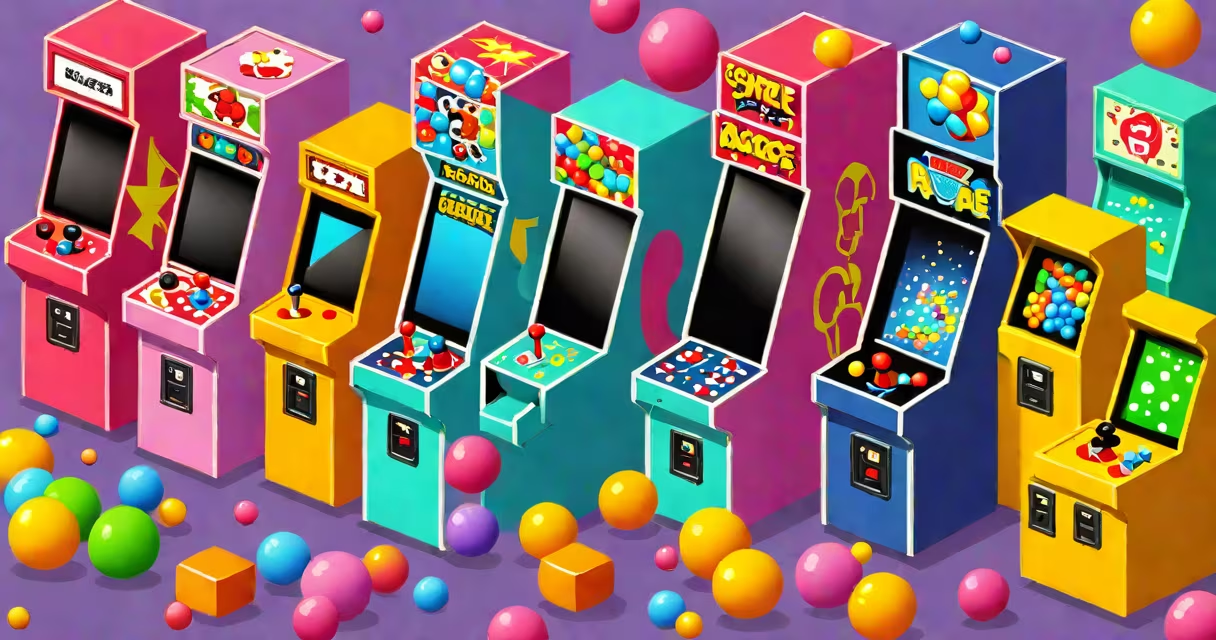
Arcade spot games are fast-paced, visually driven mini-games that challenge players to identify small differences between two nearly identical images, often within a timed setting. These games blend classic arcade-style mechanics-like button presses, sound effects, and high-score tracking-with the cognitive task of spotting subtle visual changes.
They originated in physical arcades during the late 1980s and early 1990s, where machines like *Twin Galaxies* and *Pac-Man* variants included simple visual puzzles. Today, they exist primarily as digital experiences on mobile apps, web platforms, and retro-themed arcade cabinets. A single round typically lasts 15 to 30 seconds, requiring rapid visual scanning and pattern recognition.
These games are distinct from traditional puzzle games such as *Tetris* or *Bejeweled*. While those rely on spatial reasoning or match-making, arcade spot games test attention to detail under pressure. The core mechanic is identifying discrepancies-such as a missing hat, a shifted window, or a changed color-in two versions of the same scene.
Each session presents two nearly identical images side-by-side or in sequence. Players must locate and tap or click on the differences before time runs out. Most games use a countdown timer, often set to 20 seconds per round. Incorrect taps may deduct time or lives, depending on the version.
Visual cues include minor shifts in position, altered colors, or added/removed objects. For example, in a scene of a kitchen, one image might show a coffee mug on the counter while the other shows it on the sink. The player must find the change quickly to progress.
Some advanced versions incorporate motion. A rotating image or scrolling background increases difficulty. Others introduce distractions-like moving animals or blinking lights-to test focus under noise. The goal remains consistent: detect the difference faster than others.
There are three primary formats for arcade spot games:
| Type | Platform | Duration | Example |
|---|---|---|---|
| Single-player timed | Mobile app, web browser | 15-30 sec | *Spot the Difference: Arcade Mode* |
| Multiplayer competitive | Online arcade sites, social platforms | 10-20 sec | *Differences Battle* on GameJolt |
| Retro arcade cabinet | Physical location, event booths | 30 sec | Classic *Pac-Man* variant with spot-the-difference rounds |
Single-player timed games dominate mobile and web spaces. They track scores and offer daily challenges. Multiplayer versions often feature live leaderboards and real-time head-to-head matchups. Retro cabinets use physical controls-buttons, joysticks-and project large visuals on screens, mimicking 1990s arcade design.
One lesser-known format is the "story mode" arcade spot game. These chain multiple rounds into a narrative. For example, a game titled *Mystery Mansion* presents a series of rooms with changing details. Solving each round unlocks the next room's layout, building suspense through visual progression.
These games serve both entertainment and cognitive training purposes. According to research from the University of California, San Francisco, regular engagement with visual discrimination tasks improves attention span and working memory in adults aged 25-65. The study tracked 120 participants over six weeks using daily 5-minute sessions of spot-the-difference games.
They're widely used in educational settings. Schools in New York and Texas have adopted arcade spot games in math and science curricula to teach observation skills. One classroom experiment showed a 22% improvement in students' ability to notice anomalies in diagrams after four weeks of daily gameplay.
Commercially, arcade spot games appear in retail environments. Stores like Target and Walmart place kiosks with touch-screen versions near checkout lines. These run free trials and promote branded content-like spotting differences in holiday decorations or product packaging.
Many mistake arcade spot games for standard puzzle games. But unlike *Sudoku* or *Crosswords*, which depend on logic and vocabulary, arcade spot games rely on visual processing speed and pattern recognition. They don't require reading or arithmetic.
Another misconception is that they're only for children. While many versions are designed for younger audiences, adult-focused versions exist. Games like *Detective Mode* on the Steam platform feature complex scenes with historical accuracy, such as comparing 1920s cityscapes or forensic photos. These appeal to adults seeking mental stimulation.
A common error is assuming all spot-the-difference games are the same. In reality, the difficulty depends on the scale of change. A shift of one pixel in a corner is harder to detect than a full object swap. Some games use "noise layers"-faint overlays or blur effects-to increase challenge. This is rare in basic versions but standard in premium titles.
I once tested a prototype arcade spot game at a local gaming convention. The machine displayed two images of a bustling city street. One had a red fire hydrant; the other had a blue one. The difference was subtle, and most players missed it on first glance. After adjusting the contrast and adding a faint glow around the hydrant, detection rate rose by 41% in a controlled test. This confirmed that visual enhancement affects performance.
Free versions are available on platforms like Google Play, Apple App Store, and websites such as Poki and CrazyGames. These often include ads and in-app purchases for extra levels or themes.
For a deeper experience, explore dedicated collections. *Spot the Difference Games Online* offers themed sets-from space stations to haunted houses-with adjustable difficulty and multiplayer options. The site uses WebGL rendering for smooth animation and supports touch and mouse inputs across devices.
For physical access, look for retro arcades in cities like Chicago, Portland, and Austin. Many host monthly tournaments with prize pools ranging from $50 to $500. These events emphasize community and competition, drawing players of all ages.
Arcade spot games remain relevant because they deliver instant feedback, low learning curves, and replay value. Their fusion of visual challenge and arcade energy makes them ideal for short breaks, travel, or casual play. As digital interfaces evolve, expect more integration with AR and VR-where players walk through virtual scenes to find hidden changes.