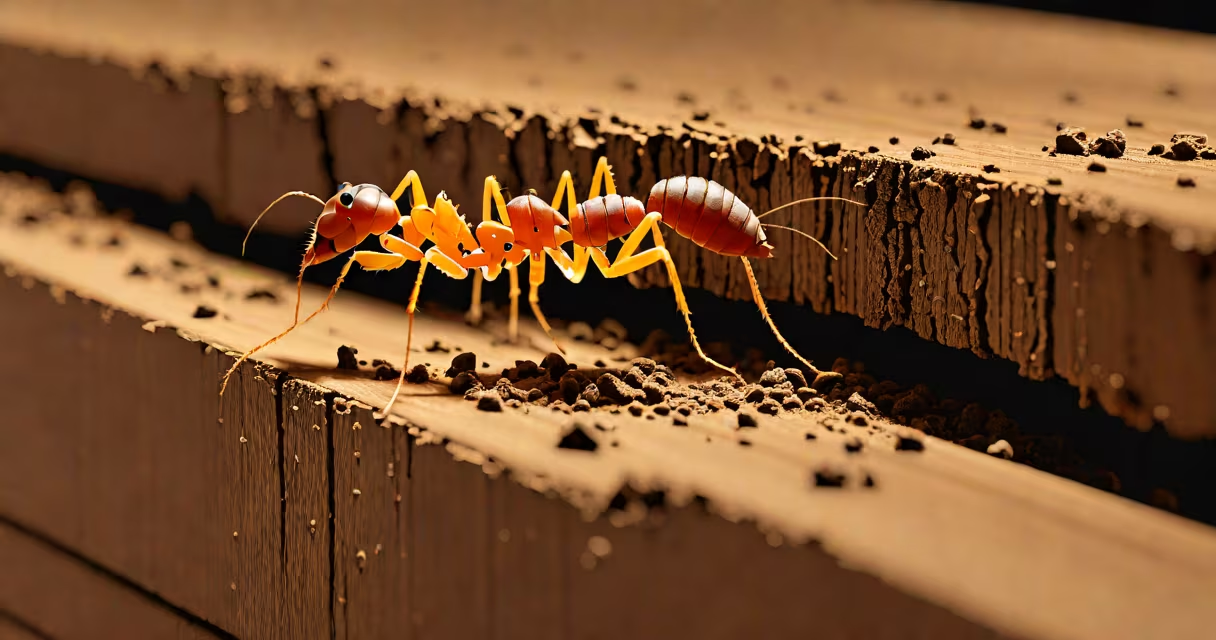
Termite pest control is the process of eliminating or preventing subterranean, drywood, or dampwood termites from damaging structural wood in homes and buildings. It involves targeted treatments, exclusion techniques, and ongoing monitoring to stop colony growth and property destruction.
Termites feed on cellulose in wood and paper, often going undetected for years. A single colony can contain 60,000 to over a million individuals. Left untreated, they can compromise floor joists, support beams, and wall studs. The U.S. Department of Agriculture estimates that termites cause $5 billion in property damage annually, making proactive pest control essential.
Effective termite pest control combines inspection, treatment, and prevention. Inspections identify entry points, mud tubes, hollow-sounding wood, and swarming insects. Treatments include liquid termiticides, bait stations, and physical barriers. Preventive measures involve reducing moisture, removing wood-to-soil contact, and sealing foundation cracks.
Termite pest control relies on disrupting colony behavior and access to food sources. Subterranean termites live underground and build mud tubes to reach above-ground wood. They enter structures through foundation cracks or direct soil contact. Drywood termites live within the wood itself and can infest furniture, attic beams, or window frames.
When a professional conducts termite pest control, they begin with a detailed inspection. They probe baseboards, examine crawl spaces, and use acoustic detectors to find hollow areas. If activity is confirmed, they apply a treatment plan based on the species and infestation level. For subterranean termites, liquid termiticides like fipronil or imidacloprid are injected into the soil around the foundation. These chemicals create a barrier that kills termites on contact or disrupts their nervous systems.
Bait systems offer an alternative. Stations containing slow-acting toxins are placed in the ground near known termite trails. Worker termites carry the poison back to the nest, eventually killing the queen and entire colony. This method takes longer-typically 6 to 18 months-but reduces chemical exposure and allows for precise targeting. The Environmental Protection Agency notes that bait systems have lower environmental impact than broad soil treatments.
Not all termite pest control approaches are equal. The choice depends on the termite species, building structure, and homeowner preferences. Below are the most common methods:
| Method | Best For | Time to Full Control | Environmental Impact |
|---|---|---|---|
| Liquid Soil Treatment | Subterranean termites, new construction | Immediate, long-term protection | Moderate to high (chemical barrier) |
| Bait Systems | Existing infestations, low-impact preference | 6-18 months | Low (targeted toxin delivery) |
| Physical Barriers | New builds, eco-conscious projects | Long-term, requires installation | None (non-chemical) |
| Heat Treatment | Drywood termites, localized infestations | Hours to days | None (thermal energy only) |
Heat treatment uses infrared heaters to raise interior temperatures to 120°F (49°C) for several hours. This kills termites in walls and floors without chemicals. It's effective for drywood species but impractical for large infestations or whole-house applications.
Many people mistake termite pest control for general pest management. Termite-specific treatments require specialized equipment and training. A standard pesticide application won't eliminate a colony. The National Pest Management Association warns that DIY products often fail because they don't penetrate deep enough into soil or wood.
A frequent error is assuming that visible winged termites mean a new infestation. Swarming occurs when mature colonies produce reproductive termites to start new nests. Finding a few swarmers doesn't confirm an active infestation-but it signals risk. A single swarm event can precede major structural damage.
Another misconception is that termites only attack old houses. In reality, new constructions are vulnerable too. A 2022 study by the University of Florida found that 15% of homes built in the past five years had termite infestations within three years of occupancy. Moisture issues during construction, such as wet framing or improper drainage, create ideal conditions for termites.
In 2021, I inspected a 1985 ranch-style home in Georgia with sagging flooring and hollow-sounding baseboards. The owner reported seeing small, pale insects near the basement door. Upon probing, I found a 3-inch mud tube extending from the foundation to a floor joist. A core sample revealed extensive internal wood damage-over 30% of the structural integrity was compromised.
I recommended a dual approach: liquid barrier treatment around the perimeter and bait stations at 10-foot intervals. The treatment included a 10-year warranty. Six months later, inspections showed no new activity. After 18 months, the bait stations were empty-indicating colony collapse. The homeowner avoided $25,000 in repair costs.
This case highlights why termite pest control must be tailored. A one-size-fits-all solution fails. The presence of mud tubes, damaged wood, and swarmers demands immediate action. Delaying treatment increases both cost and risk.
Termite pest control is not a one-time fix. It requires ongoing vigilance. Annual inspections, moisture control, and prompt response to signs of activity reduce long-term risk. Homeowners should treat termite pest control as part of routine maintenance-not just a reaction to visible damage.