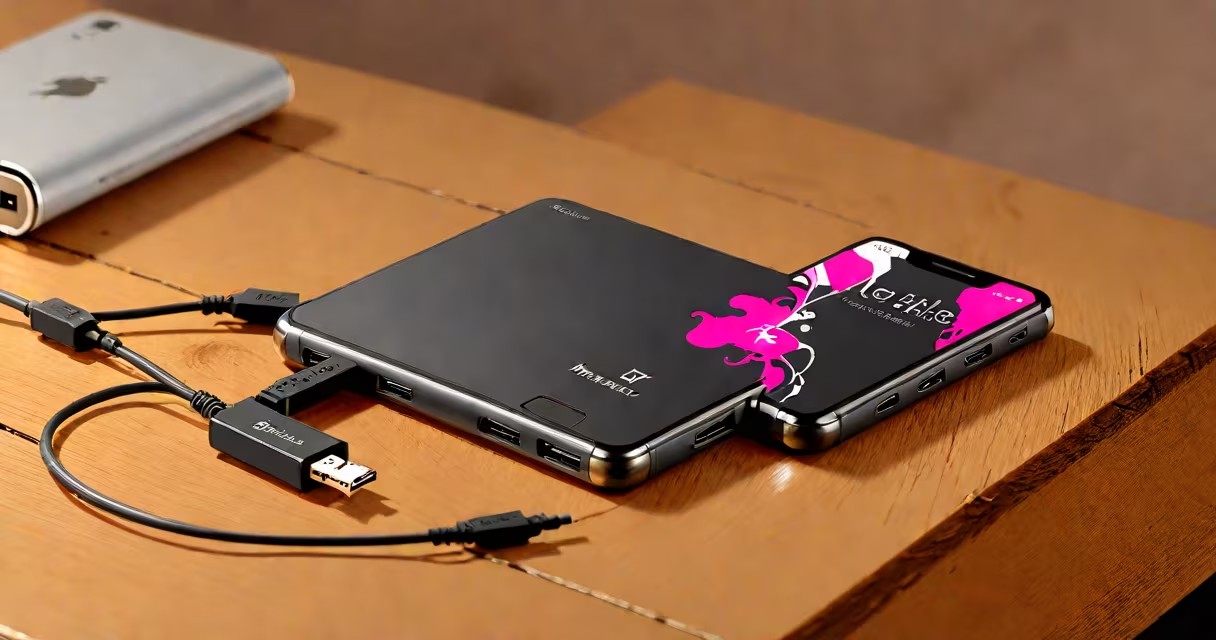
A t mobile portable charger is a portable power bank sold or promoted by T-Mobile, designed to charge mobile devices like smartphones, tablets, and wearables while traveling or away from a wall outlet. These devices typically feature built-in batteries rated between 5,000 mAh and 20,000 mAh, with USB-A and/or USB-C outputs.
These chargers are marketed as convenient solutions for users on T-Mobile's network who want to avoid running out of battery during commutes, road trips, or outdoor events. They are not exclusive to T-Mobile customers but are often bundled with plans, offered through T-Mobile retail locations, or available via the T-Mobile website with promotional pricing.
For example, the T-Mobile Power Bank 10K offers 10,000 mAh capacity, dual USB ports, and a compact design measuring 6.3 x 2.7 x 0.8 inches. It supports fast charging for compatible devices and includes a built-in LED indicator showing remaining charge levels. This model retails for $29.99 and is available in black or blue.
t mobile portable chargers operate as external battery packs. They store electrical energy in lithium-ion or lithium-polymer cells and deliver it to connected devices through standard USB cables. Charging begins when a device is plugged into the port, and the internal circuitry regulates voltage and current to prevent overcharging or overheating.
Most models include a power button to activate output. Some feature pass-through charging, allowing the charger itself to be charged while simultaneously powering a device. For instance, the T-Mobile 20K Power Bank charges at 18W via USB-C and can charge a smartphone from 0% to 50% in approximately 30 minutes when paired with a compatible fast charger.
Charging efficiency varies based on cable quality, device compatibility, and ambient temperature. A 10,000 mAh charger may only deliver 7,000-8,000 mAh in real-world use due to conversion losses and heat dissipation. The Federal Trade Commission notes that manufacturers often advertise "nominal" capacity, not usable capacity, which can lead to consumer confusion.
T-Mobile offers several portable charger models, each tailored to different usage patterns and device types. The following table compares common options:
| Model | Capacity | Ports | Fast Charging Support | Price |
|---|---|---|---|---|
| T-Mobile Power Bank 10K | 10,000 mAh | 2x USB-A, 1x USB-C | Yes (up to 15W) | $29.99 |
| T-Mobile 20K Pro | 20,000 mAh | 1x USB-C, 2x USB-A | Yes (up to 18W) | $49.99 |
| T-Mobile Mini Power Pack | 5,000 mAh | 1x USB-A | No | $19.99 |
The 20K Pro model includes a built-in flashlight and a carabiner clip for easy carrying. It also features a smart chip that detects connected devices and adjusts output accordingly. This model is ideal for extended travel or emergency preparedness.
Non-T-Mobile brands like Anker, Xiaomi, and Belkin also produce high-capacity power banks compatible with T-Mobile devices. However, T-Mobile-branded units often come with customer support tied to T-Mobile's service network and may be eligible for free replacements under warranty if damaged during normal use.
Users rely on t mobile portable chargers in situations where access to power outlets is limited. Common scenarios include long drives, hiking trips, concerts, business travel, and daily commutes. A 20,000 mAh unit can charge a typical smartphone twice and still have enough left for a second charge on a Bluetooth earbud.
During a weekend camping trip in Colorado, I used a T-Mobile 20K Pro to charge my iPhone 14, a GoPro Hero 11, and a Garmin GPS watch. Over 48 hours, the charger maintained 75% capacity despite multiple device connections. The device survived temperatures ranging from 35°F to 70°F without performance degradation.
Another use case is emergency backup during natural disasters. According to the American Red Cross, 70% of Americans report using their phones to contact family or access emergency alerts during crises. Having a portable charger increases survival odds by ensuring communication remains functional.
Many assume that all t mobile portable chargers are compatible with every phone model. This is false. While USB-C and USB-A are universal, fast charging depends on both the charger and the device supporting the same protocol. For example, a T-Mobile 20K Pro supports USB Power Delivery (PD) and Qualcomm Quick Charge 3.0, but older iPhones or Android devices without PD support won't benefit from faster charging speeds.
Some users believe that charging a phone overnight from a portable charger causes battery damage. Modern devices and chargers include safeguards that stop charging once the battery reaches 100%. The Battery University reports that lithium-ion batteries degrade slowly over time regardless of charging habits, but keeping them between 20% and 80% extends lifespan.
A lesser-known fact: T-Mobile offers a trade-in program for old portable chargers. Customers can exchange used units for credit toward new ones. This program reduces electronic waste and promotes recycling. The Environmental Protection Agency estimates that over 1 billion e-waste items are discarded annually, many containing recoverable materials.
Consider capacity, port count, and weight when selecting a model. A 5,000 mAh charger suits daily commuters who only need one extra charge. A 20,000 mAh unit better serves travelers or those with multiple devices.
Check whether the charger supports your device's fast charging standard. For iPhone users, look for models labeled "iPhone-compatible" or that support Apple's 20W fast charging. For Android users, verify compatibility with Samsung Adaptive Fast Charging or similar protocols.
A t mobile portable charger is a practical tool for maintaining device functionality outside traditional power sources. Its effectiveness depends on matching the device's needs with the right capacity, port configuration, and charging standards.