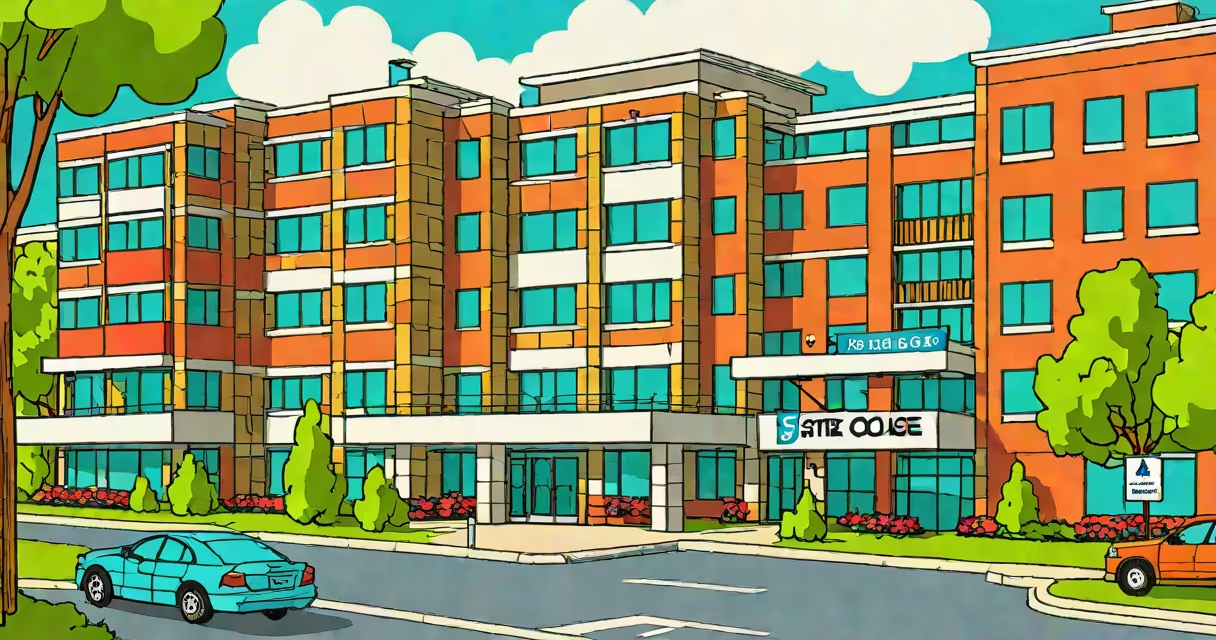
State college hotels are lodging facilities located on or directly adjacent to public universities, primarily serving students, visiting faculty, conference attendees, and family members. They are typically managed by the institution or a contracted operator and may offer discounted rates during academic sessions.
These properties are distinct from off-campus hotels in pricing, access, and purpose. While standard hotels prioritize transient guests, state college hotels emphasize institutional affiliation, offering amenities tailored to academic life such as study lounges, extended check-out times, and proximity to classrooms and libraries.
For example, Penn State University operates the University Park Hotel on its central campus in State College, Pennsylvania. It hosts over 12,000 guests annually, including alumni reunions, athletic events, and research symposia. This facility is not open to the general public without a reservation tied to a university event or affiliation.
State college hotels function under the administrative authority of a public university. They are usually funded through a combination of room revenue, event fees, and institutional subsidies. Unlike commercial chains, they do not rely on national brand marketing or loyalty programs.
Access is often restricted to verified users-students, staff, guests invited by a department, or those attending a sanctioned event. For instance, the University of Washington's on-campus hotel requires guests to provide a university email address or a letter of invitation from a faculty member.
Booking systems integrate with the university's event calendar. A visitor planning to attend a research workshop at the University of Oregon must reserve a room through the campus housing portal, which checks availability against ongoing academic activities.
State college hotels vary by size, location, and service level. The following table outlines common categories:
| Type | Typical Location | Key Features | Example |
|---|---|---|---|
| On-Campus Residence Hall Conversion | Within student dormitories | Shared bathrooms, limited private space, low cost | University of California, Santa Barbara - Summer Housing Program |
| Dedicated Conference Center | Adjacent to academic buildings | Meeting rooms, AV equipment, full kitchen access | Arizona State University - West Valley Campus Hotel |
| Full-Service Campus Hotel | Central campus or near major entrances | 24/7 front desk, fitness center, restaurant, free Wi-Fi | Penn State University Park Hotel |
Many state college hotels include study spaces, quiet zones, and late-night food services. These features reflect their dual role as hospitality venues and academic support infrastructure.
A lesser-known fact: some state college hotels operate under federal funding guidelines. The U.S. Department of Education's Office of Postsecondary Education notes that institutions receiving Title IV funds must ensure housing facilities meet safety standards set by the National Fire Protection Association (NFPA) 101. This includes fire alarm systems, egress routes, and smoke detection-requirements not always applied to private hotels.
State college hotels are frequently mistaken for student dorms. Dorms are residential units for enrolled students, often with shared bathrooms and meal plans. State college hotels are commercial accommodations with private rooms, daily housekeeping, and guest billing systems.
Another confusion arises with "college-affiliated" hotels. Some privately owned hotels near campuses use the term "near campus" or "university partner" in advertising. These are not affiliated with the school's housing office and do not offer institutional discounts. For example, a hotel in Gainesville, Florida, advertising "close to UF" may charge $220 per night-nearly double the rate at the University of Florida's official on-campus hotel, which charges $135 for the same room type.
Even within university systems, differences exist. The University of Michigan's Ann Arbor campus runs multiple lodging options: the Hill Auditorium Hotel (for performers), the Rackham Graduate School Hostel (for visiting scholars), and the North Campus Inn (for families). Each serves a different audience and has unique booking policies.
In 2023, a group of researchers from the University of Colorado Boulder attended a climate science summit hosted at the University of Alaska Fairbanks. They booked rooms at the UAF's on-campus hotel, which offered a 20% discount for university-affiliated travelers. The total cost for five people over three nights was $1,860-$310 less than booking equivalent rooms at a downtown Fairbanks chain hotel.
The hotel provided complimentary shuttle service to the conference center, access to the university library's digital archives, and evening lectures in the campus auditorium. These benefits were not available at off-site hotels.
I once stayed at the University of Washington's on-campus hotel during a faculty retreat. The room included a desk with dual monitors, a noise-canceling headset, and a printer. After a long day of meetings, I walked to the dining hall and ordered a meal using my university ID card-no cash required. The convenience of integrated services reduced logistical stress.
State college hotels serve as hybrid spaces between academic infrastructure and hospitality services. They offer predictable pricing, event integration, and access to campus resources unavailable at commercial hotels. Their value lies not in luxury, but in relevance to academic and institutional needs.