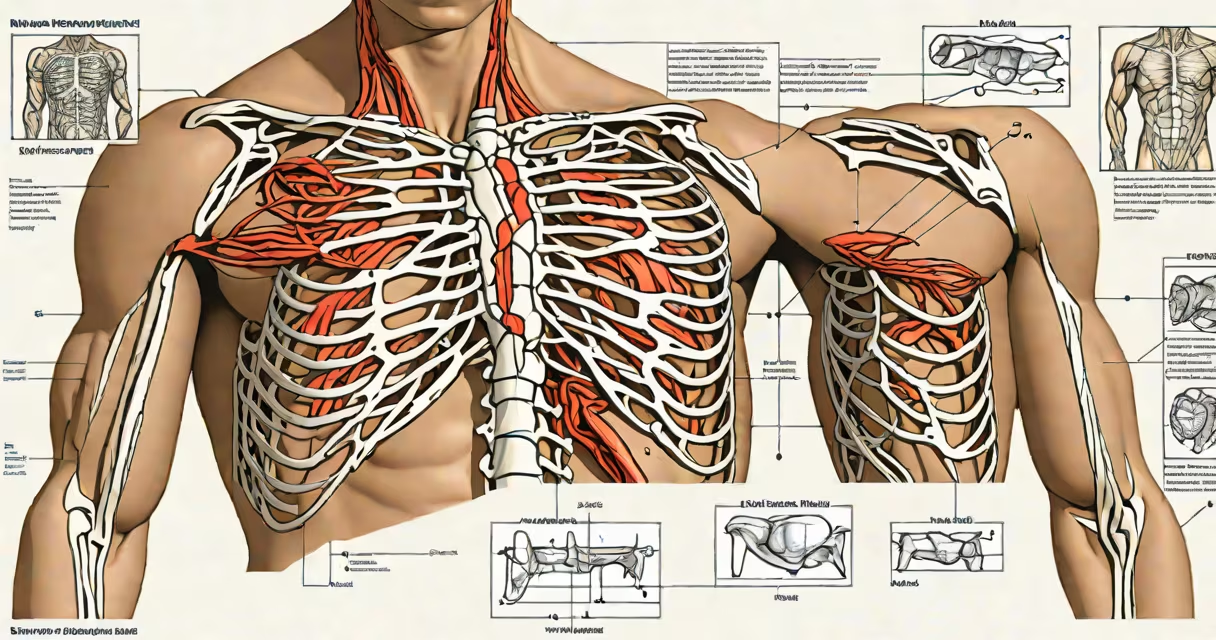
Síndrome de Poland is a rare congenital condition characterized by underdevelopment or absence of the pectoralis major muscle on one side of the chest, often accompanied by hand anomalies such as webbed fingers or missing digits. It occurs in approximately 1 in 30,000 live births and is typically diagnosed at birth or during early childhood.
The condition results from a disruption in blood flow during fetal development, specifically affecting the subclavian artery around the 6th week of gestation. This vascular insult leads to impaired growth of structures derived from the brachial plexus and lateral plate mesoderm. The severity varies widely-some individuals have only mild muscle asymmetry, while others exhibit complete absence of the pectoralis major and significant hand deformities.
Diagnosis is based on physical examination and imaging. Ultrasound, MRI, or CT scans confirm muscle deficiency and assess associated skeletal anomalies. Genetic testing is not routinely required since no consistent mutation has been identified, though some cases show familial clustering, suggesting possible autosomal dominant inheritance with variable expressivity.
During embryonic development, the pectoralis major muscle forms from the lateral plate mesoderm and is innervated by branches of the lateral pectoral nerve. The subclavian artery supplies blood to the developing upper limb and thoracic wall. A transient interruption in this vascular supply-often due to thrombosis or hypoplasia-can lead to tissue necrosis in the affected region.
Studies suggest that the timing and extent of the vascular disruption determine the phenotype. Early disruption (around week 6) affects both the chest wall and upper extremity, resulting in the classic presentation: absent pectoralis major, hypoplastic or absent serratus anterior, and hand anomalies including syndactyly (fused fingers), oligodactyly (fewer than five digits), or absence of the thumb.
Not all cases follow this pattern. Some patients present with isolated chest wall asymmetry without hand involvement, indicating that the vascular insult may be localized or partial. Others develop compensatory muscle hypertrophy on the contralateral side, masking the deficit clinically.
Poland syndrome manifests in several patterns, categorized by anatomical involvement:
| Type | Chest Wall Findings | Upper Limb Findings | Prevalence |
|---|---|---|---|
| Classic | Absent pectoralis major, asymmetrical breast tissue | Syndactyly, missing digits, hypoplastic hand | ~70% |
| Isolated Chest | Unilateral pectoralis major hypoplasia | No hand abnormalities | ~20% |
| Atypical | Partial muscle deficiency, rib anomalies | Mild hand changes or none | ~10% |
More than half of reported cases involve the right side, though left-sided presentations are well-documented. The reason for this laterality bias remains unclear, though one hypothesis suggests that the right subclavian artery is more vulnerable to early occlusion due to its embryological origin.
Non-musculoskeletal features occasionally appear. These include ipsilateral nipple hypoplasia, reduced axillary hair, and, rarely, cardiac or pulmonary anomalies. However, these are not core diagnostic criteria and should not be assumed.
Poland syndrome is frequently mistaken for other conditions with similar appearances. It is not related to Poland's disease (a historical term for tuberculosis of the lung), nor is it a form of amniotic band syndrome, although both can cause limb reduction defects.
Distinguishing features include the unilateral nature of the defect and the presence of a normal contralateral side. Amniotic band syndrome typically causes multiple, asymmetric disruptions across limbs and body regions, often with visible bands or constrictions on the skin. In contrast, Poland syndrome shows a single, localized developmental failure.
A key diagnostic clue is the absence of neurological deficits. Patients with Poland syndrome retain normal motor and sensory function in the affected arm. This differentiates it from brachial plexus injuries or neural tube disorders, which impair movement and sensation.
Another common error is assuming that all cases require surgical correction. While reconstructive surgery is available, many individuals live without intervention. The decision depends on cosmetic concerns, functional limitations, and psychological impact-not medical necessity.
A 16-year-old male presented with a visibly smaller right chest and webbing between his index and middle fingers. Physical exam revealed absent pectoralis major on the right, normal strength and sensation in the right arm, and no other systemic findings. MRI confirmed complete absence of the pectoralis major and partial absence of the serratus anterior.
He had no history of trauma or infection. Family history was unremarkable. Genetic testing showed no pathogenic variants in known limb development genes. Diagnosis was confirmed as classic Poland syndrome.
After counseling, he opted for staged reconstruction: first, a latissimus dorsi flap transfer to restore chest contour, followed by hand surgery to separate the fused digits. Postoperative recovery was uneventful. At 12 months, he reported improved self-image and resumed sports activities.
This case illustrates that diagnosis relies on clinical observation and imaging, not genetics. It also highlights that treatment is elective and patient-driven, not universally required.
Understanding the true nature of síndrome de Poland prevents misdiagnosis and unnecessary testing. It is not a progressive disorder-symptoms do not worsen over time. It is not contagious, not linked to environmental exposure, and not preventable in utero.
With accurate identification and individualized care, people with this condition can achieve excellent outcomes in both appearance and function.