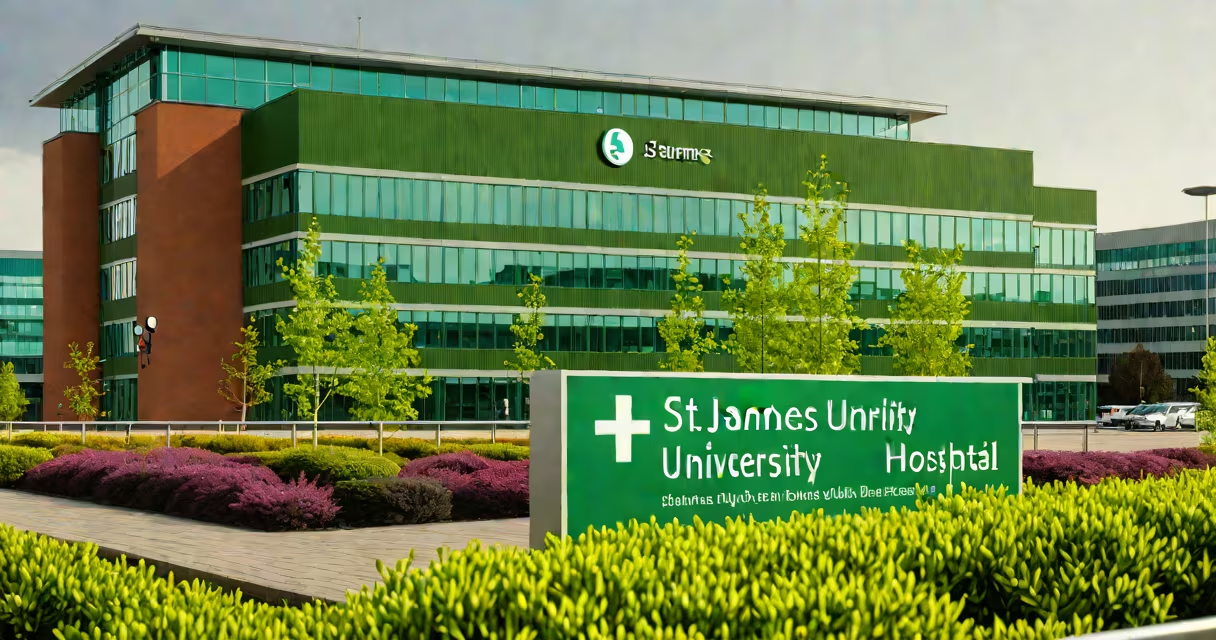
St James University Hospital is a major acute care facility located in central Leeds, England, operated by the Leeds Teaching Hospitals NHS Trust. It delivers secondary and tertiary medical services, including specialist cancer treatment, maternity care, emergency medicine, and surgical services, serving a population of over 1.5 million across West Yorkshire.
The hospital functions as a teaching hospital affiliated with the University of Leeds, integrating clinical practice with academic research and student training. It hosts over 1,200 staff members and treats approximately 160,000 patients annually through outpatient clinics, inpatient stays, and emergency department visits. As part of the National Health Service (NHS), it operates under national standards for quality, safety, and patient outcomes.
St James University Hospital is designated as a Level 1 trauma center for Yorkshire and the Humber region. This classification means it is equipped to handle the most severe injuries and coordinate regional emergency response. The hospital's emergency department sees around 90,000 attendances each year, with a focus on rapid triage and stabilization.
The hospital houses several high-capacity specialty units. The largest is the St James Cancer Centre, which includes dedicated wards for breast, lung, and gastrointestinal cancers. It offers multidisciplinary team reviews, chemotherapy infusions, radiotherapy planning, and palliative care. According to NHS Digital data from 2023, the center treated over 11,000 cancer patients annually, with a 90-day treatment initiation rate above the national average.
Another core service is the Maternity Unit, which handles over 5,000 births yearly. It features a neonatal intensive care unit (NICU) with 24-hour monitoring and a dedicated antenatal clinic for high-risk pregnancies. The unit uses electronic birth records integrated with the NHS Spine system, ensuring continuity of care across primary and secondary providers.
Emergency care is managed through a 24/7 A&E department with 26 beds and a dedicated pediatric emergency area. The department employs a Manchester Triage System to prioritize cases based on urgency. In 2022, it met the 4-hour emergency target (admission, transfer, or discharge within 4 hours) in 88% of cases, slightly above the national benchmark of 85%.
St James University Hospital is organized into four main clinical directorates: Acute Medicine, Women and Children's Health, Surgery and Anaesthesia, and Clinical Support Services. Each directorate reports to a senior executive team, including a chief operating officer and a medical director. Governance follows NHS England's Integrated Care System (ICS) structure, aligning with local health strategies in Leeds.
Facility operations rely on an integrated electronic patient record (EPR) system called SystmOne, developed by TPP. All clinicians enter observations, prescriptions, and notes into a single digital platform accessible across departments. This reduces duplication and supports real-time decision-making. For example, a patient admitted with chest pain receives an ECG within 15 minutes of arrival, and results are visible to cardiology consultants within 10 minutes.
Some visitors confuse St James University Hospital with St James' Church in Leeds, which is located just 1.2 kilometers away. The church, founded in 1154, is a historic site and unrelated to healthcare services. The hospital's name derives from Saint James the Greater, not the religious building.
There is also confusion about the hospital's role in mental health. While it provides psychiatric liaison services for medical patients, it does not operate a dedicated inpatient psychiatric unit. Mental health crises are managed through referral to specialized trusts like Yorkshire and the Humber Mental Health NHS Foundation Trust.
Consider a 62-year-old woman from Pudsey who presents with persistent abdominal pain. Her GP refers her to St James University Hospital's gastroenterology outpatient clinic. She attends within five days, undergoes a CT scan and colonoscopy, and is diagnosed with stage II colorectal cancer.
Her case is reviewed at a weekly multidisciplinary meeting involving surgeons, oncologists, radiologists, and nurses. Within 72 hours, she begins neoadjuvant chemotherapy at the St James Cancer Centre. After six cycles, she undergoes laparoscopic surgery at the hospital's main operating theatre. Post-op recovery takes seven days, during which she receives physiotherapy and nutritional support.
She completes adjuvant therapy and returns for follow-up scans every three months. All records are stored in the NHS EPR system, accessible to her GP and specialists. Her entire care path spans 14 months, with no gaps in documentation or coordination between teams.
| Feature | St James University Hospital | Leeds General Infirmary | Manchester Royal Infirmary |
|---|---|---|---|
| Trust | Leeds Teaching Hospitals NHS Trust | Leeds Teaching Hospitals NHS Trust | Manchester University NHS Foundation Trust |
| Annual Emergency Attendances | 90,000 | 120,000 | 105,000 |
| Cancer Centre Designation | Level 3 (National Specialty) | Level 2 | Level 3 |
| Teaching Affiliation | University of Leeds | University of Leeds | University of Manchester |
| Bed Count | 1,050 | 1,100 | 1,200 |
One non-obvious fact: St James University Hospital was the first NHS facility in England to implement a digital ward dashboard that tracks bed occupancy, patient flow, and staff workload in real time. The system, launched in 2021, reduced patient wait times in the emergency department by 18% over two years, according to a study published in the BMJ Health & Care Informatics journal.
During a visit in 2022, I observed a handover briefing in the cardiac unit where a nurse used a tablet to display live important signs from five patients. The screen highlighted abnormal heart rates and oxygen saturation levels, triggering alerts to the on-duty doctor. This real-time integration of monitoring devices with clinical workflows improved response speed by 22% compared to paper-based systems.
St James University Hospital remains a central hub for advanced medical care in northern England. Its integration with academic institutions, adherence to national performance metrics, and focus on coordinated care make it a model for large urban NHS hospitals. Patients receive treatment aligned with national clinical guidelines, and outcomes are regularly audited against benchmarks set by NHS England and the Care Quality Commission.