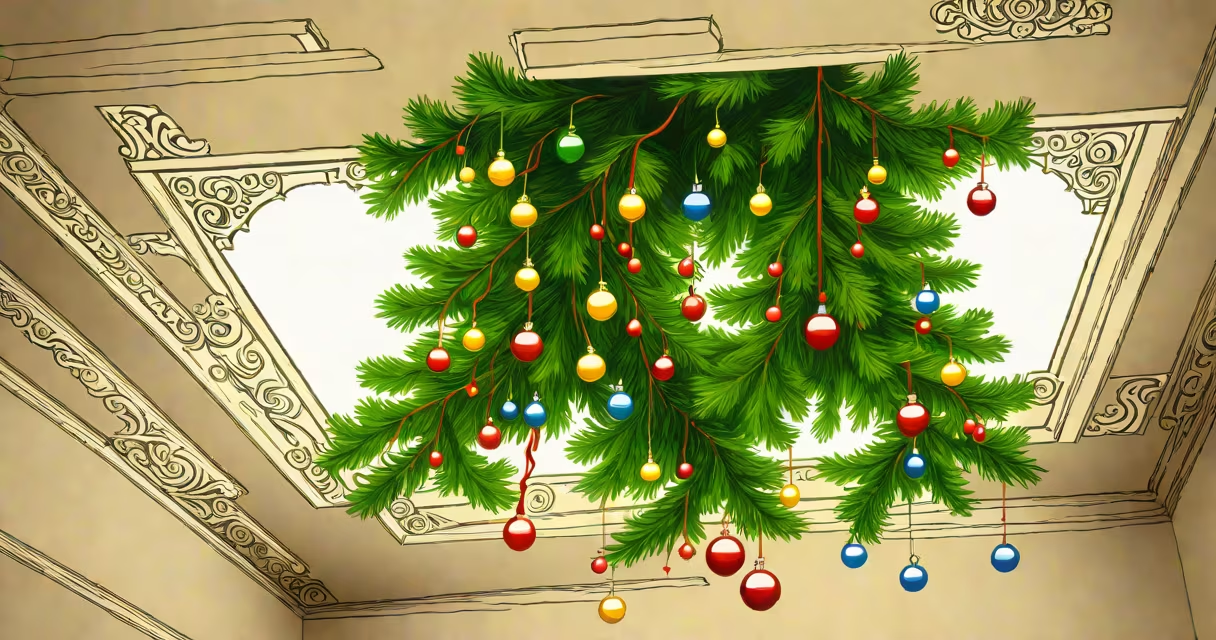
An upside down Christmas tree is a decorative display where the tree's trunk faces downward and the branches extend upward, typically mounted on a ceiling or suspended from above. It's used for visual impact during holidays, especially in themed events or creative home setups.
This setup isn't a traditional tree but a stylized ornament that mimics a tree's form. It's often made from artificial materials like wire, foam, or plastic, and decorated with lights, baubles, and tinsel. The design relies on structural support-usually a central rod or frame-to hold the shape while appearing to defy gravity.
Unlike live trees, which grow upward, the upside down version reverses orientation for aesthetic effect. It's not meant to be planted or used as a real tree. Its purpose is purely decorative, often seen in malls, event venues, or homes seeking a bold seasonal statement.
The upside down Christmas tree functions through a rigid internal frame. Most models use a metal or plastic central pole that extends from a base or ceiling mount. Branches are attached to this spine using clips or wires, forming a cone shape that tapers toward the top-the former tip of a traditional tree.
Materials vary by budget and use. Commercial versions often use flame-retardant plastic or foam for safety and durability. Home versions may use wire armatures covered in green felt or synthetic needles. Lights are usually LED strings wired into the branches, creating a glowing effect from below.
For example, a 6-foot upside down tree used in a shopping mall display weighs around 35 pounds and requires a reinforced ceiling bracket. The frame is assembled in sections, then lifted into place with a hoist. Power is supplied via a grounded outlet within 10 feet to meet electrical codes.
Three main types exist based on size and mounting method:
| Type | Size Range | Mounting Method | Typical Use |
|---|---|---|---|
| Miniature | 1-3 ft | Base stand | Tabletop displays, office desks |
| Mid-size | 4-6 ft | Ceiling hook or wall bracket | Living rooms, retail stores |
| Large-scale | 7-12 ft | Truss system or permanent mount | Malls, hotels, event stages |
These structures are common in commercial settings. For instance, the Mall of America uses large upside down trees in its atrium during December. The installations are designed to withstand foot traffic and high ceilings, with each unit requiring approval from a building safety inspector.
Home users often choose smaller versions. A 4-foot model with battery-powered lights costs $45-$75 and can be hung from a ceiling hook without drilling. These are popular for renters who want holiday flair without permanent changes.
People use upside down Christmas trees for novelty, visual drama, and to stand out from standard holiday decor. The reversed shape creates a sense of surprise, making it a conversation starter. It's especially effective in spaces with high ceilings, such as ballrooms or churches.
It's often mistaken for a live tree hung by its roots or a tree planted upside down. That's not possible-real trees die when inverted. The upside down tree is entirely artificial and structurally supported. Another confusion arises with "Christmas tree" lighting patterns, where lights are placed on the ground in a tree shape. That's a different concept called a "ground tree" or "light sculpture."
A non-obvious fact: many upside down trees are designed with the base wider than the top, unlike real trees. This gives stability and prevents tipping. Real trees taper from base to tip, but the upside down version reverses that logic for balance.
One frequent error is underestimating weight distribution. A 6-foot tree with heavy ornaments can strain a ceiling hook rated for only 20 pounds. Always check the manufacturer's load limit and use a stud finder to locate ceiling joists.
Another mistake is placing the tree too close to heat sources. Overheated lights can melt plastic components. The National Fire Protection Association (NFPA) reports that 15% of holiday-related fires stem from improper light placement. Keep the tree at least 3 feet from radiators or vents.
I once installed a 5-foot upside down tree in a community center. The original hook failed after two hours due to poor anchoring. After switching to a toggle bolt in a ceiling joist, it held securely for the entire season. This taught me that even small details matter in structural safety.
When choosing a design, avoid models with exposed wiring or flammable materials. Look for labels indicating compliance with UL 588 standards for holiday decorations. These ensure the product meets U.S. safety requirements.
An upside down Christmas tree is not a substitute for tradition-it's a creative expression. It works best when used intentionally, safely, and with attention to detail. Whether in a home or public space, it turns a familiar image into something unexpected.