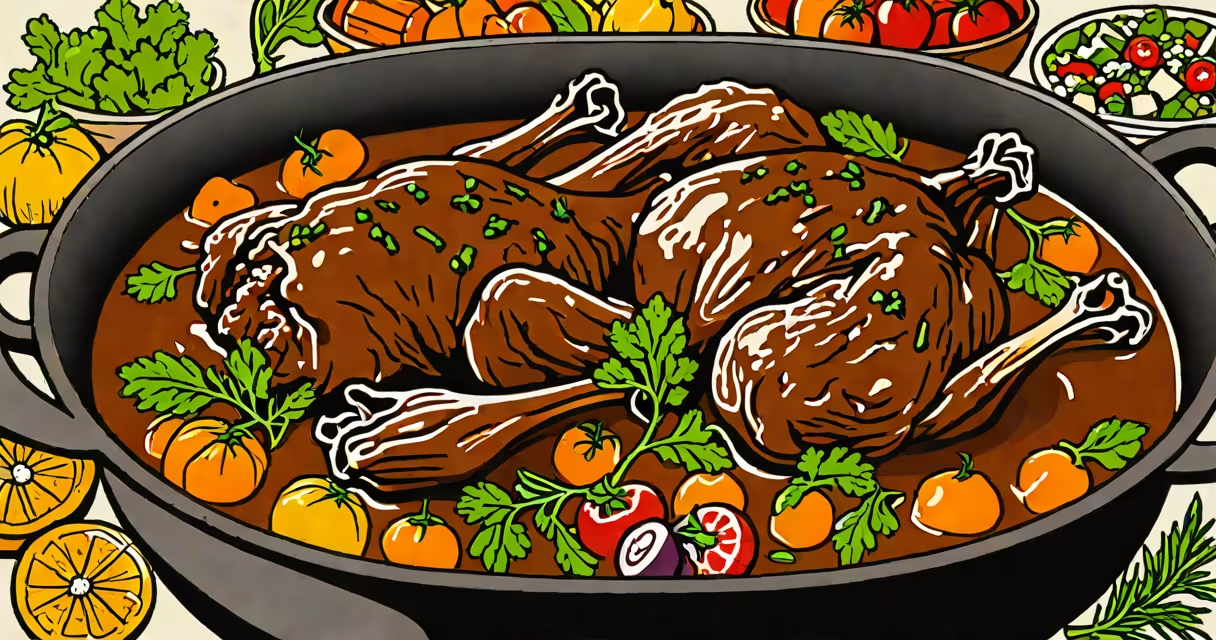
A lamb shank recipe uses slow braising to change tough leg meat into fall-apart tender, deeply flavored meat. It's cooked low and slow in liquid-typically broth, wine, or water-until connective tissue breaks down completely.
Lamb shanks come from the lower leg of the animal. They're dense, bone-in cuts with significant collagen. When cooked at temperatures below boiling for 2-3 hours, that collagen converts into gelatin, giving the meat a silky texture and the sauce a thick, mouth-coating consistency. This process is essential-rushing it results in dry, chewy meat.
The standard method involves searing the shank first to develop flavor, then simmering it in a covered pot. Common additions include onions, carrots, garlic, herbs like rosemary and thyme, and liquids such as red wine or beef broth. A well-made lamb shank recipe yields a dish that's both hearty and elegant, suitable for weeknight dinners or special occasions.
Low-temperature, long-duration cooking is the core principle. Heat applied slowly allows moisture to penetrate the meat while breaking down tough fibers. The internal temperature of the meat should reach 160°F (71°C) to ensure tenderness, though most recipes aim for 180-200°F (82-93°C) during the final hour to fully melt collagen.
Sealing the shank in a hot pan before braising creates a Maillard reaction-a chemical browning that generates complex flavors. Skipping this step reduces depth. The fat cap on the shank renders slowly, enriching the sauce. The bone acts as a heat conductor, helping distribute warmth evenly through the meat.
After cooking, rest the shank for 15 minutes before serving. This allows juices to redistribute. Removing the bone makes serving easier and improves texture. The resulting sauce is reduced to concentrate flavor-often thickened slightly with a roux or by prolonged simmering.
Every successful lamb shank recipe includes five elements: the cut, a searing step, a base liquid, aromatics, and herbs. The cut must be bone-in with visible marbling. Boneless versions exist but lack richness and structure.
| Component | Typical Amount | Why It Matters |
|---|---|---|
| Lamb shank (bone-in) | 1-1.5 lbs (450-680g) per shank | Provides collagen and structural integrity |
| Red wine or broth | 1.5-2 cups (350-475ml) | Contributes acidity and depth; wine adds complexity |
| Onion, carrot, celery | 1 large each, chopped | Form mirepoix; base for flavor and color |
| Garlic | 3-4 cloves, crushed | Enhances savoriness; balances sweetness |
| Herbs (rosemary, thyme) | 2 sprigs each, or 1 tsp dried | Provide aromatic notes; complement lamb's gaminess |
Regional variations exist. French versions often use red wine and thyme. Moroccan recipes incorporate cumin, cinnamon, and apricots. Italian versions may include tomatoes and olives. The choice of liquid changes the outcome: wine adds acidity and tannins; broth offers umami; water produces a lighter sauce.
One non-obvious fact: the liquid level should only cover half the shank. Submerging it entirely leads to steaming, not braising. Braising relies on steam and liquid contact at the surface-not full immersion. This maintains texture and prevents mushiness.
Overcooking is rare, but undercooking is common. Meat that hasn't reached 180°F (82°C) remains firm and fibrous. Use a meat thermometer. If none is available, test with a fork-if it slides in easily and pulls out with little resistance, the shank is done.
Skipping the sear is the most frequent error. Without browning, the dish lacks depth. Even if you skip oil, the natural fats render and brown. Searing also seals in juices-though this myth is debated, the flavor impact is undeniable.
Another mistake: using too much liquid. Excess liquid dilutes flavor and takes longer to reduce. A good rule: liquid should come halfway up the shank. After 2 hours, check the level. If it's gone down too far, add a splash of broth or water.
Ingredients:
Steps:
This recipe serves 4. Total time: 3.5 hours. The result is a rich, deeply savory dish with a glossy sauce and meat so tender it falls apart with a fork.
I prepared this version last winter. The kitchen filled with the scent of rosemary and wine. After 2.5 hours, the meat pulled off the bone with a gentle tug. The sauce reduced to a velvety glaze. It was richer than any restaurant version I'd had.
People mistake lamb shank for lamb stew or osso buco. While all involve slow cooking, they differ in cut and technique. Lamb shank uses a single bone-in piece. Osso buco uses veal shanks and is typically pan-seared and braised in white wine and broth, with gremolata added at the end.
Lamb shank is also sometimes confused with slow-roasted lamb shoulder. Shoulder is larger, less structured, and cooks faster. It doesn't have the same marrow-rich center or bone-in presentation. Shanks are ideal for individual servings; shoulders suit family meals.
Another confusion: cooking lamb shank in a pressure cooker. While possible, it skips the development of flavor through deglazing and reduction. Pressure cooking forces moisture retention but sacrifices depth. For authentic results, traditional braising wins.
According to the USDA, lamb shanks require a minimum internal temperature of 145°F (63°C) for safety, but for tenderness, 180°F (82°C) is recommended. The National Center for Home Food Preservation confirms that slow cooking at 250-325°F (121-163°C) ensures safe breakdown of connective tissue.