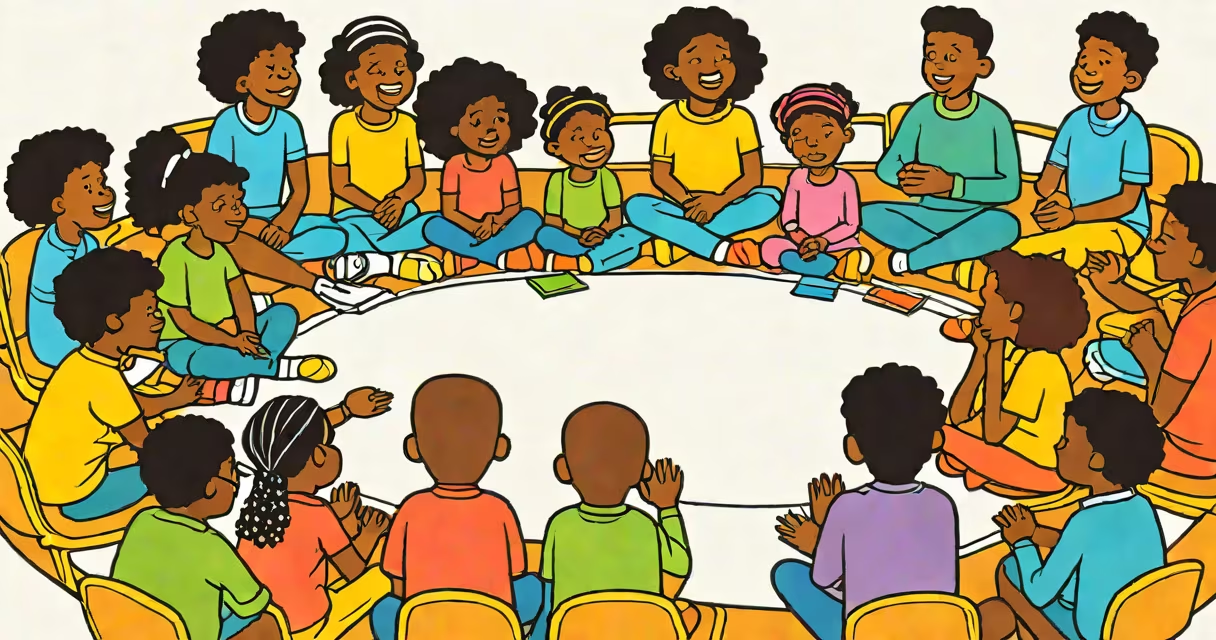
Social emotional learning meaning refers to the process through which individuals-especially students-develop self-awareness, regulate emotions, build healthy relationships, and make responsible decisions. It is not a standalone subject but a structure embedded in daily interactions and curriculum design. Research from CASEL shows SEL programs improve academic performance by an average of 11 percentile points.
SEL operates through five core competencies: self-awareness, self-management, social awareness, relationship skills, and responsible decision-making. These are not abstract ideals-they are observable behaviors taught through structured activities. For example, a middle school class might begin each day with a 5-minute check-in using emotion cards to identify mood states. This routine builds self-awareness and creates space for emotional regulation before instruction begins.
Classrooms implementing SEL report fewer disciplinary incidents. A 2021 study by the American Psychological Association found that schools with consistent SEL programming saw a 30% reduction in suspensions over three years. These outcomes stem not from punitive measures but from teaching students how to recognize stress signals, pause before reacting, and choose constructive responses.
SEL functions through deliberate integration into school culture, not isolated lessons. Teachers model respectful communication during morning meetings, use role-play scenarios to practice conflict resolution, and embed reflection prompts in assignments. A high school biology teacher might ask students to write a brief journal entry after a lab: "What did you learn about teamwork when your group disagreed on the hypothesis?" This reinforces relationship skills and responsible decision-making.
Effective SEL requires consistency across grade levels. In a K-5 district in Oregon, teachers use the same set of emotion vocabulary-calm, frustrated, proud, curious-across classrooms. By third grade, students can identify their own emotional states and request a quiet space when overwhelmed. This continuity prevents confusion and strengthens skill retention.
One district reported that after two years of SEL implementation, 78% of teachers observed improved peer collaboration during group work. Students began using phrases like "I feel heard when you listen" and "Can we try this another way?" These are not spontaneous; they result from repeated modeling and reinforcement.
The five components of social emotional learning are not ranked by importance but interlock. Self-awareness enables self-management. Without recognizing frustration, a student cannot apply coping strategies. Social awareness allows students to interpret others' perspectives, which supports relationship-building. Responsible decision-making ties all elements together-choosing actions aligned with values and long-term goals.
A common misunderstanding is equating SEL with "feelings time" or "circle time." While reflective practices are part of SEL, they serve a purpose: to build cognitive and emotional tools. A 2020 meta-analysis published in Child Development found that SEL interventions focused solely on emotional expression showed minimal academic gains. Success came when activities included goal-setting, problem-solving, and accountability structures.
Another misconception is that SEL is only for younger children. High school students benefit. A 2022 study in urban public schools found that seniors who participated in SEL modules had higher college enrollment rates than peers in control groups. They reported better time management, reduced test anxiety, and greater confidence in seeking help.
| Component | What It Looks Like in Class | Measurable Outcome |
|---|---|---|
| Self-awareness | Students label emotions using a mood chart during transitions. | 40% drop in outbursts during unstructured time. |
| Self-management | Use of breathing techniques before tests or presentations. | 25% improvement in focus during assessments. |
| Social awareness | Role-playing scenarios involving bias or cultural differences. | Increased willingness to speak up against exclusion. |
| Relationship skills | Peer feedback protocols during group projects. | Higher quality collaborative work products. |
| Responsible decision-making | Debates on ethical dilemmas using evidence-based reasoning. | Improved critical thinking scores on standardized tests. |
In a suburban middle school in Washington State, teachers implemented a weekly "reflection corner" where students wrote one sentence about a challenge they faced and one strategy they used. After six months, counselors noted a 50% increase in students voluntarily accessing mental health resources. The act of naming challenges and solutions built internal locus of control-a predictor of resilience.
I observed this system firsthand during a visit to a school serving low-income families. A sixth grader shared, "I was mad at my friend because he took my pencil, but I remembered our class rule: 'Pause, breathe, talk.' So I waited and asked him to return it." This moment wasn't dramatic-it was quiet, routine. But it reflected the cumulative effect of daily SEL practice.
Research confirms lasting benefits. A longitudinal study by the University of Illinois tracked 1,000 students from kindergarten through high school. Those exposed to consistent SEL instruction were 20% less likely to drop out and twice as likely to pursue post-secondary education. The effects persisted even after controlling for socioeconomic status.
Social emotional learning meaning differs from emotional IQ, though both involve emotional awareness. Emotional IQ-also called emotional intelligence-focuses on individual ability to perceive, use, understand, and manage emotions. SEL is broader: it includes interpersonal skills and community norms. A student may have high emotional IQ but struggle with group dynamics if not taught relationship skills.
For example, a student who recognizes their anger but lacks tools to express it respectfully may escalate conflict. SEL teaches both recognition and response. According to the Center for Academic and Social-Emotional Learning (CASEL), effective SEL programs include explicit instruction in communication styles, active listening, and de-escalation techniques.
SEL is also distinct from social security. While both contain the word "social," their domains differ entirely. Social security refers to government benefits for retirees, disabled workers, and dependents. It is a financial safety net. SEL is a developmental structure for personal and interpersonal growth. Confusing the two leads to policy misalignment-funding SEL initiatives under social security budgets would undermine their educational purpose.
Social emotional learning meaning centers on cultivating capable, thoughtful individuals. It is not about eliminating conflict or enforcing compliance. It is about giving students the tools to go through complexity, support peers, and grow into resilient adults. The evidence shows it works-not as a supplement, but as a foundation for meaningful education.