Prohibition lasted 13 years, from January 16, 1920, when the 18th Amendment took effect, to December 5, 1933, when the 21st Amendment repealed it. This period banned the manufacture, sale, and transportation of alcoholic beverages in the United States.
The 18th Amendment, ratified in 1919, made it illegal to produce or sell alcohol nationwide. Enforcement began on January 16, 1920, under the Volstead Act, which defined prohibited substances and established penalties. The ban ended on December 5, 1933, after Nebraska became the 36th state to ratify the 21st Amendment, officially repealing Prohibition.
Prohibition was not a single policy but a national experiment in moral legislation backed by temperance movements, religious groups, and progressive reformers. It reflected widespread concern over alcohol-related crime, poverty, and family breakdown. The law's failure to reduce consumption and its unintended consequences reshaped American politics and legal culture.
The federal government relied on the Bureau of Prohibition, created in 1927, to enforce the ban. Agents conducted raids, seized stills, and prosecuted bootleggers. Local police and courts handled most cases, but corruption was rampant. By 1925, over 500 federal agents were assigned to enforcement, yet they could not stop the flow of alcohol.
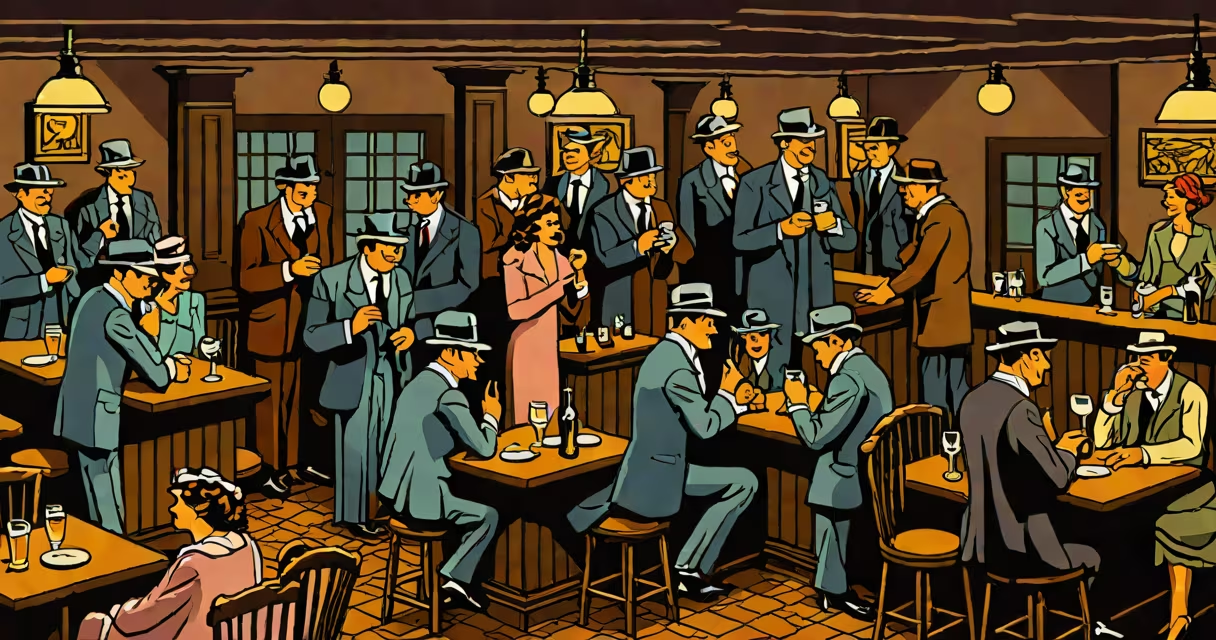
Alcohol production shifted underground. Speakeasies-illegal bars-flourished in cities like Chicago, New York, and San Francisco. Bootleggers imported liquor from Canada and the Caribbean, often using speedboats and hidden tunnels. Organized crime syndicates, including Al Capone's network in Chicago, profited from smuggling and distribution. In 1929, Capone's gang controlled much of the city's illicit alcohol trade.
Despite enforcement efforts, alcohol consumption remained high. A 1926 study by the National Commission on Law Observance and Enforcement found that 70% of Americans continued to drink during Prohibition. The ban failed to eliminate demand, and its enforcement cost over $300 million annually-equivalent to nearly $5 billion today.
Prohibition rested on three pillars: constitutional law, federal enforcement, and public support. The 18th Amendment was the legal foundation. The Volstead Act defined "intoxicating liquors" as those with more than 0.5% alcohol by volume. Exceptions included sacramental wine, medicinal alcohol, and beer with less than 3.2% alcohol-later expanded to 4% in 1933.
Enforcement tools included warrants, seizures, and prosecutions. Federal agents used wiretaps, informants, and undercover operations. State and local governments had limited authority, leading to patchwork enforcement. Some states banned alcohol entirely; others allowed limited sales. By 1923, 11 states had fully repealed their dry laws.
Public opinion shifted as Prohibition's flaws became clear. Crime rates rose, especially in urban centers. The 1929 St. Valentine's Day Massacre in Chicago, where seven mobsters were killed, highlighted the violence linked to bootlegging. The Great Depression intensified criticism-the government lost billions in tax revenue from alcohol sales.
Prohibition was enacted in response to decades of reformist pressure. The Women's Christian Temperance Union (WCTU) and the Anti-Saloon League pushed for national bans. They argued alcohol caused domestic abuse, unemployment, and poor health. A 1914 survey by the American Medical Association found that 78% of physicians believed alcohol contributed to social problems.
Support came from rural areas, religious communities, and progressive reformers. Urban working-class neighborhoods opposed it, fearing loss of income and personal freedom. The law disproportionately affected low-income families who could not afford legal alternatives. Immigrant communities, particularly German and Irish Americans, resisted the ban as culturally intrusive.
Prohibition was not unique to the U.S. Canada, Sweden, and parts of Eastern Europe implemented similar bans. But the U.S. version was the longest and most strictly enforced. In Sweden, a 1914 alcohol ban lasted only until 1922. In Canada, provinces set their own rules-Ontario banned alcohol in 1916, but repealed it in 1927.
Prohibition did not end because of a sudden public shift. It ended due to economic crisis and political pressure. The 1932 Democratic platform promised repeal. Franklin D. Roosevelt campaigned on ending Prohibition, arguing it harmed the economy and undermined the rule of law.
Many assume Prohibition reduced alcohol use. Data from the U.S. Treasury Department shows that per capita consumption dropped by 30% between 1919 and 1925-but rebounded sharply after 1927. By 1930, consumption reached pre-Prohibition levels. A 1933 report by the Bureau of Internal Revenue confirmed that illegal alcohol production exceeded legal output.
Another myth is that Prohibition stopped all drinking. In reality, people adapted. Home brewing of beer and wine increased. In 1924, the FBI reported 10,000 illegal stills operating in the U.S. The rise of bathtub gin-low-quality alcohol distilled in kitchen pots-showed how deeply entrenched the black market became.
| Year | Event | Impact |
|---|---|---|
| 1919 | 18th Amendment ratified | Banned alcohol nationwide effective January 1920 |
| 1920 | Volstead Act passed | Defined illegal alcohol and set enforcement rules |
| 1925 | Prohibition enforcement peak | Over 500 federal agents deployed; 10,000 stills seized |
| 1929 | St. Valentine's Day Massacre | Exposed organized crime's role in bootlegging |
| 1932 | Roosevelt campaign promises repeal | Democratic platform calls for ending Prohibition |
| 1933 | 21st Amendment ratified | Repealed 18th Amendment; alcohol legal again |
A fully worked example: In 1923, a raid in Detroit seized 12,000 gallons of moonshine. The operation involved 40 agents and 12 vehicles. The alcohol was traced to a distillery in Michigan's Upper Peninsula. Despite the seizure, the network continued operating through multiple routes into Chicago and Cleveland. This illustrates how enforcement could not match the scale of illegal production.
Prohibition is sometimes mistaken for a temporary wartime measure. It was not related to World War I. The war ended in 1918, but Prohibition began in 1920. The timing reflects the influence of pre-war reform movements, not military necessity.
Some confuse it with modern drug laws. While both involve banning substances deemed harmful, Prohibition targeted alcohol-a legal product before 1920. Drug laws like the Controlled Substances Act of 1970 apply to substances not previously legal. The cultural and economic context differs.
Another error is assuming Prohibition succeeded in reducing crime. Federal records show violent crime rates rose 20% between 1920 and 1925. Arrests for alcohol-related offenses peaked in 1929, with over 100,000 federal charges filed. The rise in organized crime activity contradicts the idea that Prohibition reduced societal harm.
I once visited the National Museum of American History in Washington, D.C., and saw a preserved bathtub gin bottle from 1924. The label read "Pure, Safe, and Delicious." It was a mock-up used in propaganda, but the design mirrored real products sold in back-alley shops. That artifact captured how deeply Prohibition distorted everyday life.
Understanding how long did prohibition last requires seeing it not as a brief experiment but as a key moment in American governance. Its 13-year span revealed the limits of moral legislation and the power of economic incentives. The repeal in 1933 restored federal control over alcohol taxation and regulation-now managed by the Alcohol and Tobacco Tax and Trade Bureau.