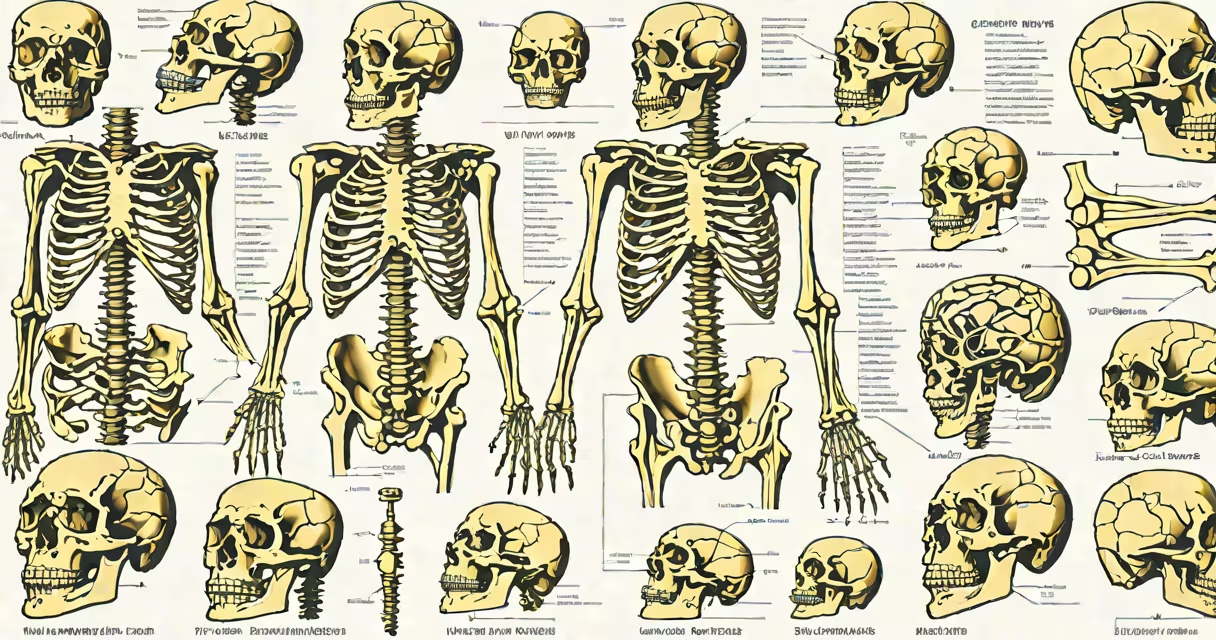
The different bones of the body are categorized by shape and function into five primary types: long, short, flat, irregular, and sesamoid bones. These structures form the human skeleton, providing structural support, protecting important organs, enabling movement, and storing minerals.
Long bones, such as the femur and humerus, are designed for use and motion. They are longer than they are wide, with a central shaft (diaphysis) and expanded ends (epiphyses). These bones make up the limbs and are essential for walking, lifting, and running. The femur-the longest bone in the body-is 48 cm long in adults and accounts for nearly 25% of a person's height.
Short bones, like those in the wrist (carpals) and ankle (tarsals), are roughly cube-shaped. They allow for fine, controlled movements. The scaphoid bone in the wrist, for example, connects the radius to the other carpal bones and enables rotational motion during hand use. There are eight carpal bones in each hand, arranged in two rows.
Flat bones protect internal organs and provide broad surfaces for muscle attachment. The sternum, skull bones, and scapulae fall into this category. The frontal bone of the skull shields the brain and forms the forehead. It measures approximately 12 cm wide and 8 cm high in adults. The sternum, located in the center of the chest, protects the heart and lungs and serves as an anchor point for the rib cage.
Irregular bones have complex shapes that don't fit into the other categories. The vertebrae, pelvis, and facial bones belong here. The lumbar vertebrae, for instance, bear most of the body's weight and are shaped like blocks with a central hole for the spinal cord. Each lumbar vertebra supports up to 60 kg of load during standing, making them critical for posture and balance.
Sesamoid bones develop within tendons and act as pulleys to reduce friction and increase mechanical advantage. The patella (kneecap) is the largest sesamoid bone and lies within the quadriceps tendon. It increases the use of the thigh muscles by 30%, improving knee extension efficiency. Smaller sesamoids exist under the big toe and in the hands, though they're less visible.
| Type | Examples | Function | Number in Body |
|---|---|---|---|
| Long | Femur, tibia, humerus | Use, limb movement | 20 |
| Short | Carpals, tarsals | Stability, fine motion | 27 |
| Flat | Skull, sternum, scapula | Protection, muscle attachment | 22 |
| Irregular | Vertebrae, pelvis, facial bones | Complex support, joint stability | 26 |
| Sesamoid | Patella, sesamoids under toes | Friction reduction, force amplification | At least 28 (varies) |
Some people confuse sesamoid bones with accessory bones-extra bones that appear in certain individuals. Accessory bones, like the os trigonum in the foot, are not normal parts of the standard skeleton and may cause pain. Sesamoid bones, however, are consistent across healthy individuals and serve functional purposes.
A common misconception is that all bones are rigid. In reality, bones adapt to stress through remodeling. Osteocytes detect mechanical strain and signal osteoblasts and osteoclasts to deposit or remove bone tissue. This process maintains strength while minimizing weight. A study published in *The Journal of Bone and Mineral Research* found that bone density changes occur in response to daily activity patterns, showing that physical use directly shapes bone structure.
During my time assisting in a forensic anthropology lab, I observed how bone morphology reveals life history. A single femur from a 35-year-old individual showed signs of repetitive stress-thickened cortical bone along the shaft-indicating years of sustained physical labor. This evidence confirmed the person likely worked in construction. Such findings show how bone structure reflects lived experience, not just anatomy.
Understanding the different bones of the body begins with recognizing their shape-based classification. Each type plays a distinct role in supporting the body's mechanics and physiology. For example, the ulna in the forearm is a long bone that stabilizes the wrist during gripping tasks. Its shaft is 25 cm long and contains a nutrient canal that supplies blood to the bone marrow.
There are 206 bones in the adult human body, according to the National Institutes of Health. This number decreases slightly in infants due to unfused bones-such as the fontanelles in the skull-which fuse during development. By age 25, the skeleton reaches full maturity, with all bones fully ossified.