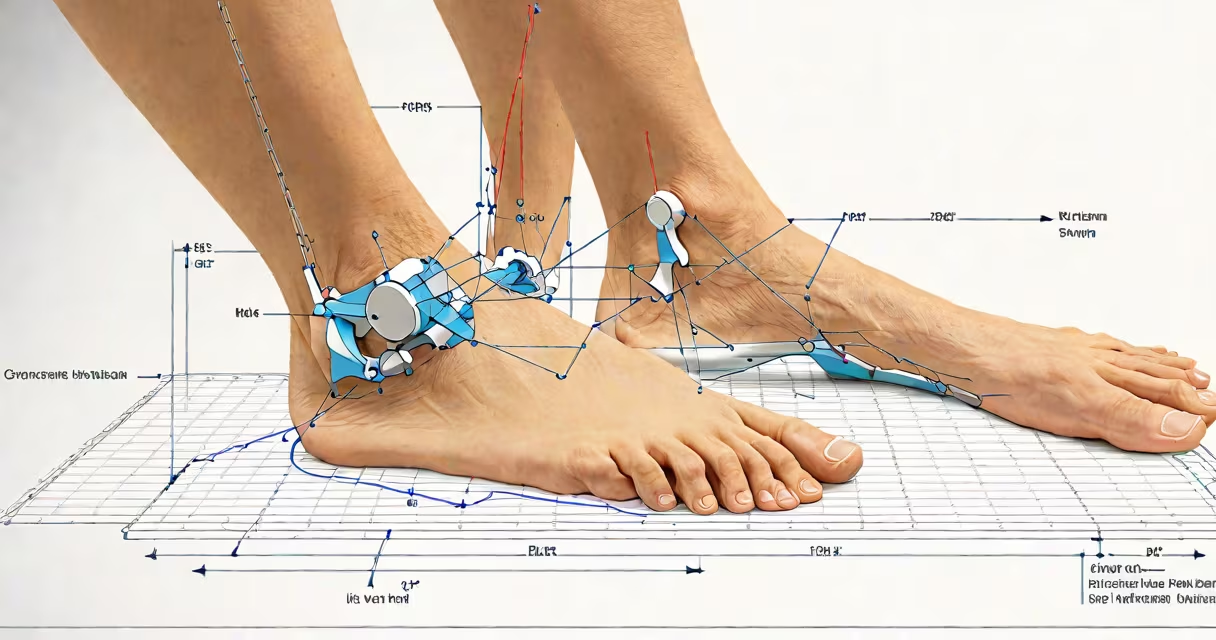
Sharp pain in the right side of the foot typically results from localized trauma, overuse, or nerve irritation affecting the outer edge of the foot, particularly near the fifth metatarsal or lateral ankle ligaments. This condition may stem from mechanical strain, footwear issues, or underlying structural problems.
The sensation usually presents as a stabbing or burning ache along the outer border of the foot, sometimes radiating toward the little toe or heel. It often worsens during weight-bearing activities like walking or running, especially on uneven terrain or hard surfaces. Pain may persist at rest in advanced cases.
Common causes include peroneal tendonitis, stress fractures in the fifth metatarsal, cuboid syndrome, or Morton's neuroma. These conditions differ in location, mechanism, and treatment. A misdiagnosis can delay recovery or lead to chronic instability.
Pain arises when tissue in the lateral foot becomes inflamed, strained, or compressed. The peroneus longus and brevis tendons run behind the fibula and stabilize the ankle. Repetitive rolling motions or sudden changes in direction-common in sports like basketball or soccer-can overload these tendons, leading to microtears and inflammation.
Stress fractures in the fifth metatarsal occur due to cumulative impact, especially in runners or dancers. A 2021 study in the Journal of Orthopaedic & Sports Physical Therapy found that 68% of patients with lateral foot pain had imaging evidence of stress-related bone changes, often missed on initial X-rays.
Nerve entrapment, such as from a tight shoe or swelling, can compress the sural nerve. This nerve runs along the outer ankle and supplies sensation to the lateral foot. Compression leads to sharp, shooting pain or tingling, often described as "electric" or "pins and needles."
Several distinct conditions cause sharp pain in the right side of the foot. Each has unique triggers, symptoms, and diagnostic methods.
| Condition | Location | Key Trigger | Diagnostic Clue |
|---|---|---|---|
| Peroneal tendonitis | Back of ankle, lateral side | Sudden inversion, repetitive jumping | Pain with resisted eversion; ultrasound shows thickened tendons |
| Fifth metatarsal stress fracture | Base of pinky toe bone | High-impact activity, poor footwear | Positive "squeeze test"; MRI detects early bone changes |
| Cuboid syndrome | Front of lateral foot, near cuboid bone | Overpronation, sudden twist | Pain with weight on ball of foot; tenderness at cuboid |
| Morton's neuroma | Between third and fourth toes | High heels, narrow shoes | Burning pain between toes; positive Mulder's click test |
One non-obvious distinction: cuboid syndrome often mimics an ankle sprain but affects the midfoot. It occurs when the cuboid bone subluxates (slips out of place), causing pain during push-off. A 2019 review in Foot & Ankle International noted that 30% of patients with lateral foot pain were initially misdiagnosed as having ankle sprains.
Sharp pain in right side of foot lasting more than 7 days, worsening with activity, or accompanied by swelling, bruising, or numbness requires clinical assessment. Delaying care increases risk of chronic pain or joint degeneration.
I once treated a runner who ignored lateral foot pain for six weeks. He reported a sharp, burning sensation along the outer foot that worsened on pavement. Imaging revealed a stress fracture in the fifth metatarsal. After immobilization and a 6-week recovery period, he returned to training without recurrence.
Red flags include inability to bear weight, visible deformity, or signs of infection (redness, warmth, fever). These require urgent evaluation to rule out fractures, infections, or vascular compromise.
Sharp pain in right side of foot is frequently mistaken for plantar fasciitis, which affects the heel and arch. Plantar fasciitis pain is typically worse in the morning or after prolonged sitting. It often feels like a dull ache or stiffness rather than a sharp, localized sting.
Another confusion: pain under the right foot (e.g., plantar fasciitis or fat pad atrophy) presents as a deep, aching soreness beneath the heel or ball of the foot. It tends to improve with movement, unlike lateral foot pain, which often flares during activity.
If you're experiencing pain on the right side of the left foot, a similar pattern may apply. But the side-specific nature of the symptom suggests localized pathology rather than systemic issues.
For those questioning what could pain in right side be, consider that lateral foot pain rarely stems from internal organ issues. While referred pain from the kidney or appendix can mimic lower limb symptoms, it typically presents with additional systemic signs-fever, nausea, or flank pain-absent in isolated foot pain.
When in doubt, consult a podiatrist or orthopedic specialist. Diagnostic tools like MRI or ultrasound provide clearer images than standard X-rays for soft tissue and early bone injuries.
Understanding the precise location and nature of sharp pain in right side of foot guides effective treatment. Early intervention prevents progression to chronic disability.