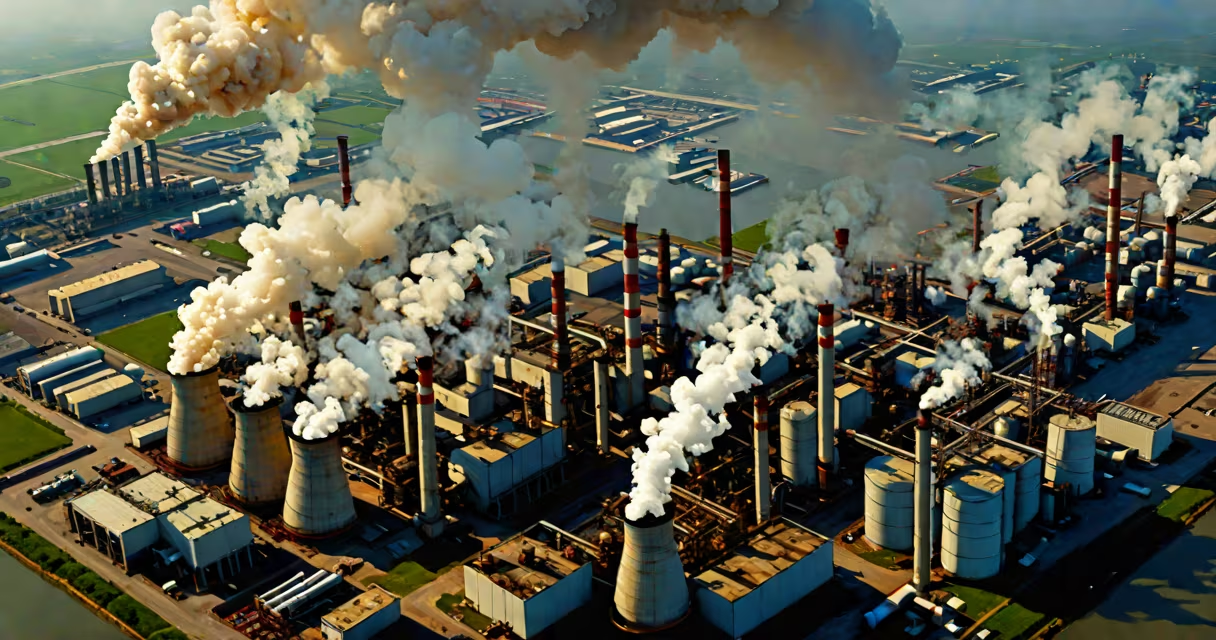
Pollution caused by factories arises from the release of hazardous chemicals, particulates, and untreated waste into the environment during manufacturing processes. These discharges degrade air quality, contaminate waterways, and damage ecosystems. Factories contribute to global environmental degradation through continuous emissions and improper disposal practices.
Factories generate pollution primarily through combustion of fossil fuels, chemical reactions in production lines, and disposal of byproducts. Emissions include sulfur dioxide (SO₂), nitrogen oxides (NOₓ), volatile organic compounds (VOCs), and fine particulate matter (PM2.5). These pollutants enter the atmosphere directly from smokestacks or indirectly via leaks and spills. Water pollution occurs when untreated effluents containing heavy metals, solvents, and toxic sludge are discharged into rivers or oceans. Soil contamination happens when solid waste is dumped on land or leached from storage pits.
The U.S. Environmental Protection Agency (EPA) identifies industrial facilities as major sources of air toxics. A 2021 EPA report found that 62% of monitored toxic air releases came from manufacturing plants. Similarly, the World Health Organization (WHO) states that outdoor air pollution-largely driven by industrial activity-causes 7 million premature deaths annually worldwide. These figures show the scale of harm linked to unchecked industrial output.
Industrial processes often rely on high-temperature operations such as smelting, refining, and chemical synthesis. These steps inherently produce gaseous emissions. For example, steel mills burn coal to reach temperatures above 1,500°C, releasing SO₂ and PM2.5. Textile dyeing facilities discharge wastewater laden with azo dyes and formaldehyde, which persist in aquatic environments and bioaccumulate in fish.
Waste management failures amplify pollution. In 2019, a chemical plant in India leaked 20,000 liters of cyanide-laced wastewater into a nearby river, killing over 1,000 fish and poisoning local drinking water supplies. This incident highlights how poor containment systems turn routine operations into environmental disasters.
Even regulated facilities exceed emission limits due to equipment wear or operational shortcuts. A 2020 study published in *Environmental Science & Technology* analyzed 120 U.S. factories under Clean Air Act standards. It found that 38% exceeded daily NOₓ thresholds during peak production months, despite compliance certifications.
Factory pollution falls into four main categories based on medium of release:
| Type | Primary Pollutants | Common Sources | Environmental Impact |
|---|---|---|---|
| Air | SO₂, NOₓ, PM2.5, VOCs | Smelters, refineries, power plants | Acid rain, respiratory illness, climate change |
| Water | Heavy metals, oils, solvents | Dye houses, metal plating, petrochemical plants | Dead zones, bioaccumulation, loss of biodiversity |
| Soil | Hydrocarbons, PCBs, pesticides | Chemical storage sites, landfill leachate | Contaminated food crops, groundwater infiltration |
| Thermal | Heated effluent, cooling water | Power plants, paper mills | Altered aquatic ecosystems, reduced oxygen levels |
Each type requires distinct monitoring and mitigation strategies. For instance, thermal pollution affects aquatic life by reducing dissolved oxygen, while soil contamination may remain undetected for years due to slow leaching rates.
Many assume that modern factories are inherently clean due to regulations. This is false. While laws exist, enforcement varies widely. In low-income nations, weak regulatory oversight allows unlicensed factories to operate openly. In 2022, the Global Alliance for Incineration Alternatives documented 340 informal e-waste recycling sites in Southeast Asia, many located near residential areas, releasing lead and dioxins into the air.
Another misconception is that pollution only comes from large-scale operations. Small workshops and family-run units often lack pollution controls. A 2021 investigation by *The Guardian* revealed that 42% of textile dyeing units in Bangladesh operated without wastewater treatment, discharging raw effluent into the Buriganga River.
Also, pollution is not always visible. Invisible gases like carbon monoxide (CO) and benzene pose serious health risks. Benzene exposure has been linked to leukemia in long-term occupational studies. The International Agency for Research on Cancer (IARC) classifies benzene as a Group 1 carcinogen-definitively cancer-causing in humans.
In 1984, a Union Carbide pesticide plant in Bhopal, India, released 40 tons of methyl isocyanate (MIC) gas due to a failure in safety protocols. The leak killed at least 3,800 people within days and injured over 500,000. Long-term effects included chronic lung disease, birth defects, and elevated cancer rates among survivors.
This event remains one of the worst industrial accidents in history. It exposed systemic flaws: inadequate emergency planning, lack of worker training, and insufficient government oversight. Even decades later, soil samples from the site still show high levels of mercury and cadmium, indicating persistent contamination.
Post-disaster reforms led to stricter international standards for hazardous chemical handling. The United Nations' Basel Convention now regulates transboundary movement of toxic waste, including industrial byproducts. However, enforcement gaps remain, especially in developing economies.
Consumers influence factory pollution through purchasing choices. Brands that disclose supply chain emissions and use certified recycling programs reduce demand for polluting production. For example, Patagonia publishes annual reports detailing factory emissions and waste reduction efforts across its global network.
Regulatory bodies also play a role. The European Union's REACH regulation mandates companies to identify and manage risks posed by chemicals used in manufacturing. Since its implementation in 2007, over 20,000 substances have been evaluated, leading to bans or restrictions on 1,200 high-risk chemicals.