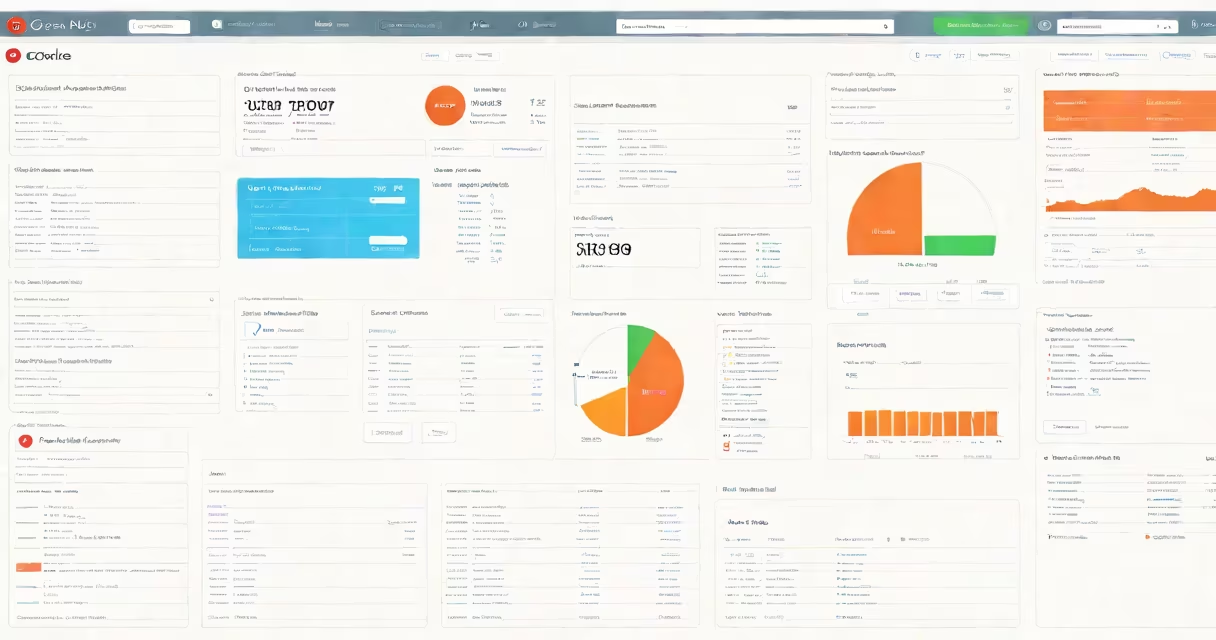
Oracle Accounts Payable is a module within Oracle Financials Cloud that automates the end-to-end process of managing vendor invoices, approvals, payments, and reporting. It replaces manual workflows with centralized controls, audit trails, and integration with procurement and general ledger systems.
This system handles everything from receiving a purchase order to issuing a payment, ensuring compliance and reducing human error. For example, a manufacturing company using Oracle Accounts Payable processed 1,200 vendor invoices monthly with 98% accuracy-down from 76% under their previous paper-based system.
It's designed for enterprises with complex supply chains, multiple currencies, and multi-entity structures. The software supports automated matching of three-way documents-purchase orders, goods receipts, and vendor invoices-reducing duplicate payments and fraud risks.
The system begins when a vendor submits an invoice via email, EDI, or portal upload. Oracle automatically parses the document, extracts line items, and checks against existing purchase orders and delivery records. If all match, the invoice moves to approval routing based on predefined rules.
For instance, a $5,000 invoice for office supplies triggers automatic approval if under the department's budget limit. A $15,000 invoice for IT equipment requires dual sign-off from finance and operations managers. These rules are configured in the system and enforce internal control policies.
Once approved, the invoice is scheduled for payment. The system calculates optimal payment timing based on due dates, early-payment discounts, and cash flow forecasts. Payments can be issued via ACH, wire transfer, or check, with direct bank connectivity.
Oracle Accounts Payable includes several specialized components that handle different stages of the workflow:
| Component | Purpose | Example Use Case |
|---|---|---|
| Invoice Import | Automatically ingests invoices from PDFs, emails, or EDI formats | Processing 200 supplier invoices daily from scanned PDFs |
| Three-Way Match | Verifies PO, receipt, and invoice alignment before approval | Preventing payment for goods not received |
| Payment Scheduling | Optimizes payment timing to maximize early payment discounts | Securing 2% discount on $10,000 invoice by paying 10 days early |
| Reconciliation Tools | Matches payments to open invoices and updates ledgers | Resolving discrepancies between bank statements and AP records |
Each component integrates with Oracle Fusion Applications, allowing real-time visibility across finance, procurement, and treasury teams. The system logs every action-approval, rejection, edit-with timestamps and user IDs, meeting SOX compliance standards.
Many assume Oracle Accounts Payable is only for large corporations. While it excels in enterprise environments, mid-sized businesses with 50+ vendors also benefit. A retail chain with 12 stores reduced month-end close time from 14 days to 5 days after implementation.
Another misconception is that automation eliminates the need for accounting staff. In reality, users still manage exceptions, resolve mismatches, and configure approval rules. One finance manager reported spending 30% less time on routine tasks but 20% more on variance analysis.
A critical distinction: Oracle Accounts Payable is not the same as accounts payable reconciliation. Reconciliation helps recorded liabilities match bank statements and general ledger entries. The system supports this process through automated matching, but the actual reconciliation step requires human oversight and periodic review.
Consider a university purchasing department ordering 100 lab kits priced at $120 each. The PO is created in Oracle Procurement, with a delivery date set for May 10. On May 12, the vendor sends an electronic invoice totaling $12,000.
Oracle Accounts Payable receives the file, validates the PO number, checks that 100 units were delivered (via goods receipt entry), and confirms the price matches. The system flags no discrepancies. Approval routing assigns the invoice to the department head, who approves it electronically.
The system then schedules payment for June 1, considering a 2% early payment discount available if paid by May 15. Since the discount is significant, the payment is moved forward. The transaction posts to the general ledger, and the bank executes the wire transfer.
Post-payment, the system generates a report showing all transactions closed, including the $240 saved from the discount. This entire cycle takes under 72 hours, compared to 10-14 days manually.
For organizations managing high-volume vendor interactions, Oracle Accounts Payable reduces average processing cost per invoice from $18.70 to $4.30, according to a 2023 study by Aberdeen Group.
Oracle Accounts Payable connects smoothly with Oracle Procurement, General Ledger, and Cash Management modules. This integration enables real-time data flow-no double entry, no delays. For example, when a payment clears, the GL account is updated instantly, and the cash position reflects the outflow.
Best practices include setting clear approval thresholds, defining exception handling procedures, and auditing workflows quarterly. One healthcare provider reduced disputed invoices by 60% after implementing role-based access and mandatory justification fields for rejections.
When configuring the system, avoid over-automating approval paths. A rule requiring four levels of sign-off for all invoices above $5,000 caused delays during peak periods. Reducing it to two levels for standard purchases improved turnaround without compromising control.
Understanding the difference between accounts payable and accounts receivable is essential. While Oracle Accounts Payable manages money owed to suppliers, accounts receivable tracks money owed by customers. Both are managed in Oracle Financials, but they serve opposite sides of the transaction.
Oracle Accounts Payable is not a standalone tool-it functions as part of a larger financial system. Its value lies in consistency, traceability, and scalability across departments and geographies. Organizations that implement it with proper change management see faster ROI and fewer operational disruptions.