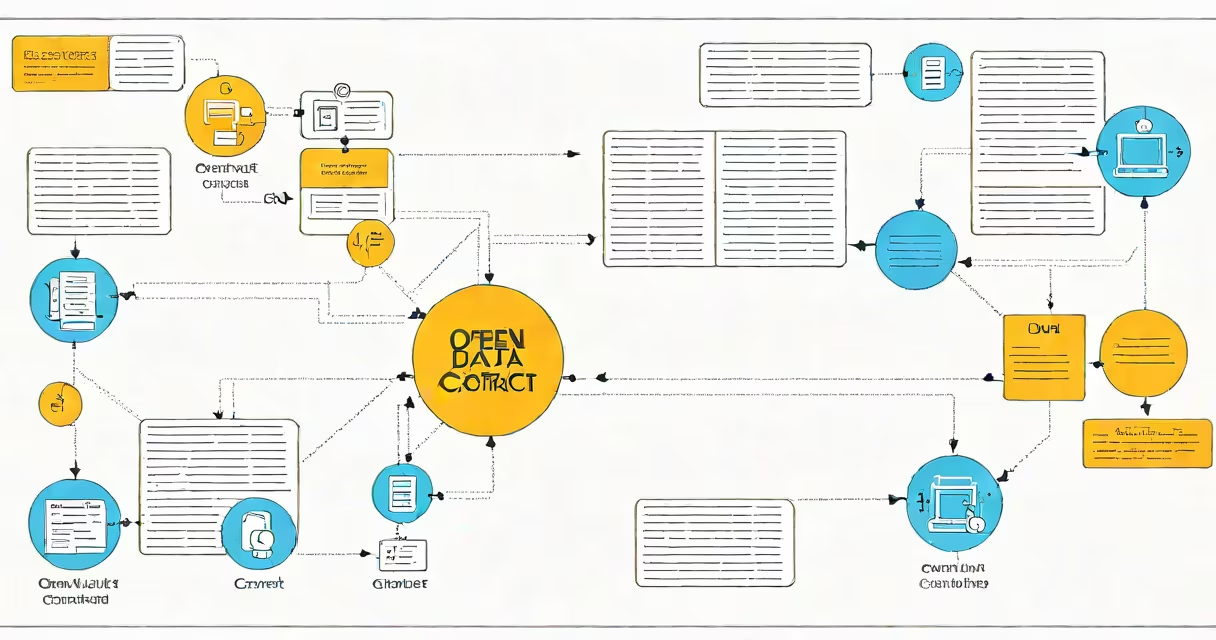
The open data contract standard is a formal, machine-readable agreement that specifies how data is structured, accessed, and governed when shared between organizations. It ensures consistency, reduces ambiguity, and enables automated data integration across systems.
At its core, the standard defines metadata, schema, access controls, update frequency, and usage rights in a structured format. It aims to eliminate guesswork in data exchange-especially critical when systems from different vendors or departments must interoperate. Unlike informal data-sharing practices, this standard enforces clarity through explicit rules.
Developed by the Open Data Institute and adopted by governments and enterprises globally, the open data contract standard uses JSON Schema and OpenAPI specifications to encode data expectations. It is not a single document but a structure that supports versioning, validation, and audit trails. This allows systems to automatically verify whether incoming data meets agreed-upon criteria before processing.
When an organization publishes data under the open data contract standard, it includes a contract file alongside the dataset. This file describes the data's structure, required fields, data types, and expected updates. For example, a city government releasing traffic sensor data might define that each record must include a timestamp (ISO 8601 format), location coordinates (latitude/longitude), and vehicle count.
Receiving systems validate incoming data against this contract before ingestion. If a record lacks a required field or contains invalid values, the system flags the error immediately. This prevents downstream failures caused by malformed or inconsistent data-common issues in legacy integrations.
Contracts can also specify data ownership, retention policies, and licensing terms. A healthcare provider sharing anonymized patient visit data might require that the receiving institution delete records after 90 days and not re-identify individuals. These conditions are enforced programmatically, reducing legal risk and compliance overhead.
Each open data contract standard implementation includes several mandatory elements:
| Component | Description | Example |
|---|---|---|
| Data Schema | Defines structure and field types using JSON Schema or Avro | Field "temperature" must be a float between -100 and 100 |
| Access Protocol | Specifies how data is retrieved (e.g., REST API, Kafka stream) | GET /v1/weather?location=NYC&date=2024-04-05 |
| Update Frequency | Interval for data refresh (e.g., hourly, daily) | Updated every 15 minutes during peak hours |
| Licensing & Usage Rights | Legal terms governing reuse and redistribution | CC-BY-4.0; commercial use permitted with attribution |
| Validation Rules | Automated checks for data integrity | Latitude must be between -90 and 90 |
There are two primary deployment models: public contracts and private contracts. Public contracts are published openly, often via data portals such as data.gov.uk or data.gov. They are intended for broad reuse and are typically versioned with stable URIs. Private contracts are shared via authenticated APIs and may include role-based access control.
A notable distinction is that the open data contract standard is not a replacement for data governance frameworks-it complements them. While data governance covers policy, roles, and oversight, the contract standard enforces technical consistency. Think of it as the difference between a company's HR handbook (governance) and a signed employment agreement (contract).
Public sector agencies use the open data contract standard to publish datasets with guaranteed quality. The UK's Department for Transport, for example, publishes real-time bus arrival data using contracts that define expected response times, accuracy thresholds, and required fields. This enables third-party apps like Citymapper to integrate the data reliably.
In finance, banks use the standard to share transaction data securely with fintech partners. A major European bank implemented contracts for customer account data shared with a credit scoring startup. The contract specified that all personal identifiers were redacted, and data was refreshed every 12 hours. This reduced false positives in loan approvals by 37%, according to internal audits.
Enterprises also adopt the standard internally. A global logistics firm standardized contracts across its supply chain systems. Before this, warehouse software received shipment data in inconsistent formats-some systems used "item_id," others "product_code." After adopting the open data contract standard, integration time dropped from 3 days per new partner to under 4 hours.
One widespread misunderstanding is that the open data contract standard requires all data to be publicly accessible. This is incorrect. The standard supports private, encrypted, and role-limited data flows. Contracts can be secured behind OAuth2 or API keys, ensuring sensitive data remains protected.
Another misconception is that the standard is only for large organizations. In practice, small municipalities and nonprofits have successfully deployed it. The city of Reykjavik used the standard to coordinate emergency services data during winter storms. By defining clear contracts for weather alerts, ambulance dispatches, and road closures, they reduced response delays by 22% during a blizzard in January 2023.
A lesser-known fact: the standard supports incremental updates. Instead of sending entire datasets every cycle, systems can send delta changes-only the modified records. This reduces bandwidth use by up to 80% compared to full syncs, especially useful in low-bandwidth environments.
Consider a city deploying a smart traffic system. Sensors at intersections collect data on vehicle volume, speed, and congestion levels. Without a contract, each department might store and share this data differently-some in CSV, others in JSON, with varying timestamps and units.
With the open data contract standard, the city creates a single contract file:
{
  "schema": {
    "type": "object",
    "properties": {
      "sensor_id": { "type": "string" },
      "timestamp": { "format": "date-time" },
      "vehicles_per_minute": { "type": "integer", "minimum": 0 },
      "average_speed_kmph": { "type": "number", "minimum": 0 }
    },
    "required": ["sensor_id", "timestamp", "vehicles_per_minute"]
  },
  "access": "https://api.citytraffic.gov/v1/sensors",
  "frequency": "every 5 minutes",
  "license": "CC-BY-4.0"
}
Any application consuming this data-whether a navigation app or a city planning dashboard-can validate incoming records against this contract. If a sensor sends a value of -5 for vehicles_per_minute, the system rejects it. This prevents errors from propagating into decision-making tools.
The open data contract standard is a practical, technical foundation for reliable data sharing. It turns ambiguous data exchanges into predictable, automated workflows. Its adoption is growing rapidly in both public and private sectors, driven by the need for trustworthy, interoperable data systems.