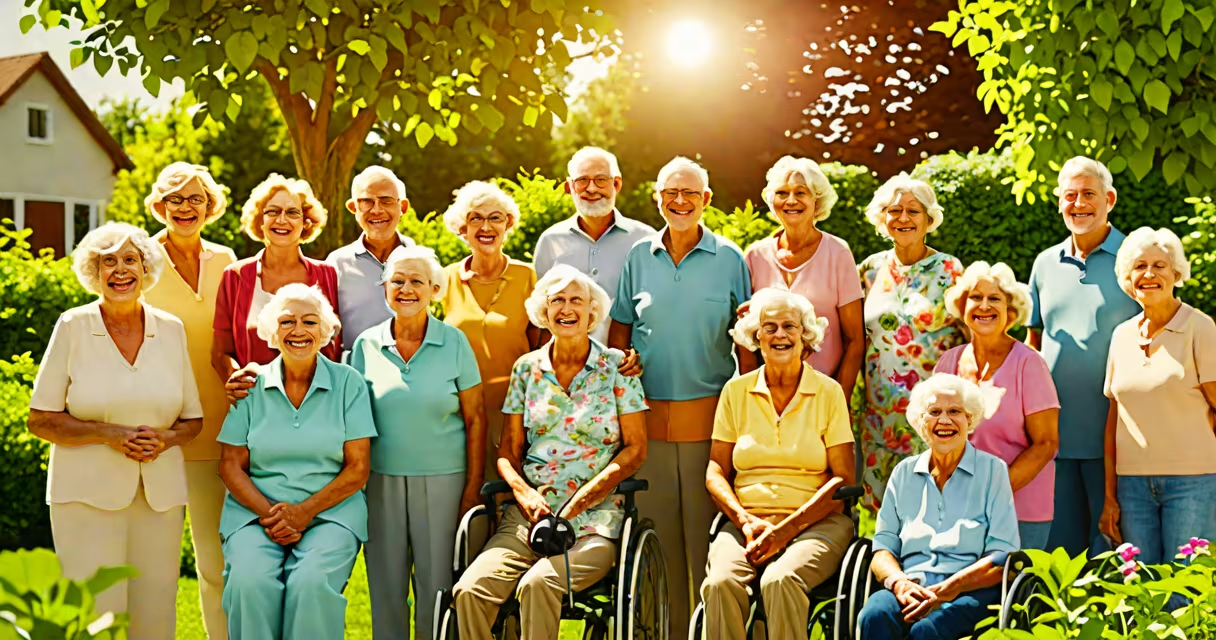
Nicknames for old people are informal terms used to refer to older adults, often reflecting regional dialect, family tradition, or generational humor. These labels vary widely in tone-from affectionate and familiar to outdated or dismissive-and their acceptability depends heavily on context, relationship, and cultural norms.
These terms emerge from long-standing social patterns. Some originate in familial settings, passed down through generations. Others arise in public discourse, shaped by media portrayals or stereotypes. Not all nicknames carry positive intent. Some reflect societal attitudes toward aging, such as assumptions about frailty, memory loss, or reduced mobility.
Understanding nicknames for old people requires distinguishing between terms used within close relationships and those used publicly or mockingly. A grandchild calling their grandfather "Pops" may express warmth. A stranger using "old timer" in a sarcastic tone may imply disrespect. The difference lies not in the word itself, but in delivery, setting, and shared history.
Informal address is common among families and long-time friends. Terms like "Grandma," "Pop," "Gramps," "Mama," or "Nana" often serve as endearments. They signal familiarity and emotional connection. In many households, these titles remain in use well into later life, even as individuals grow older.
Public or institutional settings often rely on formal titles-"Mr. Johnson," "Mrs. Patel"-to maintain professionalism. However, in casual environments like senior centers, retirement communities, or neighborhood gatherings, nicknames can build inclusion. A woman known as "Dolly" at her local bingo group may be recognized by that name for decades, not because she's being infantilized, but because it's part of a shared identity.
When used incorrectly, nicknames can reinforce ageism. Calling someone "sweetie" or "dear" in a patronizing way may unintentionally diminish their agency. Research from the American Psychological Association notes that ageist language contributes to negative self-perception and social isolation among older adults. The choice of term matters as much as the intention behind it.
Some nicknames stem from physical traits or perceived characteristics. "The Walking Encyclopedia" describes someone with vast knowledge. "Battery" refers to someone who still has energy late in life. These are usually playful, not derogatory-when used in good humor among peers.
Others come from historical or cultural roots. In parts of the UK, "old boy" refers to a man of advanced years, especially in military or academic circles. In African American communities, "Granddaddy" or "Mama" may carry deep respect, rooted in kinship systems that value elders as moral guides.
Regional differences matter. In the southern U.S., "Pappy" is common. In New England, "Uncle" may be used affectionately for men in their 70s. In Japan, "Ojisan" (for older men) and "Obaasan" (for older women) are standard terms of politeness, not diminution.
| Type | Examples | Typical Setting | Intent |
|---|---|---|---|
| Familial | Grandpa, Nana, Pops | Family homes, reunions | Warmth, intimacy |
| Cultural/Regional | Ojisan, Mama, Pappy | Local communities, ethnic groups | Belonging, tradition |
| Stereotypical | Old fogey, geezer, silver fox | Media, casual conversation | Humor, sometimes mockery |
| Professional | Mr. Smith, Dr. Lee | Hospitals, offices, legal settings | Formality, respect |
Many assume that all nicknames for old people are disrespectful. That's not true. The term "Grandma" used by a child during a birthday party is not ageist-it's celebratory. But when a news anchor calls a 78-year-old politician "old lady" in a tone of condescension, it crosses into bias.
Another misconception is that older adults don't care about how they're addressed. Data from the Pew Research Center shows that 63% of adults aged 65+ find being called "youngster" or "sweetheart" by strangers uncomfortable. The issue isn't the word-it's the power changing. Being spoken to as if one is incapable is a form of marginalization.
A lesser-known fact: some nicknames evolve. "Old timer" was once a neutral descriptor in American English. By the 1980s, it began appearing in satirical contexts, often mocking older people's views on technology. Today, it's frequently used ironically, even in advertising. A 2021 study in *Journal of Language and Age* found that younger generations use "old timer" more often in memes and jokes than in sincere conversation.
Terms like "senile," "dotty," or "senior citizen" have fallen out of favor in formal communication. "Senior citizen" is still used in government forms and event promotions, but many advocacy groups recommend alternatives like "older adult" or "person in later life." The shift reflects growing awareness of linguistic dignity.
Even affectionate terms can become problematic if overused or applied without consent. I once visited a retirement home where staff referred to residents as "honey" or "sweetie" throughout the day. One woman, in her early 80s, told me, "I've been called 'honey' since I was 20. Now it feels like they're talking to a child."
When in doubt, ask. A simple "Do you prefer a nickname?" opens space for mutual respect. This practice is supported by the National Institute on Aging, which recommends person-centered language in elder care settings.
Use formal titles unless invited to be informal. If someone offers a nickname-"Call me Pop"-accept it gracefully. Avoid terms based on appearance ("wrinkly," "bent") or assumed limitations ("can't do anything anymore").
For public writing or speaking, opt for neutral terms like "older adult" or "person aged 65+." These are consistent with guidelines from the World Health Organization's Global Strategy on Ageing and Health, which emphasizes dignity and autonomy.
If you're referring to older adults in a story, article, or video, consider showing them as active participants in society-not just recipients of care. A 75-year-old woman leading a community garden project is not "just an old lady"-she's a leader. Her nickname, if any, should reflect her role, not her age.
Understanding nicknames for old people isn't about policing language. It's about recognizing that words shape perception. A term like "Grandma" can build connection. A term like "geezer" can alienate. The goal is clarity, respect, and accuracy-especially when addressing people who have lived decades of experience.