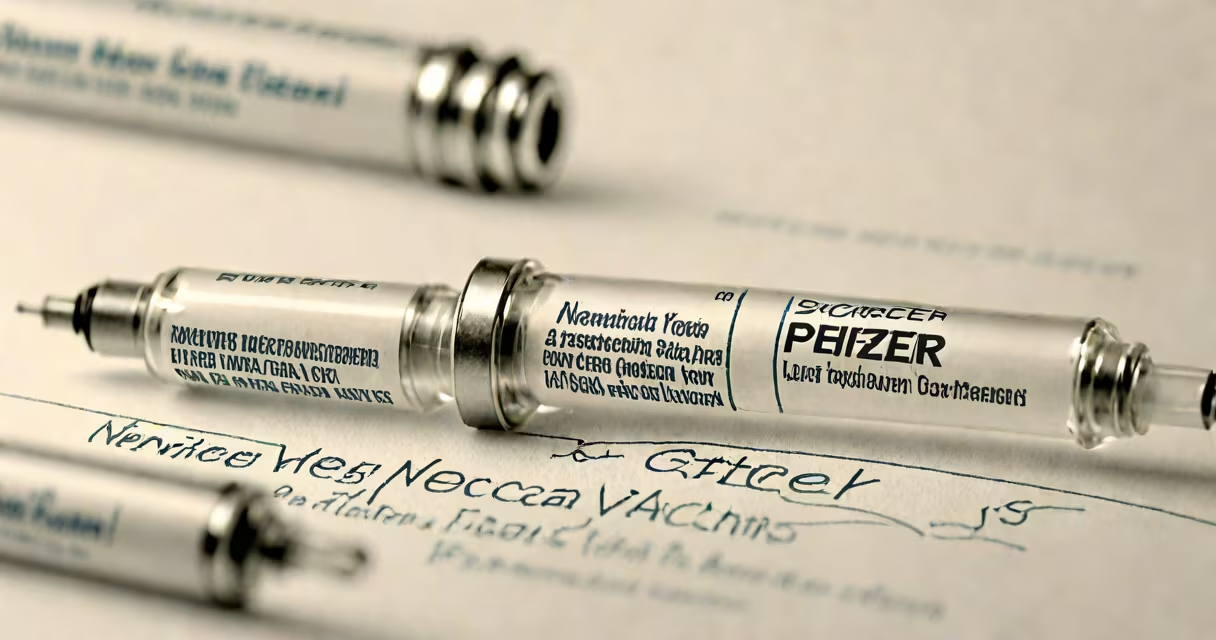
The meningococcal vaccine Pfizer, marketed as MenQuadfi, is a quadrivalent conjugate vaccine that prevents infection caused by four serogroups of Neisseria meningitidis: A, C, W, and Y. It is approved for use in individuals aged 2 months through 55 years.
This vaccine works by exposing the immune system to inactive components of the bacteria-specifically, polysaccharide antigens chemically linked to a protein carrier. This conjugation enhances the body's ability to recognize and respond quickly to actual infection. The immune response generates antibodies that neutralize the bacteria before they cause disease.
According to the Centers for Disease Control and Prevention (CDC), meningococcal disease is rare but severe, with a fatality rate of up to 10% among those who develop invasive disease. Symptoms include sudden high fever, stiff neck, confusion, and rash. Early treatment is critical, but prevention through vaccination remains the most effective strategy.
Meningococcal vaccine Pfizer uses a conjugate technology platform. Unlike older polysaccharide vaccines, which trigger weak immune responses in young children, conjugate vaccines link the bacterial sugar (polysaccharide) to a carrier protein-typically CRM197, a non-toxic mutant of diphtheria toxin. This linkage allows the immune system to mount a stronger, longer-lasting response, especially in infants and toddlers.
Each dose contains 10 micrograms of each serogroup antigen (A, C, W, Y), combined with the CRM197 carrier protein. The formulation includes aluminum hydroxide as an adjuvant to boost immune activity. The vaccine is administered intramuscularly, typically in the thigh for infants and the deltoid muscle for older children and adults.
A key advantage of MenQuadfi is its dosing flexibility. For children aged 2 through 10 years, a single 0.5 mL dose is recommended. For adolescents and adults, the same dose is used. The CDC recommends routine vaccination at age 11-12, with a booster dose at age 16.
The CDC recommends meningococcal vaccine Pfizer for all adolescents aged 11-12, with a booster dose at age 16. This timing aligns with peak risk during late adolescence, particularly in group-living settings such as college dormitories and military barracks.
High-risk groups include individuals with complement deficiencies, those without a spleen (asplenia), travelers to sub-Saharan Africa during the dry season (the "meningitis belt"), and people attending large gatherings with close contact, such as music festivals or religious pilgrimages.
One often-overlooked fact: the vaccine does not protect against serogroup B, which causes about 30% of cases in the U.S. Serogroup B requires a different vaccine-Bexsero or Trumenba-available separately. MenQuadfi covers serogroups A, C, W, and Y, responsible for roughly 70% of cases in the U.S.
Another misconception is that the vaccine causes meningitis. This is false. The vaccine contains no live bacteria. It cannot cause the disease it prevents. Side effects are mild and temporary-common reactions include soreness at the injection site, fatigue, headache, and low-grade fever in up to 30% of recipients.
Some assume the vaccine is optional. In reality, many schools and colleges require proof of meningococcal vaccination for enrollment. For example, the University of California system mandates vaccination for incoming freshmen living in residence halls.
Meningococcal vaccine Pfizer is available at primary care providers, public health clinics, and retail pharmacies. Walgreens offers the vaccine at select locations, with appointments available online. Walk-ins may be accepted depending on inventory and staffing.
For those without insurance, the Vaccines for Children (VFC) program provides free vaccines to eligible children under 18. Adults may access the vaccine through their healthcare provider or pharmacy, with costs ranging from $100 to $150 per dose without insurance.
One practical tip: if you're getting multiple vaccines at once, such as the HPV or flu vaccine, the meningococcal vaccine can be administered in a different limb. This reduces localized discomfort and makes tracking side effects easier.
In 2022, a freshman at the University of Michigan was required to show proof of meningococcal vaccination before moving into campus housing. She had received her first dose at age 11 but missed the booster at 16 due to family travel. Her campus health center offered a catch-up dose using MenQuadfi.
She received the vaccine at a university clinic during orientation week. Within 24 hours, she reported mild soreness and a 100.4°F fever, which resolved within 48 hours. No long-term side effects occurred. She later learned that her roommate had contracted meningococcal disease during a previous academic year-prompting the university to enforce stricter vaccination policies.
| Vaccine Name | Serogroups Covered | Age Range | Route | Booster Needed? |
|---|---|---|---|---|
| Meningococcal vaccine Pfizer (MenQuadfi) | A, C, W, Y | 2 months - 55 years | IM (intramuscular) | Yes, at age 16 |
| Bexsero (serogroup B) | B | 10 weeks - 25 years | IM | No, but recommended for high-risk groups |
| Menveo (another conjugate) | A, C, W, Y | 2 months - 55 years | IM | Yes, at age 16 |
MenQuadfi stands out for its broad age indication and consistent dosing schedule. It is also the only FDA-approved meningococcal conjugate vaccine suitable for infants as young as 2 months.
Preventing meningococcal disease through timely vaccination reduces hospitalization rates and eliminates the risk of permanent disability, including hearing loss and limb amputation. The meningococcal vaccine Pfizer is a proven tool in safeguarding individual and community health.