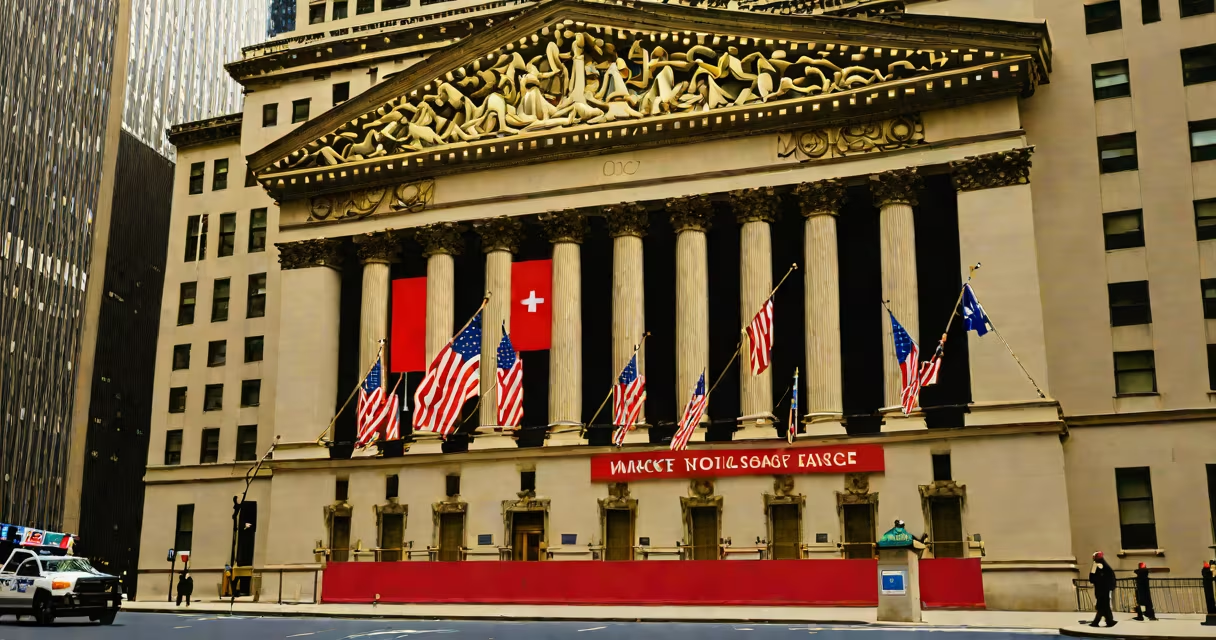
The market holiday NYSE occurs when the New York Stock Exchange closes early or entirely on designated federal and observance holidays, halting equity trading for the day. These closures are scheduled annually and enforced by the exchange's operating rules, affecting all U.S. equities markets.
Trading on the NYSE follows a strict calendar set by the Securities and Exchange Commission (SEC) and the exchange itself. On market holiday NYSE days, all regular trading sessions-pre-market, regular hours, and after-hours-are suspended. This includes major indices like the S&P 500 and Dow Jones Industrial Average, which do not update prices until the next business day.
For example, on January 1, 2024, the NYSE was closed for New Year's Day, a federal holiday. No trades were executed, and market data remained frozen. The next trading session resumed on January 2, 2024, at 9:30 a.m. Eastern Time. This pattern repeats each year for 10 recognized holidays.
The NYSE operates under a standardized schedule approved by the SEC. Each holiday is listed in advance, and exchanges notify participants via public calendars. Trading is not permitted on these days unless a special waiver applies, which is rare.
When a holiday falls on a weekend, the exchange typically observes the closest weekday. For instance, if Independence Day (July 4) lands on a Saturday, the NYSE closes on Friday, July 3. If it lands on a Sunday, the close happens on Monday, July 5. This ensures consistent market operations and avoids confusion in settlement cycles.
During a market holiday NYSE, financial institutions, brokers, and algorithmic systems pause trading activity. Orders placed during the holiday window are held until the next open day. This prevents unintended executions and maintains fair access for all investors.
There are ten primary market holiday NYSE dates each year. They include federally mandated holidays and exchange-specific observations. The following table outlines the standard list:
| Holiday | Date (2024) | Trading Status |
|---|---|---|
| New Year's Day | January 1 | Closed |
| Martin Luther King Jr. Day | January 15 | Closed |
| Presidents' Day | February 19 | Closed |
| Memorial Day | May 27 | Closed |
| Independence Day | July 4 | Closed |
| Labor Day | September 2 | Closed |
| Columbus Day | October 14 | Closed |
| Veterans Day | November 11 | Closed |
| Thanksgiving Day | November 28 | Closed |
| Christmas Day | December 25 | Closed |
Some holidays, like Thanksgiving, have unique timing. In 2024, Thanksgiving fell on a Thursday, and the NYSE closed early on Wednesday, November 27, due to the holiday weekend. This early closure allows for settlement processing and reduces operational risk.
The NYSE does not observe leap day (February 29) as a holiday. Despite the calendar oddity, trading continues normally. This is a common misconception among retail investors who assume all calendar anomalies affect market operations.
Many assume that market holiday NYSE means all financial activity stops. That's incorrect. While equities trading halts, options, futures, and foreign exchange markets often continue. For example, the Chicago Mercantile Exchange (CME) runs extended hours on NYSE holidays, allowing traders to hedge positions.
Another error is thinking that holidays are uniform across all U.S. exchanges. The Nasdaq and NYSE operate on the same holiday schedule, but regional differences exist. The Chicago Board Options Exchange (CBOE) may adjust its closure times based on local conditions, such as severe weather.
A lesser-known fact: the NYSE can declare an unscheduled holiday during extreme events. In 2001, after the September 11 attacks, the exchange closed for four consecutive days-beyond the usual holiday list. This was the first time since the 1930s that the NYSE shut down for reasons unrelated to federal holidays.
Investors and portfolio managers rely on the NYSE holiday calendar to time trades, rebalance assets, and avoid execution delays. A trade placed on a market holiday NYSE date will not execute until the next open day, potentially missing price movements.
For example, if an investor places a limit order to buy 100 shares of Apple Inc. (AAPL) on December 24, 2024-a Friday-trading won't occur until December 26, 2024, because Christmas Eve is not a NYSE holiday. However, placing the same order on December 25, 2024, results in a delay until December 26, since Christmas Day is a formal holiday.
As a personal note, I once scheduled a dividend reinvestment on a Friday that coincided with Martin Luther King Jr. Day. The system flagged the transaction as invalid due to the holiday. I had to resubmit it on the next business day, losing a few hours of potential price gain. This taught me to double-check the NYSE calendar before executing time-sensitive actions.