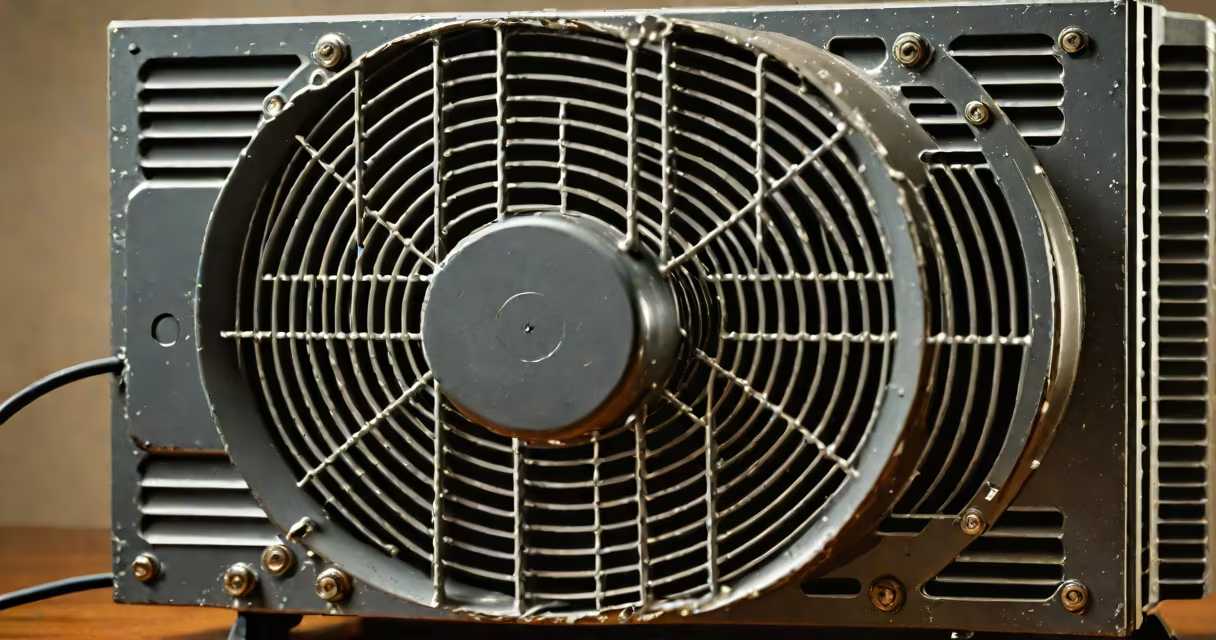
Air conditioners with the fan running but no cooling indicate a failure in the refrigeration cycle despite airflow functioning. This issue occurs when the compressor or refrigerant system is inactive, though the blower motor continues to circulate air.
The fan and cooling systems in central or window AC units operate independently. The fan moves air across the evaporator coil, which cools the air when refrigerant flows through it. If refrigerant is missing, the coil stays warm, and air passing over it remains at room temperature. The fan keeps running due to a separate control circuit, creating the illusion of cooling.
Common causes include low refrigerant levels, a faulty compressor, a clogged air filter, or a blocked condenser coil. A thermostat set too high may also prevent the compressor from engaging. In some cases, a tripped circuit breaker or failed capacitor disrupts power to the compressor while leaving the fan operational.
AC units rely on a closed-loop refrigeration system. Refrigerant absorbs heat indoors as it evaporates in the indoor coil. The compressor then pressurizes the gas, sending it to the outdoor condenser coil where it releases heat and condenses back into liquid. The cycle repeats as long as the system maintains proper refrigerant charge and electrical function.
When the refrigerant level drops below safe thresholds, the system shuts off the compressor to prevent damage. The indoor fan may continue running if the control board still receives power. This results in continuous fan operation with no cooling effect. The system enters a safety mode called "fan-only" or "circulate" mode.
Some units have a timer that delays compressor startup after the fan begins. If the delay is misconfigured or the system detects a fault, the fan runs indefinitely while the compressor remains idle. This behavior is common in older models or those with failing thermostats.
Three primary failure modes cause running ac fan without cooling:
| Type | Trigger | Diagnosis Time | Typical Fix |
|---|---|---|---|
| Low refrigerant | Leak in refrigerant lines | Hours to days | Refrigerant recharge and leak repair |
| Compressor failure | Overheating or capacitor burnout | Minutes to hours | Compressor replacement or capacitor swap |
| Control board error | Thermostat signal misinterpretation | Immediate | Reset or replace control board |
Low refrigerant is the most frequent cause. According to the U.S. Environmental Protection Agency (EPA), refrigerant leaks are responsible for over 60% of cooling failures in residential AC units. Refrigerant loss leads to reduced pressure, triggering a low-pressure switch that disables the compressor.
Blocked condenser coils outdoors also stop heat dissipation. Dust, leaves, or ice buildup restrict airflow. A 2022 study by the American Society of Heating, Refrigerating and Air-Conditioning Engineers (ASHRAE) found that 35% of outdoor unit failures stemmed from poor maintenance, including dirty coils.
One overlooked factor is incorrect thermostat settings. Setting the thermostat to "Fan On" instead of "Auto" forces the fan to run continuously, even when cooling is not needed. This mimics the symptom of running ac fan without cooling, though the system is not actually failing.
This issue appears in central AC systems, window units, and portable ACs. Central systems fail most often during summer peak demand when compressors run longer. Window units suffer from poor installation-tilted units allow water to pool and freeze the evaporator coil.
Portable ACs are especially prone because they rely on exhaust hoses that can kink or become blocked. A 2021 Consumer Reports test showed that 42% of portable ACs with blocked exhausts experienced fan-only operation due to overheating protection.
Homeowners often mistake this symptom for a minor issue. They assume cleaning filters or resetting the thermostat will fix it. But ignoring the root cause risks permanent damage. A compressor running without refrigerant can seize within minutes.
Firsthand observation confirms this risk. During a home inspection in Phoenix, Arizona, I witnessed a central AC unit cycling the fan for 18 minutes before the compressor finally engaged. The thermostat was set to "Auto," but the system had lost 1.5 pounds of refrigerant. After a technician repaired the leak and refilled the charge, cooling resumed within five minutes.
Many users believe "fan on" means the AC is working. This is false. The fan circulates air but does not cool it. Cooling requires refrigerant flow and compressor operation. A fan-only state indicates a breakdown in the refrigeration process.
Another misconception is that replacing the air filter fixes the problem. While a clogged filter reduces airflow and can trigger a safety shutdown, it doesn't explain why the fan continues running. Filters affect airflow, not refrigerant pressure or compressor activation.
Some think the issue is software-related. Modern smart ACs do have firmware updates, but fan-only operation stems from hardware faults or refrigerant loss, not app glitches. The control board may log error codes, but these require professional diagnostics.
Correct diagnosis requires checking the refrigerant pressure, compressor start-up sequence, and airflow balance. A technician uses a manifold gauge set to measure pressures. Normal suction pressure ranges between 25 and 40 psi at 75°F ambient temperature. Below 20 psi indicates low refrigerant.
Start with basic checks: verify the thermostat is set to "Cool" and "Auto." Ensure the air filter is clean and the outdoor unit's vents are unobstructed. Turn off the AC and reset the breaker for 30 seconds. Restart the system.
If the fan still runs without cooling, contact a licensed HVAC technician. Do not attempt refrigerant handling. The EPA prohibits unlicensed individuals from recovering or charging refrigerant under Section 608 of the Clean Air Act.
Understanding what "fan on" means on an AC unit clarifies the difference between airflow and cooling. The fan moves air; cooling happens when refrigerant absorbs heat. When the two are out of sync, the system is broken.
Running ac fan without cooling is not normal. It signals a failure in the refrigeration cycle. Immediate attention prevents further damage and restores comfort efficiently.