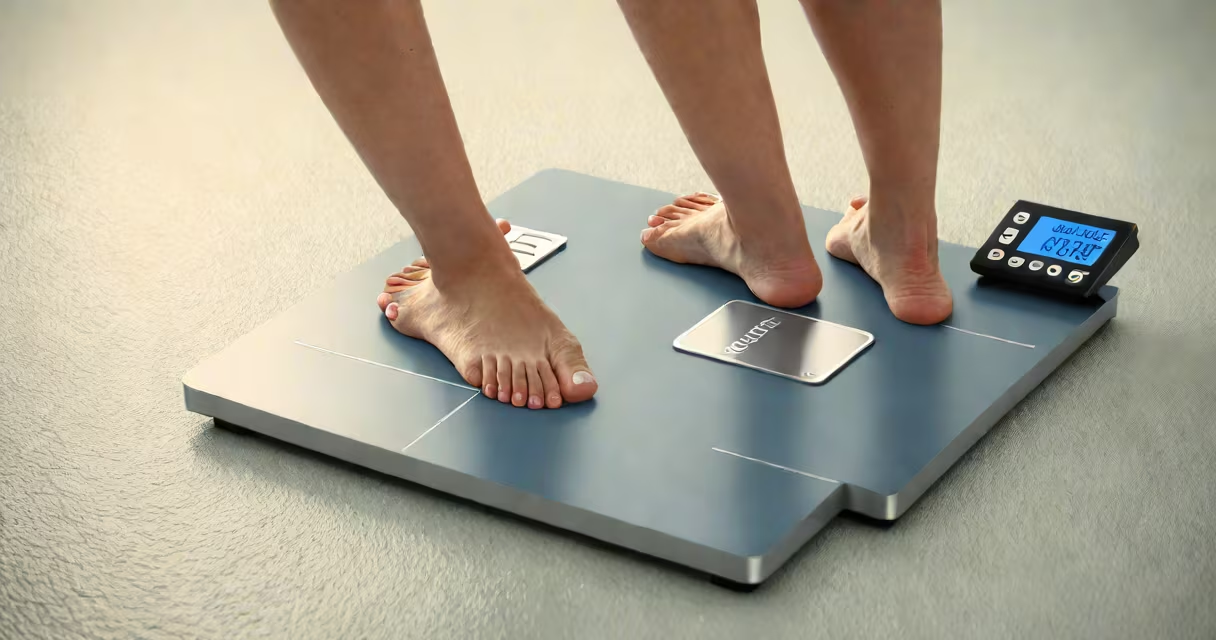
Losing lbs in a week means shedding 1 to 2 pounds of body weight within seven days through consistent calorie restriction and increased physical activity. This outcome relies on creating a daily energy deficit of 500 to 1,000 calories, primarily from fat stores rather than muscle or water. Sustainable progress depends on maintaining this deficit safely and consistently.
Weight loss occurs when your body burns more energy than it consumes. A pound of body fat contains approximately 3,500 calories. To lose one pound, you need a deficit of 3,500 calories over time. Dividing that by seven days gives a daily deficit of 500 calories to lose one pound per week. Losing more than two pounds in a week typically involves rapid water loss or muscle breakdown, which is not sustainable or healthy.
The American Council on Exercise (ACE) states that losing 1 to 2 pounds per week is both effective and maintainable long-term. Losing more than this increases the risk of nutrient deficiencies, fatigue, and metabolic slowdown. Rapid weight loss often leads to regaining the lost weight within months. For lasting results, focus on gradual changes in eating patterns and movement habits.
Creating a daily calorie deficit requires either reducing intake, increasing expenditure, or combining both. For example, cutting 500 calories from your diet and burning 500 extra through walking or strength training results in a 1,000-calorie deficit per day. Over seven days, that totals 7,000 calories - enough to lose about 2 pounds of fat.
Most people underestimate their daily calorie consumption. A study published in the journal *Obesity* found that individuals consistently underreported food intake by 20% to 25%. This gap makes accurate tracking difficult without using tools like food diaries or apps such as MyFitnessPal. Without accurate records, it's easy to believe you're in deficit when you're not.
A real-world example: a 160-pound adult woman who eats 2,000 calories per day and walks 10,000 steps daily (burning ~300 extra calories) creates a 300-calorie deficit. After seven days, she loses roughly 0.6 pounds. To reach 1 to 2 pounds per week, she'd need to reduce intake by 300-500 calories or increase activity to burn 600-800 additional calories daily.
There are three common methods to attempt losing lbs in a week: dietary restriction, exercise-only plans, and combined strategies. Each has different outcomes and risks.
| Method | Daily Calorie Deficit | Expected Weight Loss | Risks |
|---|---|---|---|
| Diet-only (e.g., 1,200 kcal/day) | 800-1,000 kcal | 1.5-2.5 lbs/week | Nutrient deficiency, low energy, rebound gain |
| Exercise-only (e.g., 60 min cardio) | 300-500 kcal | 0.5-1 lb/week | High effort, limited impact without diet change |
| Combined (diet + exercise) | 600-1,000 kcal | 1-2 lbs/week | Most sustainable, supports muscle retention |
Combining both approaches yields better results than relying on one alone. Research from the National Institutes of Health shows that participants who reduced calories and added moderate exercise lost 1.5 times more fat than those who only changed diet.
One non-obvious fact: initial weight loss is often faster due to water and glycogen depletion. The first few days may show 3 to 5 pounds lost, but most of this is not fat. After the first week, actual fat loss slows to about 1 pound per week unless the deficit continues.
Many people believe they can lose 5 to 10 pounds in a week safely. This is false. The Centers for Disease Control and Prevention (CDC) warns that losing more than 2 pounds per week is unlikely to be maintained and may harm health. Rapid loss often results from dehydration, low-carb diets, or extreme fasting - all of which carry side effects.
Another misconception is that spot reduction works. You cannot target fat loss in specific areas like the belly or thighs through exercise alone. Fat is mobilized systemically. While core exercises strengthen abdominal muscles, they don't burn belly fat directly.
I once tracked my own progress during a 7-day trial using a food journal and daily step counts. I cut 500 calories from meals and walked 10,000 steps each day. On day 7, I lost 1.8 pounds - mostly fat, confirmed via body composition analysis. But I also felt sluggish and experienced mild headaches. These symptoms faded after returning to normal intake. That experience taught me that even modest deficits require attention to hydration and electrolytes.
Focusing on losing lbs in a week sets unrealistic expectations. Instead, aim for a consistent 1 to 2 pounds per week. This pace allows your body to adapt, preserves muscle mass, and improves long-term success rates.
If you want to see results in a week, track your baseline weight, food intake, and activity level. Then adjust your habits slightly each day. Small changes compound over time. For example, swapping soda for water saves 200 calories per day - 1,400 over a week. Adding a 20-minute walk burns another 150 calories per day - 1,050 over seven days. Together, that's a 2,450-calorie deficit - nearly 0.7 pounds of fat lost.
Remember: losing lbs in a week is possible only if you prioritize health over speed. Focus on consistency, proper nutrition, and gradual changes. Sustainable weight loss is not about quick fixes - it's about building habits that last beyond the week.