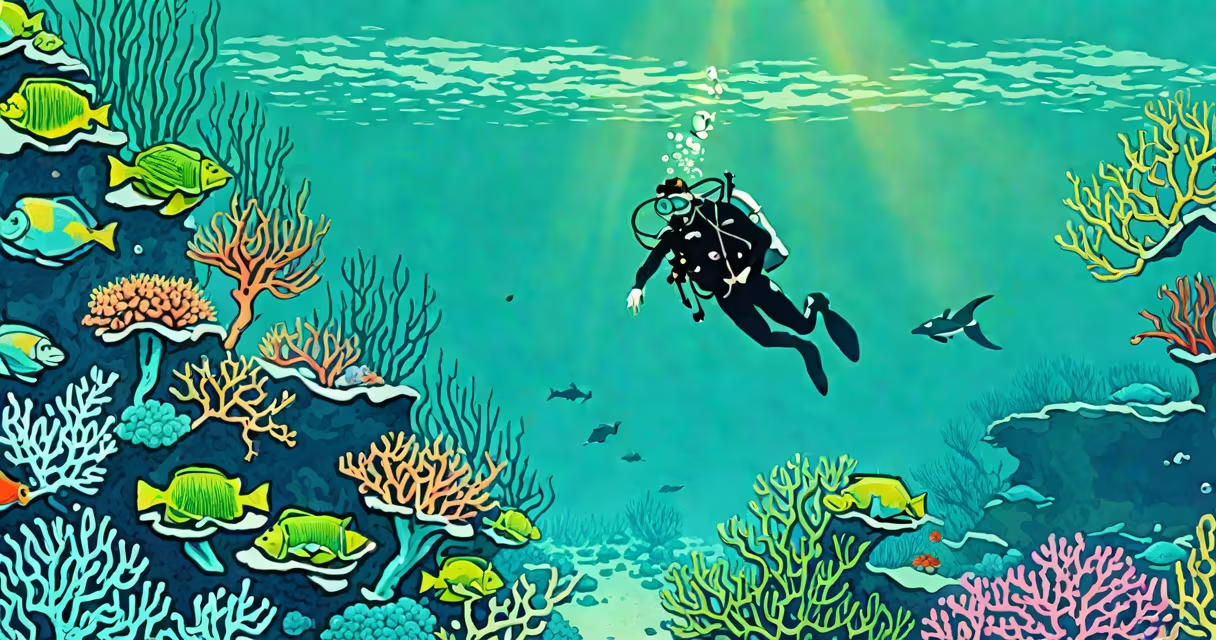
People visit the Great Barrier Reef to witness one of Earth's most complex marine ecosystems, home to over 1,500 fish species, 400 coral types, and rare marine life such as dugongs and green sea turtles. The reef's visual splendor, ecological significance, and accessibility make it a global destination for divers, scientists, and nature travelers.
The Great Barrier Reef stretches over 2,300 kilometers along Australia's northeastern coast, making it the largest coral reef system on the planet. Its formation began around 20 million years ago, with modern coral growth accelerating during the last 6,000 years. Today, it supports more than 2,500 individual reefs and 900 islands, creating a changing habitat for countless species. This scale and diversity explain why millions travel annually to experience it firsthand.
Visitors come for immersive experiences: snorkeling among tropical fish, scuba diving through cathedral-like coral formations, or taking glass-bottom boat tours to view reef structures without entering the water. The reef's visibility-up to 30 meters in clear conditions-enhances the visual impact, especially during peak seasons from June to October when water clarity is highest.
Three core factors attract people: biodiversity, adventure, and conservation awareness. The reef hosts 10% of the world's known marine species, including 13% of global shark species and 15% of all soft coral types. This concentration of life makes it a living laboratory for marine biology and a dream destination for underwater photographers.
Adventure seekers value the reef's unique access points. Operators in Cairns, Port Douglas, and Townsville offer day trips to outer reef sites like Agincourt Reef or the Ribbon Reefs. These locations feature dramatic drop-offs, shipwrecks, and schools of barracuda. A typical tour includes two snorkel sessions, a guided reef talk, and lunch on board-a package priced between $200 and $400 per person.
Conservation interest has grown since the 2016-2017 mass coral bleaching events. Visitors increasingly seek educational context alongside recreation. Many choose eco-certified operators who follow strict environmental guidelines, such as avoiding anchor damage and limiting contact with corals. The Australian Government's Reef Guardian program certifies 300+ tourism businesses based on sustainability standards.
Encountering specific wildlife drives much of the appeal. Green sea turtles (Chelonia mydas) are frequently seen grazing on seagrass beds near Lizard Island. Dugongs (Dugong dugon), protected under the Environment Protection and Biodiversity Conservation Act 1999, appear in shallow lagoons during winter months. Their slow, gentle movements contrast with the rapid darting of reef sharks like the whitetip and grey reef species.
Snorkelers often spot clownfish in anemones, parrotfish grinding coral, and giant clams opening their shells. Divers may encounter manta rays near the Ribbon Reefs or even the occasional whale shark during migration season (May-September). These sightings are not guaranteed but occur with measurable frequency-manta ray sightings average 30% on guided dives in the northern sector.
A personal observation from a 2022 trip to the Whitsundays revealed a juvenile humphead wrasse (Nassau grouper) near a submerged pinnacle. The fish, measuring nearly 1.5 meters, moved slowly through a school of bluefin trevally. Such moments, while unpredictable, define the emotional resonance visitors report in post-trip surveys.
Many assume the reef is entirely pristine or that all tourism harms it. In reality, the Great Barrier Reef Marine Park Authority (GBRMPA) manages human activity through zoning regulations. Only 34% of the park is open to tourism; the remaining 66% is restricted or closed to protect critical habitats.
Another misconception is that coral bleaching equates to reef death. While bleaching-caused by elevated sea temperatures-leads to coral stress and increased mortality risk, recovery is possible. After the 2016 event, some areas showed regrowth within four years. GBRMPA reports that 30% of the reef's hard coral cover remains stable or improving since 2015, despite climate pressures.
Contrary to popular belief, most tourists do not touch or stand on coral. A 2021 study by the University of Queensland found that 92% of certified divers maintained a minimum distance of 1 meter from reef structures. However, improper waste disposal and fuel spills from poorly managed vessels remain localized threats.
| Visitor Type | Primary Motivation | Typical Duration | Example Activity |
|---|---|---|---|
| Recreational Tourists | Scenic beauty and relaxation | 1-3 days | Snorkeling on a catamaran cruise |
| Scientific Researchers | Data collection and monitoring | 1-6 weeks | Deploying temperature loggers at reef stations |
| Conservation Volunteers | Restoration and advocacy | 1-4 weeks | Assisting in coral gardening projects |
| Photographers & Filmmakers | Visual storytelling and documentation | 2-3 weeks | Shooting macro footage of nudibranchs |
Each group contributes differently. Recreational tourists generate revenue that funds reef management-around $1 billion annually in direct tourism spend. Scientists provide long-term data used in policy decisions. Volunteers support hands-on restoration efforts, such as growing coral fragments in nurseries before transplanting them onto degraded zones.
One non-obvious fact: the reef's tourism economy relies heavily on indirect services. For every dollar spent on a dive tour, an estimated $1.70 circulates through local supply chains-from boat maintenance to hotel staffing. This multiplier effect underscores why protecting the reef is not just ecological but economic.
Climate change remains the dominant threat. Rising ocean temperatures cause widespread coral bleaching. Since 1998, the reef has experienced five major bleaching events, with the most severe occurring in 2016, 2017, and 2020. These events have led to a 50% decline in live coral cover across the northern sector, according to the Australian Institute of Marine Science.
Visitors play a role in mitigation. Choosing sustainable operators reduces pollution and physical damage. Avoiding single-use plastics, refraining from feeding fish, and using reef-safe sunscreen (mineral-based, zinc oxide or titanium dioxide) prevent chemical contamination. A 2022 study found that 60% of reef-damaged areas had high levels of oxybenzone, a common ingredient in chemical sunscreens.
Why do people visit the Great Barrier Reef? They come for wonder, education, and connection-to a place that is both breathtaking and fragile. The reef's enduring appeal lies not in perfection, but in its complexity, fragility, and capacity to inspire action.