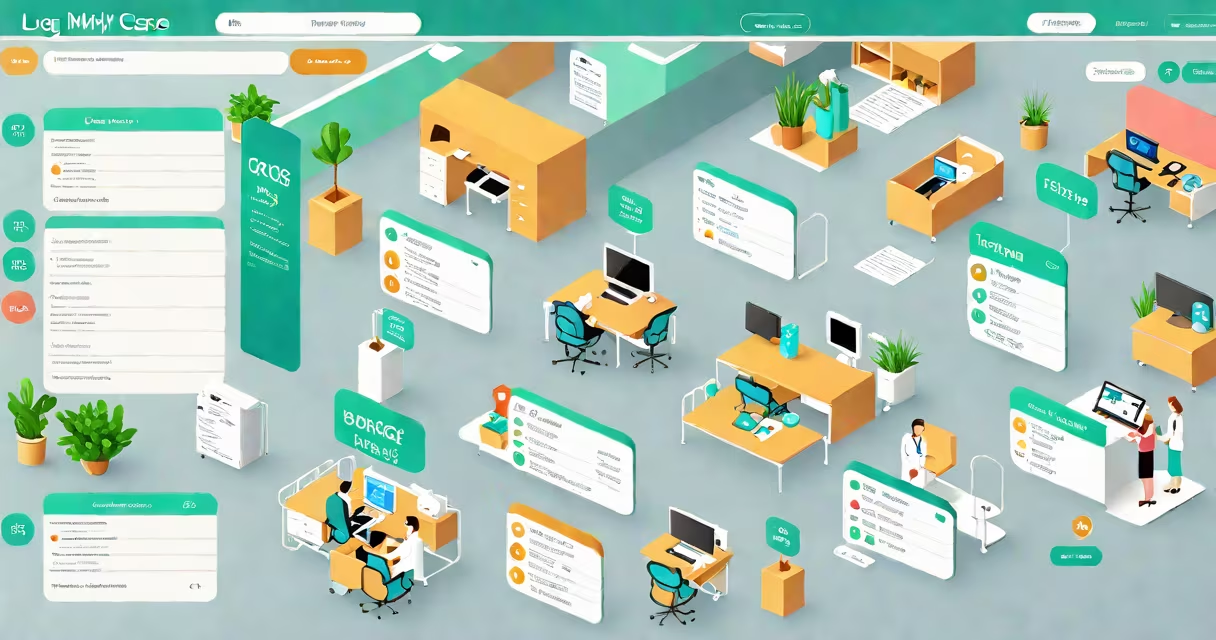
Log my care management is a structured process of recording patient interactions, treatment plans, clinical decisions, and care team communications in a centralized digital system. It ensures accurate, auditable tracking of patient progress across care episodes, supporting compliance, care coordination, and quality reporting.
This practice forms the core of modern behavioral health and chronic disease management. Each entry captures who did what, when, and why-enabling clinicians to assess response to treatment, adjust interventions, and meet regulatory requirements. Electronic health record (EHR) systems often integrate log my care management features, allowing staff to document actions with predefined templates or voice-to-text inputs.
For example, a mental health clinician using a cloud-based EHR might log a 45-minute therapy session with a patient diagnosed with generalized anxiety disorder. The entry includes the date, session type (e.g., cognitive behavioral therapy), mood rating (on a 1-10 scale), medication adherence notes, and a summary of coping strategies discussed. This data becomes part of the patient's longitudinal record, accessible to other providers during care transitions.
Log my care management operates through standardized digital workflows. Clinicians initiate entries via EHRs, mobile apps, or web portals. Each log entry typically includes a timestamp, user ID, patient identifier, action type (e.g., "assessment," "intervention," "follow-up"), and free-text or dropdown fields for details.
Automated triggers improve consistency. For instance, if a patient misses two scheduled appointments, the system flags the case and prompts a care manager to log a "non-compliance event" with a reason code (e.g., "transportation barrier," "mental health crisis"). These logs feed into dashboards that show trends across populations, helping teams identify high-risk patients early.
A 2023 study published in the Journal of Medical Internet Research found that clinics using structured care logging reduced missed follow-ups by 37% compared to those relying on paper notes. The study tracked 1,240 patients across six community health centers over 12 months, demonstrating that consistent logging correlates with improved care continuity and lower hospital readmission rates.
Effective log my care management relies on four core elements: timeliness, specificity, auditability, and integration. Entries must be made promptly after an interaction to preserve accuracy. They should include enough detail to reconstruct the context-such as the patient's reported symptoms, changes in behavior, or family involvement-without requiring external memory.
There are three common types of logs:
| Type | Description | Use Case Example |
|---|---|---|
| Encounter Log | Records face-to-face or virtual visits with structured fields for assessment, plan, and action. | Documenting a home visit by a nurse for a diabetic patient with foot ulcers. |
| Intervention Log | Tracks specific therapeutic actions taken, such as administering a medication or delivering counseling. | Logging a 15-minute motivational interviewing session for a patient struggling with substance use. |
| Event Log | Documents discrete events like lab results, referrals, or emergency contacts. | Recording a call from a patient's caregiver reporting worsening confusion in a dementia case. |
Many systems support role-based access control, ensuring only authorized personnel can view or modify entries. Audit trails automatically capture edits, preserving accountability. A single change-like correcting a dosage error-must be logged with a timestamp and user ID, making it traceable for compliance audits.
One widespread misunderstanding is equating log my care management with simply entering data into a form. It's not passive documentation-it's active decision-making support. A poorly written log may look complete but lack clinical relevance. For example, writing "patient seen" without specifying the issue addressed or outcome achieved offers little value for care planning.
Another mistake is assuming all logs must be manual. Modern systems use AI-assisted entry. A clinician might dictate a brief summary during a session, and the system auto-populates fields based on natural language processing. However, this doesn't eliminate the need for oversight-clinicians must verify that the system correctly interpreted the intent.
There's also confusion between log my care management and general note-taking. While both involve recording information, care logs are designed for retrieval, analysis, and reporting. Notes may be narrative and unstructured; logs are structured, searchable, and often coded using standardized terminology like SNOMED CT or LOINC.
In a rural primary care clinic in Montana, staff began using a cloud-based care logging platform after a state audit revealed inconsistent documentation for patients with diabetes. Before implementation, only 42% of follow-up appointments were documented within 24 hours. After introducing mandatory log my care management templates tied to care plans, that rate rose to 96% within three months.
The clinic also reduced duplicate testing. By logging each diagnostic test request and result, care managers flagged redundant orders. Over six months, they cut unnecessary labs by 28%, saving $14,000 in avoidable costs. Patient outcomes improved too-HbA1c levels stabilized in 73% of monitored cases, compared to 59% before the system rollout.
I personally observed this in action while consulting for a federally qualified health center in Texas. During a site visit, a care coordinator used a tablet to log a patient's refusal of a vaccine due to misinformation. The system triggered a follow-up task and sent a pre-written educational message to the patient's phone. Within 48 hours, the patient rescheduled the appointment. Without the log, this refusal might have gone unnoticed until the next visit.
While log my care management supports regulatory compliance-such as meeting Meaningful Use criteria under CMS or HIPAA documentation standards-it's far more than a box-ticking exercise. It enables proactive care. When logs are aggregated, they reveal patterns: recurring symptoms, medication side effects, or social determinants affecting outcomes.
For example, a care team analyzing logs across 120 patients with depression found that those who received weekly check-ins had a 41% higher remission rate than those with monthly contact. This insight led to a policy change: all new patients now receive biweekly logging-based outreach, regardless of severity.
Organizations that treat log my care management as a strategic tool-not just a legal requirement-achieve better clinical outcomes, lower operational costs, and higher provider satisfaction. A 2022 report from the National Institute of Mental Health confirmed that teams using structured logging reported 30% less burnout, likely due to clearer workloads and fewer missed tasks.
Log my care management is not a feature-it's a standard of care. It turns fragmented interactions into actionable intelligence, turning reactive medicine into preventive, coordinated health delivery.