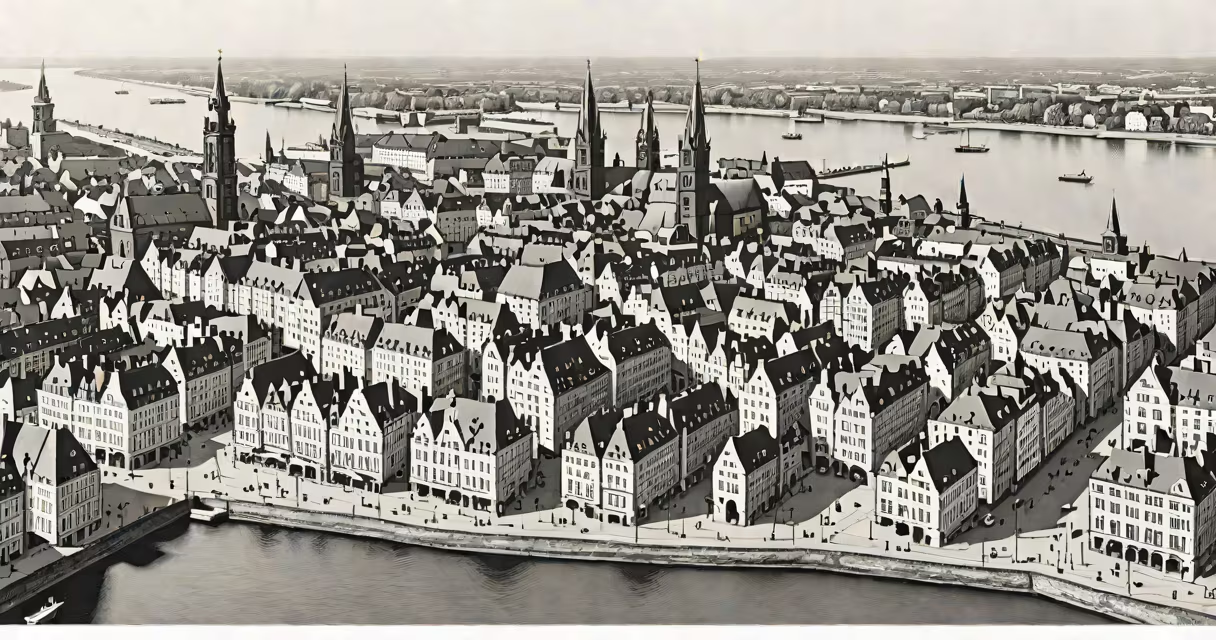
Kaliningrad is a Russian federal subject located on the southern coast of the Baltic Sea, bordered by Poland to the west and Lithuania to the east. It is the westernmost region of Russia and the only Russian territory directly adjacent to NATO members. Formerly the German city of Königsberg, it became part of the Soviet Union after World War II and was renamed in 1946.
The region is an exclave-geographically detached from the rest of Russia-situated approximately 400 kilometers (250 miles) west of Moscow. Its position makes it strategically significant for Russia's military and naval operations in the Baltic region. The city of Kaliningrad serves as the administrative center and the largest urban area in the oblast.
Geographically, Kaliningrad lies at the intersection of Central Europe and Northern Europe. It sits on the Pregolya River, near the mouth of the Vistula Lagoon, which connects to the Baltic Sea. The region's climate is temperate maritime, with mild winters and cool summers. Its proximity to major European transport routes enhances its role in regional trade and logistics.
Kaliningrad was originally founded in 1255 as Königsberg by the Teutonic Knights. Over centuries, it became a cultural and academic hub under Prussian rule. The city was home to philosopher Immanuel Kant, who lived and taught there from 1770 until his death in 1804.
After Nazi Germany's defeat in 1945, the Potsdam Agreement assigned Königsberg to the Soviet Union. The German population was expelled, and the city was repopulated by Russians and other Soviet citizens. In 1946, it was renamed Kaliningrad in honor of Mikhail Kalinin, a Soviet political leader. The renaming marked the symbolic erasure of its German past.
Today, Kaliningrad remains a Russian enclave with limited access to the rest of the country. Travelers must cross international borders to reach it from Russia proper. This isolation reinforces its status as a strategic outpost rather than a regional extension of the Russian Federation.
Kaliningrad hosts Russia's Baltic Fleet, a key component of its naval power projection in the North Atlantic and Eastern Europe. The region's military infrastructure includes air bases, missile systems, and radar installations. Since 2014, Russia has expanded its defenses here, including the deployment of Iskander-M tactical ballistic missiles capable of striking targets across the Baltic states and parts of Western Europe.
According to the Stockholm International Peace Research Institute (SIPRI), Russia maintains a high concentration of advanced weapons systems in Kaliningrad, making it one of the most militarized regions in Europe. The presence of these systems has prompted increased NATO surveillance and joint exercises in nearby countries such as Latvia and Estonia.
Despite its small size-just 15,100 square kilometers (5,830 sq mi)-Kaliningrad plays a disproportionate role in European security dynamics. Its location allows Russia to monitor NATO movements, project influence into the Baltic region, and challenge Western military deployments in the area.
Many assume Kaliningrad is part of Eastern Europe due to its geographic location. However, it is legally and politically a part of the Russian Federation. This distinction matters because it affects travel, trade, and diplomatic relations. Citizens of EU countries can visit Kaliningrad with a visa, but entry requires crossing both Polish and Lithuanian borders.
Another misconception is that Kaliningrad is a "Russian island" disconnected from Europe. In reality, it is deeply integrated into European economic networks. The region exports machinery, electronics, and processed foods to Germany, Poland, and the Baltics. In 2022, Kaliningrad's trade volume with neighboring countries exceeded $1.2 billion, according to Eurostat data.
Some also believe the region is isolated or economically stagnant. But Kaliningrad has a diversified economy. It operates a free economic zone established in 2008, offering tax incentives for foreign investors. Companies such as Volkswagen and Siemens have set up supply chain operations in the region, using its access to EU markets via rail and road.
Kaliningrad's coordinates are 54.7° N, 20.5° E. The city lies at the northern edge of the Baltic Sea, within the Klaipėda-Kaliningrad corridor-a narrow strip of land connecting the region to the wider European network. The nearest major cities are Gdańsk, Poland (about 220 km away), and Vilnius, Lithuania (about 300 km).
A notable example of Kaliningrad's geopolitical significance occurred in 2022 during the Ukraine conflict. Russia deployed Su-35 fighter jets and S-400 missile systems to the region, increasing air defense coverage over the Baltic Sea. This move prompted NATO to conduct emergency air patrols and deploy additional reconnaissance assets in response.
For travelers, the city's historical core features restored buildings from the Königsberg era. The Cathedral of St. John, once the seat of the Prince-Bishopric of Königsberg, now houses a museum dedicated to the city's German and Soviet past. The Königsberg Castle ruins, partially rebuilt, host exhibitions on the city's transformation.
| Attribute | Detail |
|---|---|
| Official Name | Kaliningrad Oblast |
| Capital City | Kaliningrad |
| Former Name | Königsberg (German) |
| Country | Russia |
| Region Type | Exclave |
| Neighboring Countries | Poland (west), Lithuania (east) |
| Area | 15,100 km² (5,830 sq mi) |
| Population (2021) | 962,000 |
| Time Zone | UTC+2 (Moscow Time) |
Understanding where Kaliningrad is requires recognizing both its physical geography and its political context. It is not merely a city on a map-it is a geopolitical flashpoint shaped by war, migration, and Cold War strategy. The region's history as Königsberg and its current status as a Russian exclave illustrate how borders shift and identities change over time.
For those seeking clarity on where Kaliningrad is, the answer lies in its dual identity: a place of deep historical roots and modern strategic function. It exists at the edge of Europe, physically and symbolically, and continues to influence the balance of power in the Baltic region.