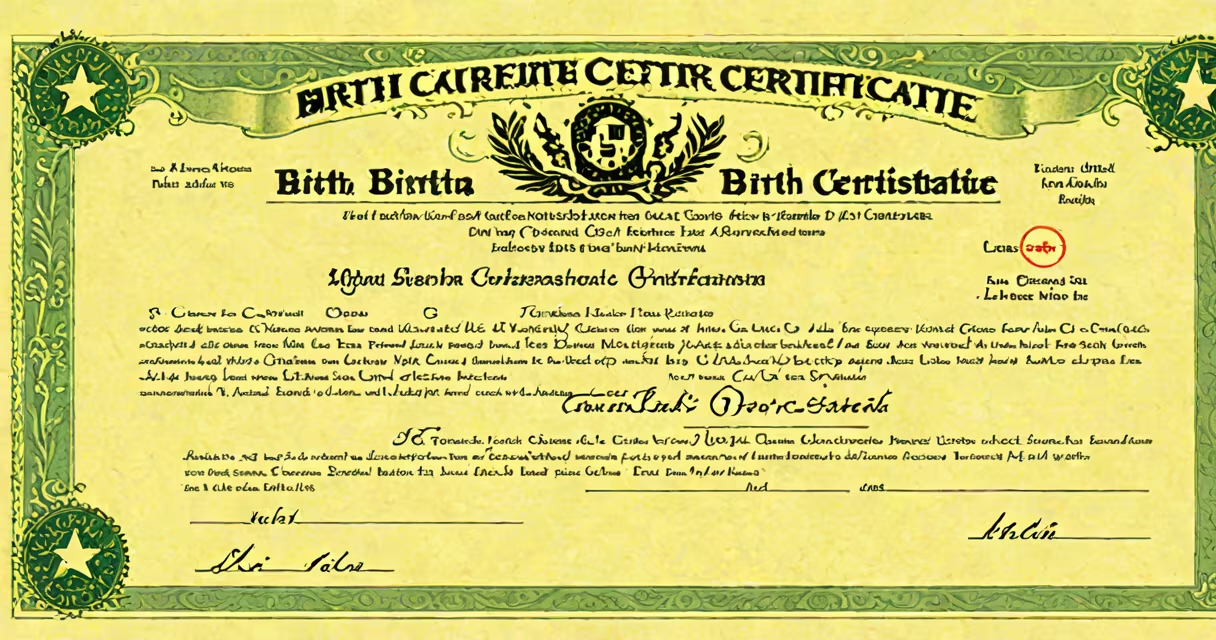
A birth certificate in Spanish translation is a certified, officially validated version of a U.S.-issued birth record rendered into Spanish. It serves as legal proof of identity and citizenship for individuals going through Spanish-speaking institutions or systems. This document must match the original in content and be produced by a qualified translator or agency.
When a person needs to submit a birth certificate to a Spanish-speaking entity-such as a consulate, school district, or immigration office-the original English version may not suffice. A Spanish translation ensures compliance with language requirements. The translation must be accurate, complete, and certified to carry legal weight. Without certification, the document is invalid for official purposes.
The U.S. Department of State requires certified translations for documents submitted in consular applications. Similarly, the Social Security Administration accepts Spanish translations only if they include a sworn statement from the translator affirming accuracy. These standards ensure consistency across international and federal systems.
A birth certificate in Spanish translation begins with the original document. The translator reviews every field: full name, date of birth, place of birth, parents' names, and issuing authority. Each element must be translated precisely. For example, "United States of America" becomes "Estados Unidos de América," and "City of New York" becomes "Ciudad de Nueva York."
After translation, the document undergoes certification. The translator signs a statement declaring the translation is accurate and complete. Some agencies require a notarized affidavit. The certification must include the translator's name, credentials, contact information, and a signature. The original birth certificate is never altered-only the translation is validated.
Once certified, the document is typically presented with a cover letter explaining its purpose. For immigration cases, this letter may reference Form I-130 or I-485. For school enrollment, it may cite state education regulations. The recipient verifies the certification before accepting the document.
A valid birth certificate in Spanish translation includes four core components:
There are two main types based on use:
| Type | Purpose | Required Certification |
|---|---|---|
| Standard Certified Translation | University admissions, employment verification | Yes - signed and stamped by translator |
| Notarized Translation | Immigration, court proceedings, passport renewal | Yes - notary public verifies identity and signature |
Some institutions accept both, but notarization adds legal weight. For example, U.S. Citizenship and Immigration Services (USCIS) mandates notarized translations for Form I-765. The National Association of Judiciary Interpreters and Translators (NAJIT) sets standards for translator qualifications, including ongoing training and adherence to ethical guidelines.
Common uses include applying for a U.S. passport, enrolling children in bilingual schools, securing healthcare benefits, or proving eligibility for scholarships. In Texas, for instance, students applying to public universities must submit transcripts and birth records in Spanish if their primary language is Spanish. The University of Texas at Austin requires a certified translation for all non-English documents.
Immigration is the most frequent context. A parent applying for a child's visa must provide a birth certificate in Spanish. USCIS rejects unverified translations. In 2022, over 12,000 visa applications were delayed due to missing or invalid translations, according to the Migration Policy Institute.
Another frequent scenario involves elderly relatives seeking Social Security benefits. A spouse who speaks only Spanish may need a certified translation to file a claim. The SSA's website states that only translations from approved providers are accepted. Using a non-certified service risks denial.
Many assume that online tools like Google Translate produce acceptable results. This is false. Machine-generated translations lack legal validity. They often misrender names, dates, or titles. For example, "mother's name" might appear as "nombre de la madre" instead of "nombre de la madre biológica," which changes meaning in legal contexts.
Another error is believing that any bilingual person can certify a translation. Only licensed translators or notaries authorized by state law can issue certified translations. In California, the Board of Language Certification requires exam passage and continuing education. Unauthorized individuals risk fines under Penal Code § 14.1.
A lesser-known fact: some U.S. states issue birth certificates in both English and Spanish. New Mexico, for example, offers dual-language birth certificates through the Department of Health. However, these are not automatically accepted abroad. For international use, a certified translation remains necessary.
In 2021, Maria Gómez applied for her daughter's F-1 student visa. Her daughter was born in Chicago and had a standard English birth certificate. Maria needed a Spanish translation for the U.S. embassy in Mexico City. She contacted a NAJIT-certified translator in Illinois. The translator reviewed the original, translated all fields using formal terminology, added a sworn statement, and affixed a notary seal.
She submitted the document with the visa application. The embassy accepted it within 72 hours. Had she used a free online tool, the application would have been rejected. The embassy's internal policy requires certified translations for all foreign-language submissions.
When in doubt, verify the translator's credentials. Always request a copy of the certification. If a service refuses, do not proceed. A single error can delay processing by weeks or months.