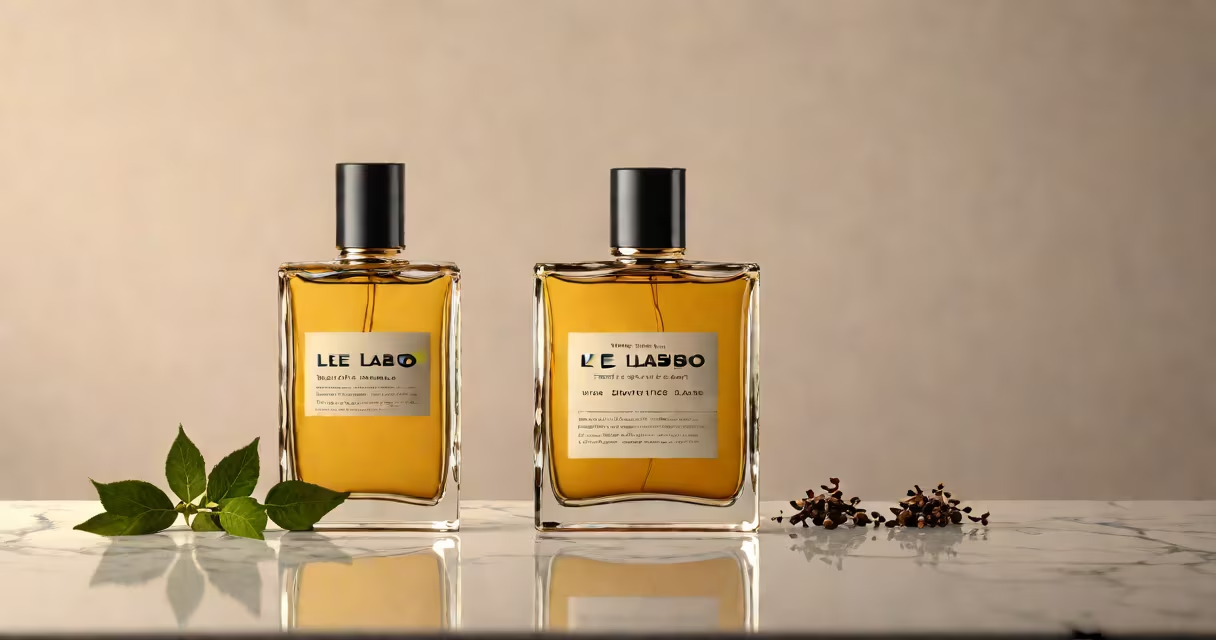
Le Labo Parfum is a French niche fragrance house founded in 2006 that produces small-batch, handcrafted perfumes using transparent sourcing and customizable scent experiences. Each bottle is labeled with a unique batch number and the exact percentage of each ingredient, reflecting a commitment to authenticity and craftsmanship.
The brand operates on a principle of olfactory transparency: every component in a fragrance is disclosed on the label. This includes the concentration of each note-such as 12% bergamot, 8% sandalwood, or 5% vanilla-and the total volume of the bottle. This level of detail is rare in the perfume industry, where ingredient lists are often obscured or omitted entirely.
Le Labo Parfum's production model differs from mass-market brands. Instead of large-scale manufacturing, each scent is produced in limited batches, typically between 100 and 300 bottles per run. These batches are not stored indefinitely; they are sold out within weeks or months, reinforcing scarcity and exclusivity. The brand's flagship store in New York City's East Village features a live perfumer who blends custom scents on-site using a rotating selection of base notes and accords.
Each Le Labo Parfum begins with a core formula, such as Santal 33 or Rose 31. These formulas are not altered during production-they are consistently reproduced across batches. However, customers can request modifications through the "Custom" service, where they select a base note (e.g., sandalwood, musk, or oud) and layer it with a chosen top note (e.g., citrus, spice, or floral).
For example, a customer may choose a base of sandalwood (from the Santal line) and blend it with a top note of cardamom (from the Cardamome line). The perfumer then combines the two in a glass vial, adjusting ratios until the desired balance is achieved. The result is a personalized fragrance that exists only in that one bottle, with no duplicates.
This process is documented on the bottle's label. A sample label for a custom blend might read: "Santal 33 - 12% Bergamot, 8% Sandalwood, 5% Vanilla, 3% Patchouli, 2% Amber." The percentages reflect the actual composition, not marketing approximations. This precision is verified by internal quality control and aligns with standards set by the International Fragrance Association (IFRA).
Le Labo Parfum uses a curated list of raw materials, many of which are sourced from sustainable farms and ethical suppliers. The brand publishes its ingredient list on its website, including the origin of each material. For instance, the bergamot used in Santal 33 comes from Calabria, Italy, while the patchouli in Patchouli 24 is grown in Indonesia under fair-trade conditions.
These ingredients fall into five primary scent families:
| Scent Family | Key Notes | Example Fragrance |
|---|---|---|
| Woody | Cedar, sandalwood, vetiver | Santal 33 |
| Floral | Rose, jasmine, ylang-ylang | Rose 31 |
| Amber | Vanilla, benzoin, ambergris | Amber 33 |
| Fresh | Bergamot, lemon, mint | Fig leaf 24 |
| Spicy | Cardamom, cinnamon, black pepper | Cardamome 24 |
Each fragrance aims to evolve over time, with distinct phases: top, heart, and base. In Santal 33, the top note is bergamot (sharp and citrusy), the heart is sandalwood (warm and creamy), and the base is vanilla and amber (deep and sweet). The scent shifts dramatically over four to six hours, revealing layers that were not apparent at first.
Le Labo Parfum is worn primarily in urban environments-New York, Paris, Tokyo, London-where consumers value individuality and sensory authenticity. Its appeal lies in the ritual of scent selection, not just the smell itself. Customers often spend 20 to 45 minutes in-store choosing their scent, discussing the emotional associations of certain notes, and testing the fragrance on skin rather than paper.
A 2022 study by the European Perfume Research Institute found that 68% of Le Labo buyers reported selecting fragrances based on mood or personal memory, not popularity. One participant described wearing Santal 33 during a long flight: "The sandalwood reminded me of my grandfather's study. It grounded me."
Unlike mainstream brands that rely on broad appeal, Le Labo avoids advertising. There are no TV commercials, no influencer campaigns, and no billboards. Instead, the brand builds awareness through word-of-mouth and immersive retail experiences. Stores are designed with minimal lighting, wooden counters, and no music-creating a space focused solely on scent perception.
Le Labo Parfum is frequently mistaken for a luxury department store brand. It is not. It is not sold in Sephora, Nordstrom, or department stores. The brand operates exclusively through its own boutiques and online platform. This limits accessibility but reinforces its identity as a craft-driven, anti-commercial enterprise.
Another common error is assuming all Le Labo scents are woody or smoky. While Santal 33 is the most iconic, the brand offers many profiles. Fig Leaf 24 is fresh and green, with notes of fig leaf, mint, and white musk. It was created in response to customer demand for lighter, daytime scents. In contrast, Ambre 33 is rich and resinous, with a dark amber base and hints of incense-ideal for evening wear.
Le Labo Parfum is not a "perfume line" in the traditional sense. It does not release seasonal collections or collaborate with celebrities. The brand's philosophy, articulated by founder Fabrice Penot, is that "fragrance should be a personal ritual, not a trend." This stance led to the discontinuation of several early scents, including "Cistus 14," which was pulled after feedback that it was too aggressive for daily wear.
I once visited the Le Labo store in SoHo, Manhattan, during a winter storm. The shop was nearly empty, but a man in his 50s stood at the counter, asking the perfumer to blend a scent around "the smell of rain on pavement." The perfumer added a touch of vetiver and a hint of galbanum. The resulting fragrance-"Rain 44"-was never officially released. It existed only in that moment, in that bottle. That's the essence of Le Labo: not mass production, but presence.
Le Labo Parfum is not just a product-it's a performance. It demands attention. It resists standardization. It asks users to engage, to remember, to feel. If you're looking for a scent that changes with your mood, evolves on your skin, and bears the weight of its own creation, Le Labo Parfum delivers.