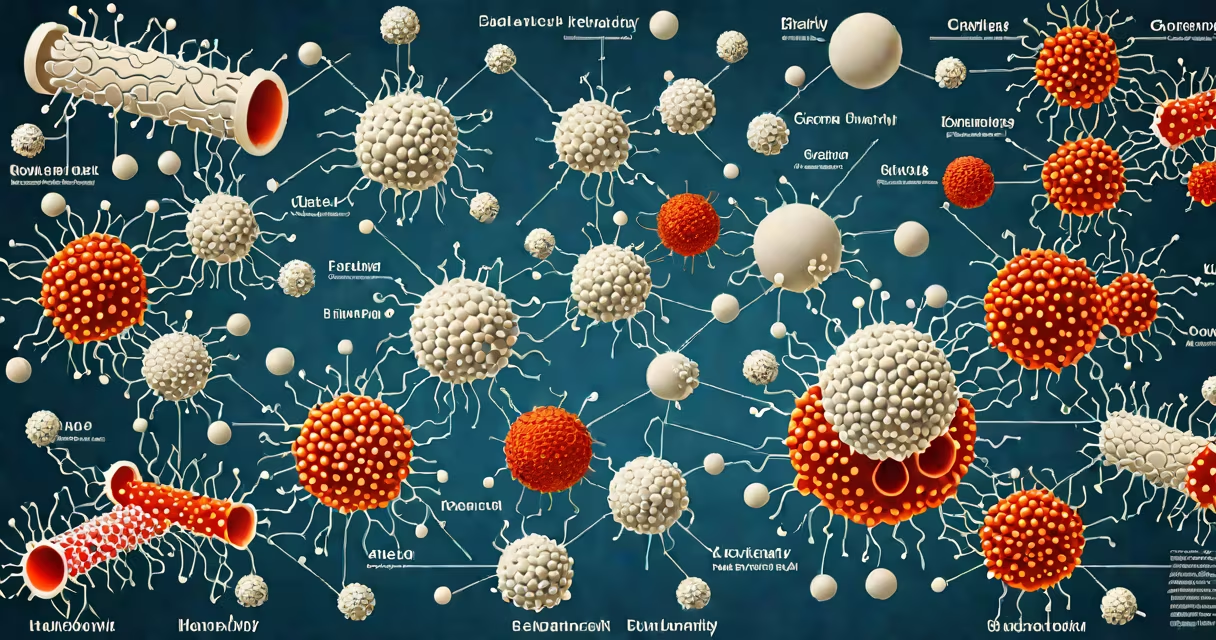
Immunity in biology is the ability of an organism to resist or eliminate potentially harmful foreign materials or abnormal cells. It involves coordinated responses by specialized cells and molecules to prevent disease caused by pathogens such as viruses, bacteria, fungi, and parasites.
The immune system operates through two primary layers: innate immunity, which provides immediate but nonspecific defense, and adaptive immunity, which develops targeted responses after exposure to specific antigens. These systems work together to maintain internal stability and protect against infection.
When a pathogen enters the body, innate immunity activates within minutes. Physical barriers like skin and mucous membranes act as first lines of defense. If breached, pattern recognition receptors on immune cells detect molecular signatures common to many pathogens-such as bacterial lipopolysaccharides or viral RNA-and trigger inflammation and phagocytosis.
Phagocytes like neutrophils and macrophages engulf and destroy invaders. Natural killer (NK) cells eliminate infected or cancerous host cells. This response is rapid, nonspecific, and does not improve with repeated exposure.
Adaptive immunity takes days to activate but offers long-term protection. Antigen-presenting cells process foreign proteins and display them on their surface using major histocompatibility complex (MHC) molecules. T cells and B cells recognize these signals and initiate tailored responses-T cells directly kill infected cells, while B cells produce antibodies that neutralize pathogens or mark them for destruction.
Immunity is broadly categorized into innate and adaptive forms. Each has distinct mechanisms and timeframes.
| Type | Onset Time | Specificity | Memory | Key Components |
|---|---|---|---|---|
| Innate immunity | Minutes to hours | Low (recognizes broad patterns) | No | Barrier defenses, phagocytes, NK cells, complement proteins |
| Adaptive immunity | Days to weeks | High (targets specific antigens) | Yes (long-lasting memory) | T cells, B cells, antibodies, MHC molecules |
A key feature of adaptive immunity is immunological memory. After an initial infection, memory T and B cells persist for years or decades. Upon re-exposure, they mount a faster, stronger response-this is the principle behind vaccination.
For example, after receiving a measles vaccine, the body generates memory B cells that recognize the measles virus. If exposed later, these cells rapidly produce neutralizing antibodies, preventing illness. Without this mechanism, reinfection would result in severe symptoms.
Immunity is often misunderstood as synonymous with "health" or "resistance to all illness." But immunity specifically refers to defense against infectious agents and abnormal cell growth-not general wellness. A person can be healthy yet lack immunity to a novel virus.
Another misconception is that immunity is solely cellular. While lymphocytes are central, humoral immunity-mediated by antibodies in blood and lymph-is equally important. Antibodies neutralize toxins, opsonize pathogens for phagocytosis, and activate the complement cascade.
Autoimmune disorders arise when adaptive immunity mistakenly targets self-antigens. Conditions like type 1 diabetes and rheumatoid arthritis result from T cells attacking insulin-producing beta cells or joint tissues. This shows immunity is not inherently protective-it depends on accurate self/non-self discrimination.
One documented case of immunity failure occurred during the 2014 Ebola outbreak in West Africa. Some patients developed high viral loads because their adaptive immune response was delayed or suppressed. Autopsies revealed depleted lymph node reserves and poor T cell activation, highlighting how delayed adaptive immunity can lead to fatal outcomes.
Conversely, successful immunity is seen in HIV-positive individuals who maintain low viral loads despite infection. These "elite controllers" exhibit strong CD8+ T cell responses targeting conserved regions of the HIV genome. Their immune systems suppress replication without medication-a rare but biologically significant example of effective adaptive immunity.
From a practical standpoint, understanding immunity definition biology is essential for developing vaccines, treating autoimmune diseases, and managing organ transplants. Immunosuppressants are used to prevent rejection, but they increase infection risk-underscoring the delicate balance required in clinical immunology.
I once observed a controlled experiment in a university lab where mice were exposed to a modified influenza strain. One group received a live-attenuated vaccine; the other did not. After challenge, vaccinated mice showed no signs of illness, while controls lost weight and had high lung viral titers. Blood analysis confirmed elevated IgG levels and activated CD4+ T cells in the vaccinated group-clear evidence of adaptive immunity in action.
Finally, immunity functions within the context of the whole organism. An organism in biology is defined as a living entity capable of metabolism, growth, reproduction, and response to stimuli. Immune function is one of the systems that sustain organismal integrity under environmental stress.
Understanding immunity definition biology enables deeper insight into health, disease, and evolution. It explains why some people recover quickly from infections while others face complications. It also reveals how medical interventions-from antibiotics to monoclonal antibodies-interact with biological defense mechanisms.
With advances in immunotherapy, particularly in cancer treatment, the relevance of immunity definition biology continues to grow. Therapies like checkpoint inhibitors reactivate T cells that had become exhausted in tumors-demonstrating that immunity is not static, but adaptable and modifiable.