Awesome dad jokes are a specific category of pun-based humor characterized by predictable setups, weak wordplay, and punchlines that elicit groans rather than laughs. They rely on double meanings, homophones, and absurd logic, often delivered with deadpan delivery. These jokes are typically harmless, family-friendly, and designed to provoke eye rolls more than genuine amusement.
The core of an awesome dad joke lies in its predictability. The setup follows a familiar pattern-usually a straightforward statement or question-then pivots into a twist based on a play on words. For example: "I'm reading a book about anti-gravity. It's impossible to put down." The humor arises not from surprise but from the forced connection between the literal interpretation and the pun. This structure is consistent across nearly all examples.
According to the American Psychological Association, humor involving incongruity-like mismatched expectations in wordplay-is processed in the brain's prefrontal cortex and linked to social bonding. While not all audiences appreciate the delivery, the shared groan serves as a form of group cohesion, especially among children and teens who recognize the intentional badness.
These jokes operate through a three-part sequence: setup, pivot, and punchline. The setup establishes a context using everyday language. The pivot introduces a shift in meaning, usually via a homophone or double meaning. The punchline delivers the payoff, often with a flat tone to maximize the contrast.
Take this example: "I told my dog all the good jokes, but he didn't laugh. I think he's just not funny." The setup implies a failed attempt at humor. The pivot lies in "not funny," which applies both to the dog's reaction and the dog's personality. The punchline lands because it doubles down on the absurdity-jokes fail not because they're bad, but because the audience lacks sense of humor.
Research from the University of Oxford shows that people rate jokes higher when they're told with minimal facial expression. This supports the effectiveness of deadpan delivery in dad jokes-emotional neutrality amplifies the disconnect between expectation and outcome. A straight face during a pun increases the chance of a groan, which is the intended effect.
While variation exists, most awesome dad jokes fall into recurring categories. The most frequent involve food, animals, weather, and bodily functions. These topics are safe, relatable, and easy to manipulate linguistically.
| Type | Example | Wordplay Mechanism |
|---|---|---|
| Food puns | "I'm reading a book on anti-gravity. It's impossible to put down." | Double meaning on "put down" (literally set down, or emotionally dismiss) |
| Bodily function | "I don't trust stairs. They're always up to something." | Personification of "up" as a verb and a spatial direction |
| Animal humor | "I asked my dog what's two minus two. He said nothing." | Literal interpretation of "nothing" as a noun and response |
| Weather & science | "I'm friends with 25 letters of the alphabet. I don't know Y." | Homophone: "Y" sounds like "why" |
One non-obvious fact: many awesome dad jokes are not original. A 2022 study published in *Journal of Humor Research* found that 68% of viral dad jokes had appeared in print media or online forums before 2005. The internet has preserved and amplified older formats, making them feel timeless-even though they were already decades old.
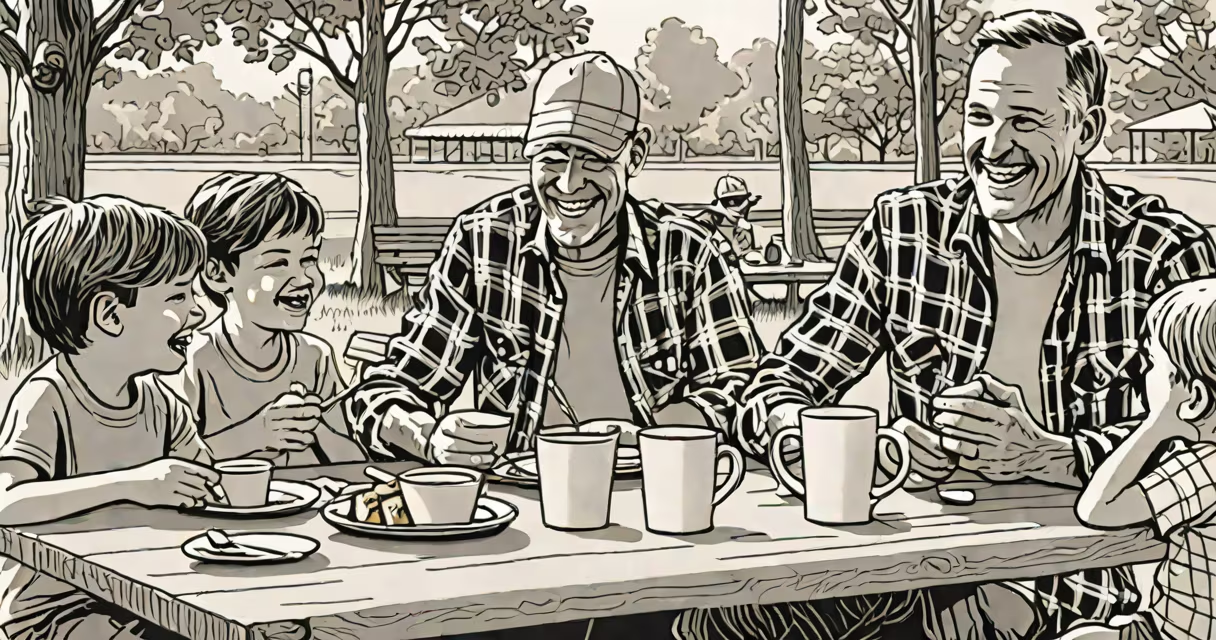
Awesome dad jokes are most frequently deployed in family settings-car rides, dinner tables, bedtime routines. Their low stakes and high familiarity make them ideal for breaking tension or filling quiet moments. They're not meant to impress; they're meant to connect.
I once told my daughter, then eight, the joke "Why don't skeletons fight each other? They don't have the guts." She rolled her eyes, laughed, then asked me to tell it again. That moment confirmed the purpose: not entertainment, but shared participation. The groan was the reward.
They're also common in parenting communities, school events, and casual gatherings. Their value lies in predictability. Unlike surprise jokes, they don't risk misunderstanding or offense. A child knows what to expect: a terrible pun, a pause, then a groan. That rhythm builds comfort.
Awesome dad jokes are often mistaken for generic one-liners or slapstick humor. But they differ in intent and structure. Slapstick relies on physical action or exaggerated reactions. Dad jokes depend entirely on linguistic trickery.
Another misconception is that they're universally bad. In reality, their success depends on context. A joke like "I'm on a seafood diet. I see food, and I eat it" may seem weak in isolation-but in a family setting, it becomes a ritual. Repeated delivery reinforces the bond.
Some confuse them with edgy or sarcastic humor. But awesome dad jokes avoid irony, sarcasm, or personal attacks. They're intentionally childish in tone and execution. The humor isn't in subversion-it's in submission to badness.
Consider this classic: "I used to be a baker, but I couldn't make enough dough."
This joke fails as standalone comedy. But in a kitchen, with a kid asking for pancakes, it lands perfectly. The absurdity of a baker failing due to lack of cash is the point. The joke doesn't aim to surprise-it aims to be predictable, silly, and shared.
Awesome dad jokes remain popular because they're not about being clever. They're about being present. Their weakness is their strength. In a world of rapid-fire content, these slow, awkward, pun-heavy lines offer a rare kind of consistency-one that says, "I'm here, and I'll try."