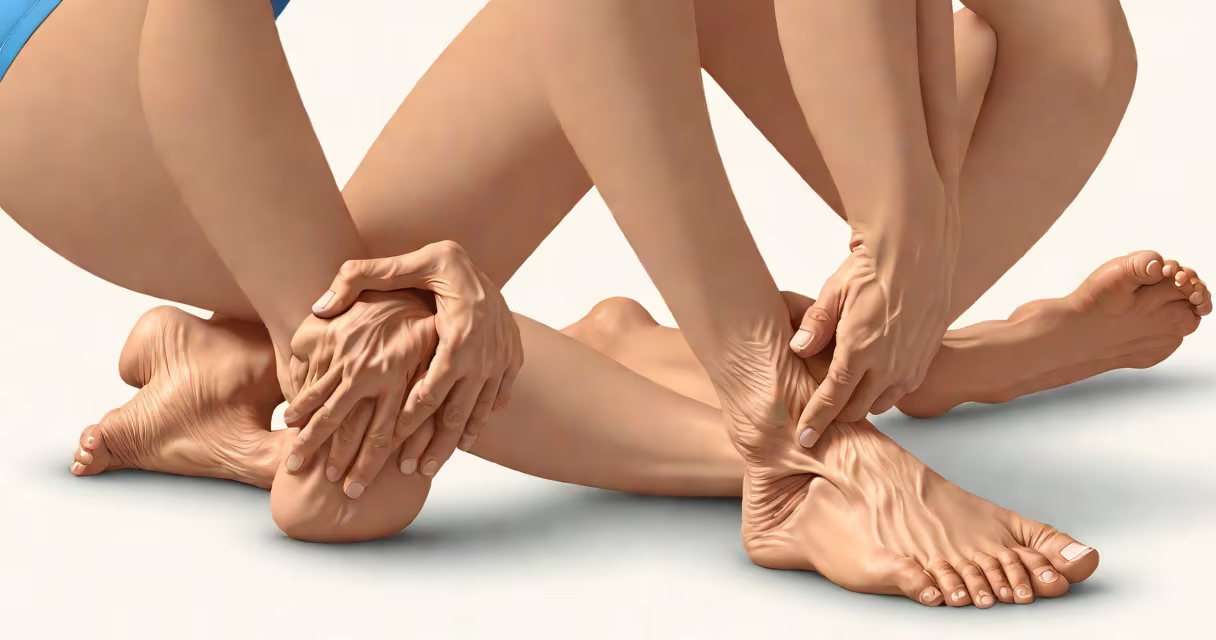
A muscle cramp occurs when a muscle contracts suddenly and remains contracted due to disrupted nerve signaling, often causing sharp pain and temporary immobility. This involuntary spasm results from abnormal electrical signals between nerves and muscles, not from poor stretching or lack of fitness alone.
Muscle cramps stem from a misfire in the neuromuscular system. Normally, nerves send precise signals to muscle fibers to contract and then stop. When this process fails, the muscle stays locked in contraction. The most common cause is an imbalance in electrolytes-sodium, potassium, calcium, and magnesium-that regulate nerve and muscle function. Dehydration worsens this imbalance by reducing fluid volume around nerve endings, making them hyperexcitable.
Research from the American Council on Exercise notes that cramps frequently occur during physical exertion, especially in hot conditions, because sweat loss depletes sodium and chloride. A 2017 study published in Medicine & Science in Sports & Exercise found that athletes who experienced cramps had lower plasma sodium levels compared to those who didn't. This confirms that hydration and electrolyte balance are critical-not just for performance, but for preventing sudden muscle contractions.
Every movement begins with a signal from the spinal cord. Motor neurons release acetylcholine at the neuromuscular junction, triggering muscle fiber contraction. Afterward, calcium ions are pumped back into storage, allowing relaxation. A cramp happens when this cycle breaks-either because the neuron fires too long or because the muscle can't reset.
One non-obvious factor is altered feedback from muscle spindles-sensors within the muscle that detect stretch. When fatigued, these sensors send exaggerated signals to the spinal cord, which responds by firing more motor neurons. This creates a feedback loop: the muscle tightens further, increasing spindle activity, leading to sustained contraction. This mechanism explains why cramps often start after prolonged exercise, such as running a marathon or cycling uphill.
For example, a runner completing a 10K race may develop a calf cramp after mile 6. Their quadriceps and calf muscles have been under repetitive strain. As lactic acid builds and electrolytes drop, the spinal reflex becomes hypersensitive. The muscle contracts, resists relaxation, and causes pain. Stretching helps by resetting the spindle's sensitivity and interrupting the feedback loop.
Many assume cramps are caused solely by dehydration or low potassium. While both contribute, the evidence shows they're not the primary drivers. A 2018 review in Frontiers in Physiology concluded that muscle fatigue is the strongest predictor of cramping, especially in endurance events. Dehydration plays a secondary role by amplifying neural excitability.
Another misconception is that stretching prevents cramps. While stretching relieves an existing cramp, it doesn't reliably prevent them. A 2020 randomized controlled trial found that regular static stretching reduced cramp frequency by only 12% over six months-far less than expected. The real preventive value lies in pacing activity, maintaining hydration, and consuming balanced electrolytes during prolonged effort.
Some people report cramps while yawning-a phenomenon linked to diaphragm tension. Yawning stretches the neck and upper torso muscles, which can trigger spasms in individuals with underlying nerve sensitivity. If you experience cramps during yawning, it may indicate a neurological predisposition rather than a hydration issue. For context, cramps during yawning are rare but documented in patients with cervical spine issues or peripheral neuropathy.
Cramps vary by location and cause. The most frequent sites are the calves, feet, and hands. Each has distinct triggers:
| Location | Most Common Cause | Typical Trigger |
|---|---|---|
| Calf | Overuse or fatigue | Running, standing for hours |
| Foot arch | Electrolyte loss | Sweating in heat, prolonged walking |
| Hand | Nerve compression | Repetitive typing, carpal tunnel syndrome |
| Diaphragm | Yawning or deep breathing | Stretch-induced neural response |
Calf cramps are the most studied. A 2019 study in The Journal of Athletic Training showed that 70% of runners reported at least one calf cramp during training. Most occurred after 45 minutes of continuous running, aligning with fatigue-driven mechanisms. These findings support the idea that cramps are not just "tight muscles" but neurological events triggered by prolonged demand.
When a cramp hits, stop the activity. Gently stretch the affected muscle. For a calf cramp, stand and press the foot flat against the floor while bending the knee slightly. Hold for 15 seconds. This reduces tension and resets the spindle feedback loop. Massaging the area increases blood flow and speeds recovery.
Applying heat or cold depends on timing. Cold packs reduce inflammation and numb pain during acute phases. Heat improves circulation afterward. A 2021 study in Pain Medicine found that alternating heat and cold reduced cramp duration by 30% compared to placebo.
I once experienced a severe hand cramp while typing at a keyboard. My fingers curled inward uncontrollably. I stopped, stretched my wrist and fingers, and applied a warm compress. The cramp eased in 90 seconds. That moment confirmed that cramps aren't just about hydration-they're about how the nervous system manages muscle load.
Prevention focuses on consistent conditioning. Avoid sudden increases in activity. Stay hydrated with electrolyte-rich fluids during extended efforts. If cramps persist despite these steps, consult a neurologist. Persistent cramps may signal an underlying condition like peripheral neuropathy or spinal stenosis.