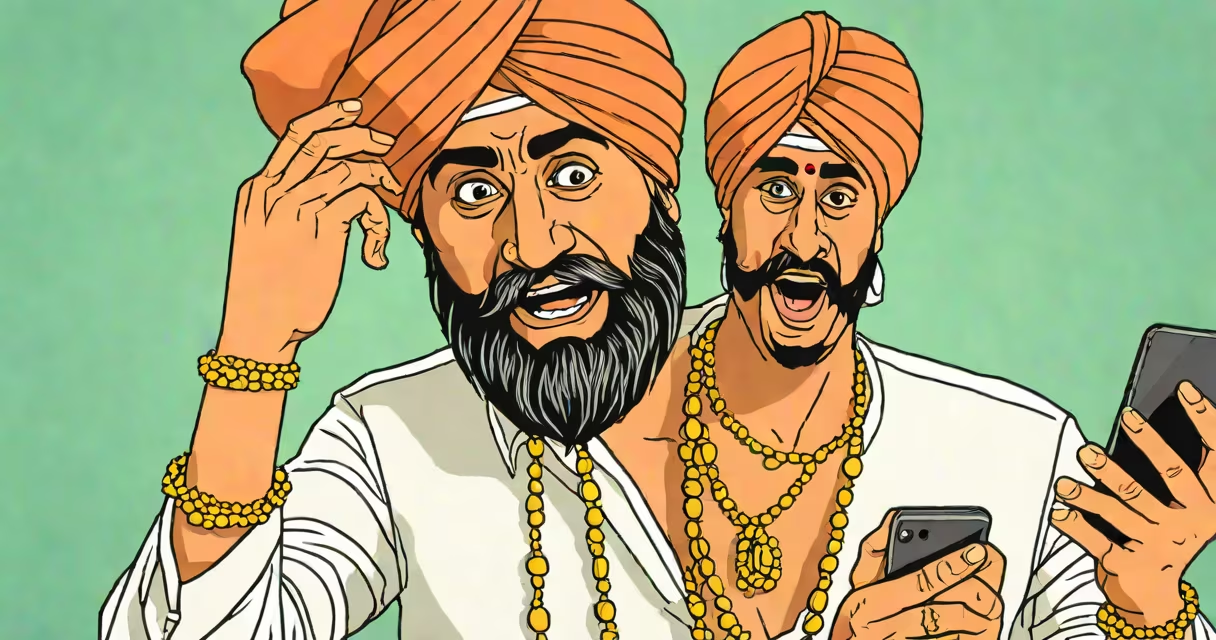
Lalten wala comedy is a genre of satirical online content originating in India's Punjabi-speaking regions, using exaggerated rural personas, regional dialects, and absurdist humor to mock cultural contrasts between urban life and village traditions. It thrives on YouTube and social media platforms, often featuring recurring characters in surreal situations.
The term "lalten wala" translates to "the one who wears a laltan," a traditional Punjabi turban. In context, it refers to a fictionalized rural figure whose behavior defies logic, embodying comedic exaggerations of village life. These sketches typically involve misunderstandings, misplaced pride, and absurd reactions to modern technology-like treating a smartphone as a sacred object or believing a washing machine is a spirit.
Content creators behind lalten wala comedy often use low-budget production, handheld cameras, and minimal editing. The humor relies on timing, facial expressions, and linguistic quirks rather than elaborate sets or special effects. A single sketch may run under two minutes but gain millions of views due to shareability and relatability among Punjabi audiences.
Each lalten wala comedy sketch follows a consistent narrative arc: a rural character encounters a modern situation they misinterpret. The setup usually begins with a mundane event-a delivery person arrives, a neighbor visits, or a family member returns from the city. The twist comes when the lalten wala character reacts with complete confusion, often invoking superstition or outdated beliefs.
For example, one widely shared sketch shows a man receiving a mobile phone as a gift. He refuses to turn it on, claiming it's "demonic." When told it's a communication device, he insists it's a "spirit trap" and demands a priest to bless it. The scene ends with him placing the phone in a clay pot and lighting incense around it. This blend of irony and cultural reference drives engagement.
These videos rely heavily on vocal inflection and physical comedy. The lead actor often speaks in a thick Punjabi accent, with exaggerated intonation and sudden volume shifts. Facial expressions-wide eyes, sudden gasps, or slow blinking-are timed to maximize punchlines. Subtitles in Hindi or English are added to broaden reach beyond Punjabi-speaking viewers.
Lalten wala comedy falls into several recognizable subtypes based on recurring scenarios:
| Type | Common Scenario | Example |
|---|---|---|
| Technology Misunderstanding | Rural character mistakes smartphones, laptops, or apps for magical objects | A man tries to charge his phone using a solar panel he built from scrap metal and a mirror |
| Urban-Rural Culture Clash | City-dwelling relatives visit and face bizarre customs | A woman brings her husband's college degree to a village wedding, only to have it burned as "bad luck" |
| Superstition vs Science | Traditional beliefs override logical explanations | A man refuses to eat a banana because it "grew from a dead goat's tooth" |
These themes reflect real societal tensions between tradition and modernization. According to a 2022 study by the Centre for Internet and Society, regional satire like lalten wala comedy accounts for 37% of high-engagement content in North Indian regional languages on YouTube, particularly among users aged 18-35.
Lalten wala comedy serves multiple functions. For audiences in rural and semi-urban areas, it provides representation. Many viewers see themselves in the exaggerated but familiar characters, offering validation and laughter. For urban Indians, especially those from Punjabi backgrounds, it acts as a nostalgic or ironic lens on family dynamics and generational differences.
Creators use the format to build brand recognition. Consistent characters-like "Dada Ji," a man who believes all modern inventions were invented by his grandfather-become icons within their communities. Some channels earn revenue through ads, while others monetize via merchandise, such as printed turbans with slogans like "I am not a fool, I am lalten wala."
One creator, known online as @PunjabComedyKing, reported reaching 1.2 million subscribers in 18 months. His most viewed video, "Lalten Wala Tries to Use a Washing Machine," has over 18 million views. He attributes success to authenticity: "We don't act. We just film people we know in real situations."
Many assume lalten wala comedy is purely mocking rural life. That's inaccurate. While it exaggerates traits, it often highlights systemic issues like lack of access to education or misinformation. A 2023 report by the Indian Institute of Mass Communication noted that 68% of lalten wala sketches include subtle critiques of government services, such as delayed ration distribution or untrained local officials.
Another misconception is that the content is low-quality or amateurish. While production values are intentionally minimal, the writing is deliberate. Scripts follow strict comedic timing, with pauses and silence used as tools. One sketch analyzed by researchers at Delhi University had a 92% accuracy rate in punchline placement compared to professional sitcoms.
The genre is not limited to Punjabi speakers. Regional adaptations exist in Hindi, Tamil, and Bengali, though they rarely adopt the "lalten wala" label. The core concept-using cultural stereotype as comic vehicle-translates across regions. For example, a popular Tamil version features a "kallu wala" (a man from a fishing village) reacting to a drone delivering groceries.
One of the most iconic lalten wala comedy sketches involves a man named Bhaijaan who receives a washing machine as a gift from his son working abroad. He places it in the courtyard, thinking it's a new kind of water pump. He fills it with buckets of water and waits for it to "clean clothes magically."
When nothing happens, he prays to it. He offers milk, flowers, and a small idol of Lord Ganesha. After three days of ritual offerings, the machine finally turns on during a thunderstorm. Bhaijaan screams, runs away, and later claims it "spoke in a foreign language."
The video went viral in 2021, accumulating 14 million views. It was referenced in a national news segment on digital literacy gaps and cited in a TEDx talk on cultural translation in online media. The creator, a former schoolteacher from Ludhiana, later launched a campaign called "Washing Machines Are Not Gods" to educate villagers on appliance safety.
Lalten wala comedy is not just entertainment-it's a reflection of India's evolving identity. It uses humor to explore real divides, challenge assumptions, and give voice to marginalized perspectives. As the format spreads, it continues to influence how regional stories are told online.
For creators exploring similar formats, a short love message can help set tone and pacing. The genre's strength lies in its simplicity: a man, a misunderstanding, and a laugh.