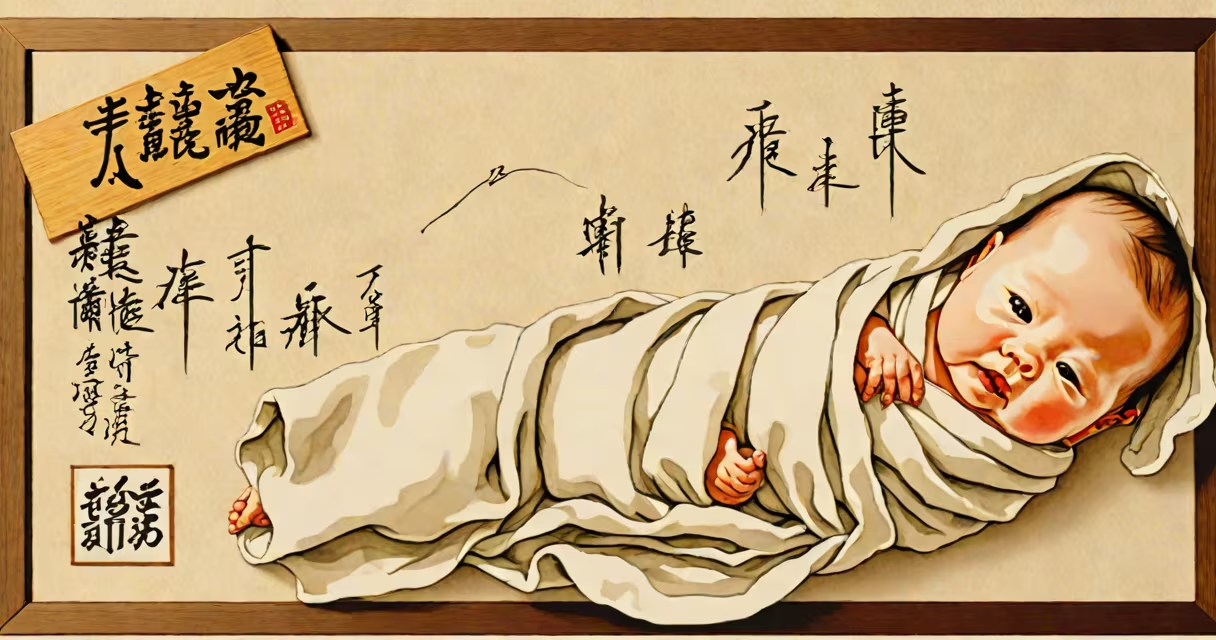
japanese baby names are traditionally derived from kanji characters, each carrying specific meanings related to nature, virtues, or aspirations. Names often reflect seasonal elements, moral qualities, or familial hopes, and are chosen based on pronunciation, meaning, and cultural resonance rather than Western-style popularity rankings.
Names in Japan are typically written using kanji, which are Chinese-derived characters that represent ideas or concepts. For example, "Aoi" (葵) means "hollyhock," a flower associated with resilience and loyalty. The same sound can be written with different kanji-such as "Aoi" (青い), meaning "blue"-so the choice of characters determines the name's meaning. This dual system allows for both phonetic consistency and semantic variation.
Most Japanese names follow a pattern: a single syllable or two for the given name, and a surname (family name) that usually comes last. Surnames often derive from geography-like "Tanaka" (田中), meaning "middle of the rice field"-while given names may reference weather ("Haruka," meaning "distant"), seasons ("Kotaro," meaning "second son born in autumn"), or virtues such as "Yuki" (雪), meaning "snow," symbolizing purity.
Names are selected through a combination of sound, meaning, and cultural familiarity. Parents often consult name dictionaries or online tools that list thousands of approved names registered under Japan's Ministry of Health, Labour and Welfare. These databases include over 100,000 officially recognized names, though only a few hundred are commonly used.
Gender is often indicated by the kanji used. For example, "Ren" (蓮) can mean "lotus," a symbol of purity, and is used for both boys and girls. But "Ren" (怜), meaning "compassion," is more frequently given to girls. The same pronunciation can carry entirely different meanings depending on the character.
Names are also influenced by regional dialects and historical naming practices. In older generations, names like "Takeshi" (武志) were common-"také" meaning "to take" or "to seize," and "shi" meaning "will" or "spirit." Today, names like "Sora" (空), meaning "sky," or "Hikaru" (光), meaning "light," have gained popularity due to their poetic sound and positive associations.
Japanese baby names fall into several categories based on meaning and origin:
| Type | Examples | Meaning & Origin | Usage Frequency |
|---|---|---|---|
| Nature-based | Aoi, Sora, Kaito | Derived from plants, animals, or weather (e.g., "Aoi" = hollyhock; "Sora" = sky) | High - especially since 2000 |
| Virtue/Quality | Yūki (勇気), Haru (春) | "Yūki" means "courage"; "Haru" means "spring" or "gentleness" | Medium - stable over decades |
| Modern/Foreign Influence | Ren, Riku, Mio | Sound-alike adaptations of foreign names (e.g., "Riku" from "Richard") | Very high - dominant in 2010s-2020s |
| Classical/Traditional | Kōsuke, Akira | Rooted in classical literature or Buddhist texts (e.g., "Akira" from "bright") | Declining - less common among younger parents |
Since 2010, names ending in "-to" (like "Kaito") or "-ya" (like "Ryota") have risen sharply in popularity. According to the National Institute of Population and Social Security Research, "Kaito" ranked #1 for boys in 2016 and remained in the top 10 through 2023. Similarly, "Sakura" (cherry blossom) has been consistently popular for girls since the 1990s.
A lesser-known fact: many names are not assigned until after birth. While parents may have a list of preferred names, the official registration requires the child's sex to be confirmed. Some families choose names based on the child's birth time, zodiac sign, or even the day's auspiciousness according to the lunar calendar.
Many assume Japanese names are always gender-neutral or that all names are short. In reality, names like "Yoshinori" (善則) or "Reiko" (玲子) are longer and gendered. "Reiko" is almost exclusively female, while "Yoshinori" is male and rarely used for girls.
Another misconception is that names like "Naruto" or "Sasuke" are real baby names. These are fictional characters from the anime series *Naruto*. While they've inspired real-world usage-especially in the early 2000s-official statistics show fewer than 100 children named "Naruto" nationwide, and most are used ironically or as nicknames.
Parents sometimes confuse pronunciation with spelling. For example, "Miyuki" (美由紀) sounds like "mee-yoo-kee," but the kanji "美" (beauty), "由" (reason), and "紀" (record) give it a layered meaning: "beautiful reason, recorded history." Misreading the kanji can lead to unintended meanings.
In 2022, a couple in Kyoto chose the name "Hikari" (光) for their daughter. They selected it because "Hikari" means "light" and evokes hope and clarity. The mother wanted a name that felt warm and timeless. She avoided overly trendy names like "Rin" or "Momo" because they felt too common.
They checked the government's official name registry, which lists over 100,000 approved combinations. "Hikari" was available and had been used for about 1,200 girls in the past decade. They chose the kanji "光" (light), avoiding "光" spelled with a different character that could imply "ghost" or "spiritual light."
The name was registered with the local city office. After approval, they received a certificate with the name in kanji, hiragana, and Romanized form. The child's name appears in public records as "Hikari Tanaka."
When asked about the process, the father said, "We didn't want something flashy. We wanted a name that felt meaningful, not just trendy. 'Hikari' reminded us of morning sun through the trees."
Japanese baby names are not just personal identifiers-they reflect deeper cultural values. Nature, harmony, and modesty are central themes. A name like "Shizuka" (静香), meaning "quiet fragrance," suggests inner peace and subtle beauty, values emphasized in traditional Japanese aesthetics.
Some names are tied to religious or seasonal festivals. "Tsukimi" (月見), meaning "moon viewing," is sometimes used during autumn months, especially around the Mid-Autumn Festival. Though rare, it's still registered and legally valid.
For those exploring names beyond Japan, the conversion between Chinese and Japanese scripts reveals how similar characters can carry different meanings. For example, "Shin" (真) means "truth" in Japanese but "new" in Chinese. Understanding these differences prevents misinterpretation when adapting names across cultures.
According to the Ministry of Health, Labour and Welfare, 98% of registered names in 2023 used standard kanji approved in the national database. Over 10,000 unique names were registered annually, with the most popular names changing slightly each year based on media influence and regional preferences.
Japanese baby names are not random selections. They are deliberate choices shaped by language, history, and family intention. Whether drawn from ancient poetry, seasonal cycles, or modern pop culture, each name carries weight and memory.