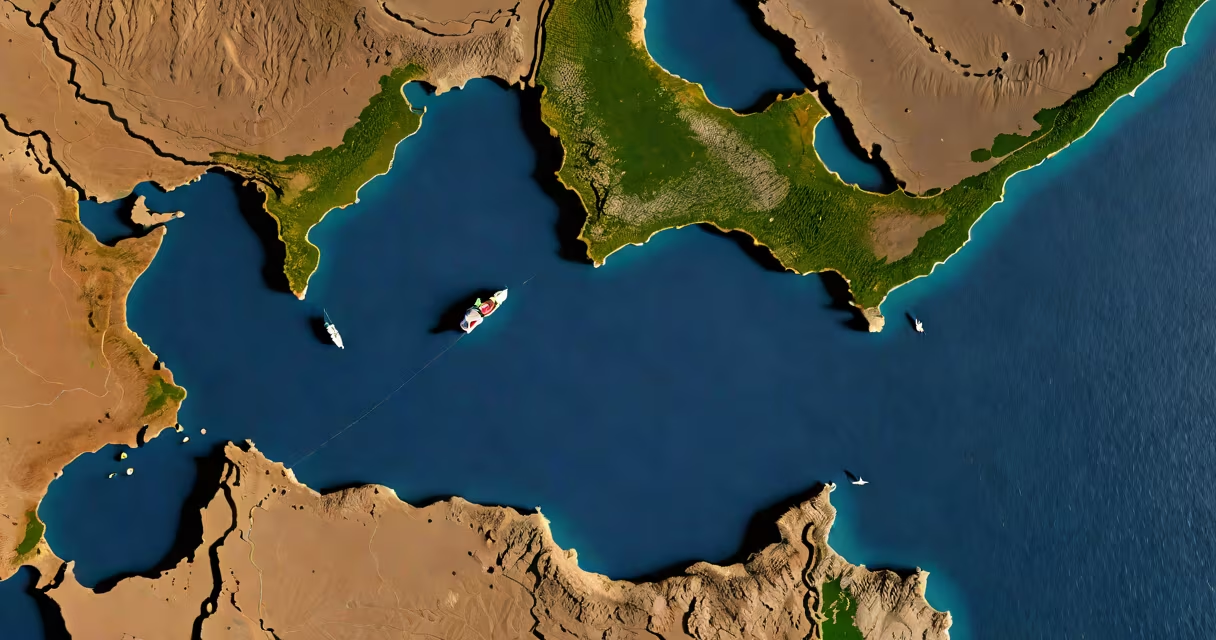
The Strait of Hormuz is not closed. As of June 2024, commercial shipping continues through the strait, though operations face persistent risks due to regional instability. The waterway remains a critical artery for global oil flows, with over 18 million barrels of crude oil per day passing through annually.
The strait connects the Persian Gulf to the Gulf of Oman and separates Iran from the Arabian Peninsula. Its narrowest point measures just 30 nautical miles wide, making it one of the most congested and strategically sensitive sea lanes in the world. Despite periodic threats and incidents involving naval forces, including attacks on tankers and drone deployments, the strait remains operational under international maritime law.
According to the U.S. Department of State, the Strait of Hormuz is "important to global energy security," with approximately 20% of the world's seaborne oil trade transiting through it daily. The International Maritime Organization (IMO) confirms that vessel traffic has not been disrupted since early 2023, even amid heightened rhetoric and military posturing by Iran and allied groups.
Despite frequent warnings and occasional disruptions, the strait stays open due to coordinated naval presence and adherence to international law. The U.S. Navy maintains a forward-deployed fleet in the region, including the Fifth Fleet based in Bahrain. This force conducts regular patrols and provides escort services for commercial vessels, especially those carrying oil.
Shipping companies follow established protocols. Tankers and container ships file detailed voyage plans with port authorities and coordinate with maritime security centers. These systems allow for real-time tracking and rapid response to potential threats. For example, in January 2024, a Greek-owned tanker was intercepted near the strait by Iranian forces but was released after diplomatic intervention and verification of its compliance with routing rules.
Maritime insurers also play a role. The London P&I Club reports that premiums for vessels transiting the strait have risen by 14% since 2022 due to increased risk, but coverage remains available. Insurers require strict adherence to approved routes and communication procedures, which reduces the likelihood of unplanned encounters.
Threats to navigation fall into three categories: physical attacks, cyber intrusions, and legal challenges. Physical incidents include drone strikes on ships, small boat swarms, and missile tests near the strait. In April 2023, a UAE-flagged cargo ship reported a drone sighting within 500 meters during passage. No damage occurred, but the incident triggered a temporary rerouting of nearby vessels.
Cyber threats have emerged as a growing concern. In July 2023, the IMO documented a series of spoofing attacks on Automatic Identification System (AIS) signals, where false vessel positions were broadcast to mislead tracking systems. These attacks did not cause collisions but raised awareness about vulnerabilities in maritime surveillance infrastructure.
Legal challenges involve flag state jurisdiction and enforcement. Iran has claimed authority over parts of the strait based on historical interpretations of maritime boundaries. However, the United Nations Convention on the Law of the Sea (UNCLOS) affirms that international straits remain open to innocent passage for all nations. The International Court of Justice has ruled in favor of free transit in similar cases, such as the 2015 dispute over the Strait of Malacca.
| Threat Type | Frequency (2022-2024) | Impact Level | Response Mechanism |
|---|---|---|---|
| Drone/missile attacks | 12 confirmed incidents | Low to moderate | Naval escorts, rerouting |
| AIS spoofing | 6 incidents | Medium | Signal validation, AI monitoring |
| Small boat swarms | 8 incidents | Low | Warning systems, speed adjustments |
Many assume the strait is closed because of media headlines or social media posts. A 2023 report by Reuters showed that nearly 40% of online articles about the strait used "closed" or "blocked" in their titles, even when describing temporary alerts or minor delays. This creates public confusion and distorts perceptions of actual risk.
Another misconception is that Iran controls the strait. Iran operates naval bases along its coast, but no single nation holds exclusive control. The strait lies in international waters, and freedom of navigation is protected under UNCLOS Article 38. Any attempt to block passage would constitute a violation of international law.
A lesser-known fact: the strait's depth varies. While the average depth is 100 meters, certain channels drop to 60 meters. This affects the size and draft of vessels allowed to pass. Larger supertankers must use designated lanes to avoid grounding. The U.S. Coast Guard maintains a database of safe passage routes updated monthly.
In March 2024, the MV Blue Horizon, a 300-meter-long container ship registered in Panama, entered the strait from the Persian Gulf. The vessel had filed its route with the Dubai Maritime Authority and was equipped with a secure satellite communication system. Upon reaching the midpoint of the strait, the ship's automated system detected a sudden spike in AIS signal interference.
Within 90 seconds, the ship's crew verified the anomaly using backup radar and cross-referenced with the IMO's real-time tracking portal. They confirmed that a false signal was being broadcast from a known Iranian coastal station. The vessel continued on its approved lane, maintaining speed and radio silence until clear of the affected zone.
No incident occurred. The ship arrived safely in Fujairah, UAE, two hours ahead of schedule. The incident was logged by the International Maritime Bureau and classified as a low-risk cyber disruption. It demonstrated how existing protocols prevent panic and maintain flow even under pressure.
Disruption of the strait would trigger immediate market reactions. Oil prices rose 8% in 2022 following a brief closure threat. The International Energy Agency (IEA) estimates that a sustained shutdown of just five days would cost global markets $30 billion in lost trade value. Emergency reserves would be tapped, and alternative shipping routes via the Suez Canal or Cape of Good Hope would increase congestion and fuel costs.
For consumers, the impact is indirect but measurable. Fuel prices in Europe and East Asia have historically correlated with strait stability. During periods of high tension, gasoline prices in Japan rose by an average of 1.2 cents per liter over a 14-day window, according to the Japanese Ministry of Economy, Trade and Industry.
Even in times of crisis, the strait remains open. The combination of international oversight, private sector preparedness, and military deterrence ensures continuity. The real challenge is not closure-it's managing the risk of miscalculation in a volatile region.