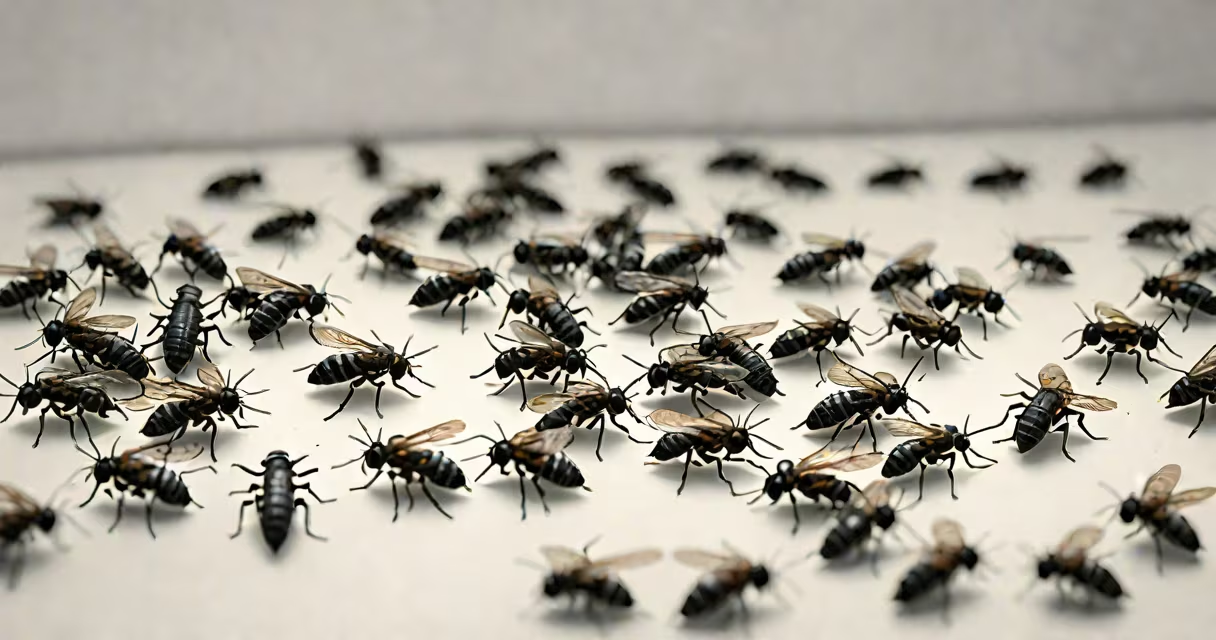
An infestation of black flies in house occurs when small, dark-colored flies breed indoors, often in moist environments such as drains, potted plants, or garbage bins. These flies are typically fungus gnats, fruit flies, or drain flies-species that thrive in decomposing organic material and high humidity.
Unlike larger houseflies, black flies in this context are usually less than 3 mm long and appear in swarms near sinks, windows, or potted plants. They do not bite humans but can contaminate food and spread microbes. Their presence indicates a hidden breeding site requiring targeted elimination.
Black flies in homes reproduce rapidly under warm, humid conditions. Female flies lay eggs in damp organic matter-such as wet potting soil, standing water in sink traps, or rotting food scraps. Eggs hatch within 24-48 hours, and larvae mature into adults in 7-14 days. A single female can produce up to 100 eggs, enabling quick population growth.
Drain flies (Psychodidae family) are common culprits. They emerge from sewer lines or slow-draining pipes where gelatinous biofilm builds up. Fungus gnats (Sciaridae) feed on mold in soil and are drawn to light. Fruit flies (Drosophila melanogaster) breed in fermenting fruit or spilled liquids.
One study by the University of California Agriculture and Natural Resources found that 83% of indoor fly infestations originate from kitchen drains or bathroom traps left unused for more than a week. This highlights the role of stagnant water in sustaining fly populations.
Identifying the specific species is critical for effective treatment. The following table outlines the most frequent black flies found indoors:
| Type | Size | Breeding Site | Behavior | Control Method |
|---|---|---|---|---|
| Fungus gnat | 1-3 mm | Damp potting soil, compost | Flies weakly, often seen near plant leaves | Allow soil to dry, use sticky traps, apply beneficial nematodes |
| Drain fly | 1.5-5 mm | Plumbing traps, drain pipes | Slow, moth-like flight; clusters around drains | Clean drain with enzyme-based cleaners, flush with boiling water weekly |
| Fruit fly | 2-4 mm | Fermenting fruit, spilled wine, trash | Aggressive around ripe produce; swarm near kitchen counters | Remove food sources, use vinegar traps, seal containers |
A non-obvious distinction: drain flies are not attracted to food. They rely solely on organic sludge in plumbing. Confusing them with fruit flies leads to ineffective control. For example, placing apple cider vinegar traps won't stop drain flies-they don't respond to fermentation odors.
Infestations often go unnoticed until swarms appear. Look for signs near sinks, laundry areas, potted plants, or garbage bins. Check under sinks for standing water or slimy residue. Run water through drains for 30 seconds daily to prevent biofilm formation.
I once observed a persistent fly problem in a rental apartment where residents reported seeing small black flies near the kitchen sink. After checking the P-trap, I found a thick layer of black sludge. Cleaning it with a mixture of baking soda and vinegar eliminated the source. Within five days, fly activity dropped to zero.
Use a flashlight to inspect dark corners behind appliances. Place a piece of clear tape over a drain opening overnight-flies may stick to it. Sticky traps placed near suspected sites confirm species and infestation levels.
Eliminating an infestation requires targeting the breeding site, not just killing adult flies. Spraying insecticide on flying insects offers temporary relief but fails to stop reproduction.
For fungus gnats in houseplants: allow soil to dry between waterings. Apply a thin layer of sand or diatomaceous earth on the surface to disrupt larval development. Use yellow sticky traps to monitor adult numbers.
For drain flies: pour 1 cup of boiling water down the drain once a week. Follow with ½ cup of baking soda and 1 cup of white vinegar. Let sit for 30 minutes, then flush with hot water. Repeat weekly for four weeks to break the life cycle.
For fruit flies: store fruit in sealed containers or refrigerate. Clean countertops with a 1:1 mix of water and white vinegar. Set up a trap using a jar, plastic wrap, and a few drops of apple cider vinegar. Cover the jar with plastic wrap and poke small holes-flies enter but can't escape.
Prevention includes sealing cracks around windows and doors, keeping trash in lidded bins, and drying mops and sponges after use. Regular cleaning reduces moisture and organic debris-key elements for fly survival.
When dealing with recurring infestations, remember that black flies are not a sign of poor hygiene. They exploit environmental conditions-moisture, warmth, and organic waste. Addressing the root cause, not just the symptom, ensures lasting results.
Understanding the biology and habits of indoor black flies prevents misdiagnosis and wasted effort. An infestation of black flies in house is not a random event-it's a signal of a specific environmental condition that can be corrected with precision.