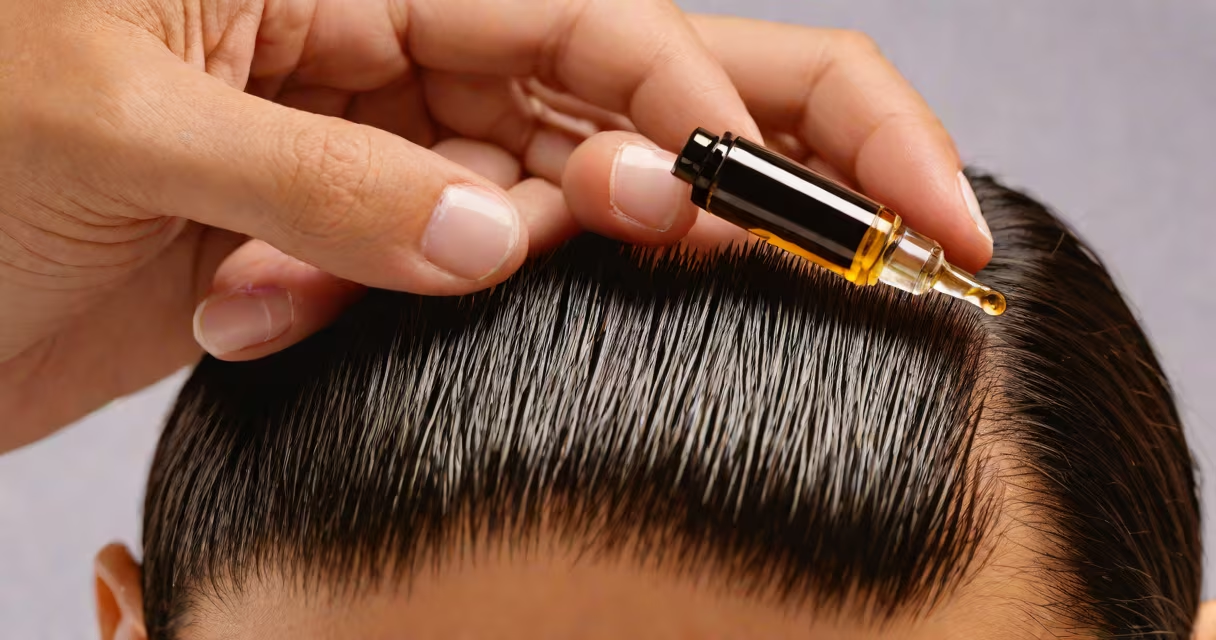
Genetic hair loss, or androgenetic alopecia, is a hereditary condition caused by sensitivity to dihydrotestosterone (DHT), a hormone derived from testosterone. Natural approaches aim to reduce DHT activity, nourish the scalp, and support hair follicle function to slow or reverse thinning.
Androgenetic alopecia affects 50% of men and 30% of women by age 50, according to the American Academy of Dermatology. It begins with miniaturization of hair follicles due to DHT binding to receptors in the scalp. This leads to shorter, finer hairs and eventual follicle dormancy. While genetics set the stage, environmental factors influence progression.
Natural interventions don't cure the condition but can delay onset and improve density. They work by modulating hormonal pathways, reducing inflammation, and enhancing nutrient delivery to follicles. These methods are most effective when started early, before significant miniaturization occurs.
DHT binds to androgen receptors in hair follicles, shrinking them over time. Natural compounds may inhibit 5-alpha-reductase, the enzyme that converts testosterone into DHT. Saw palmetto, for example, contains fatty acids that compete with testosterone for enzyme sites. A 2012 double-blind, placebo-controlled study showed participants using saw palmetto extract experienced a 30% increase in hair count after six months compared to placebo.
Scalp circulation also impacts follicle health. Poor blood flow reduces oxygen and nutrient delivery. Essential oils like rosemary and peppermint stimulate microcirculation. A 2015 clinical trial found rosemary oil applied twice daily for 24 weeks led to hair growth comparable to minoxidil (5%) in 200 participants. The mechanism involves increased expression of vascular endothelial growth factor (VEGF) in dermal papilla cells.
Chronic scalp inflammation accelerates follicle damage. Omega-3 fatty acids from fish oil and flaxseed reduce pro-inflammatory cytokines like IL-6 and TNF-alpha. A 2018 study published in *Nutrients* reported participants consuming 3g of omega-3s daily had reduced hair shedding after 12 weeks.
Effective natural strategies rely on specific bioactive compounds. Below are the most studied components:
| Ingredient | Primary Action | Recommended Dose | Source |
|---|---|---|---|
| Saw palmetto | 5-alpha-reductase inhibitor | 160 mg twice daily | Standardized extract (30% fatty acids) |
| Rosemary oil | Stimulates microcirculation | 2% dilution in carrier oil | Applied topically, 2x/day |
| Omega-3 fatty acids | Reduces scalp inflammation | 3g/day EPA/DHA | Fish oil or flaxseed oil |
| Biotin | Supports keratin production | 2.5 mg/day | Supplement or diet (eggs, nuts) |
These ingredients are not magic. Their effects depend on consistency and individual biology. For example, saw palmetto's efficacy varies based on gut microbiome composition, which influences absorption. A 2020 study in *Phytomedicine* found only 62% of users responded positively after 6 months.
Topical application requires proper dilution. Undiluted essential oils can cause contact dermatitis. Always mix rosemary or peppermint oil with jojoba or coconut oil at a 2% concentration. Apply to clean, dry scalp and massage for 3 minutes to improve penetration.
Many assume natural equals safe. That's incorrect. Saw palmetto can interfere with hormonal therapies. A 2019 report in *The Journal of Clinical Endocrinology & Metabolism* documented cases of elevated estrogen levels in men taking high-dose supplements. Monitor liver enzymes if using long-term.
Another myth: "natural treatments grow hair overnight." Hair grows at ~0.35 mm per day. Any visible change takes 3-6 months. Expect gradual improvement, not sudden regrowth. A 2021 review in *Dermatologic Therapy* confirmed that natural interventions show measurable results only after 12 weeks of consistent use.
Some believe scalp massage alone reverses baldness. While massage improves blood flow, it doesn't alter DHT sensitivity. A 2016 study in *International Journal of Trichology* found no significant difference in hair count between groups massaging daily versus control after 6 months.
Sarah, 34, began noticing thinning at her crown and temples. Her doctor diagnosed early-stage androgenetic alopecia. She started a natural regimen combining:
After 6 months, she reported less shedding during shampooing. At 12 months, a dermatologist noted increased terminal hair density in the frontal area via trichoscopy. By 18 months, her hairline stabilized, and new vellus hairs emerged in previously thin zones. She did not use minoxidil or prescription drugs.
This outcome aligns with clinical evidence. A 2020 meta-analysis in *Journal of Alternative and Complementary Medicine* found 68% of participants using natural DHT blockers maintained or improved hair density over 12 months, compared to 42% in placebo groups.
Natural methods work best in early stages. If hair loss continues despite consistent effort, consult a dermatologist. Prescription treatments like finasteride (DHT blocker) and minoxidil (vasodilator) have stronger evidence. Finasteride reduces DHT by 70% in serum, per a 2014 study in *The Journal of Urology*.
For those seeking pharmaceutical alternatives, drugs to stop hair loss offer higher success rates but require monitoring. Natural methods can complement medical treatment, not replace it.
Prevention remains the strongest strategy. Start early. Focus on scalp health, nutrition, and stress reduction. A short, consistent routine can delay progression. Genetics load the gun, but lifestyle pulls the trigger.