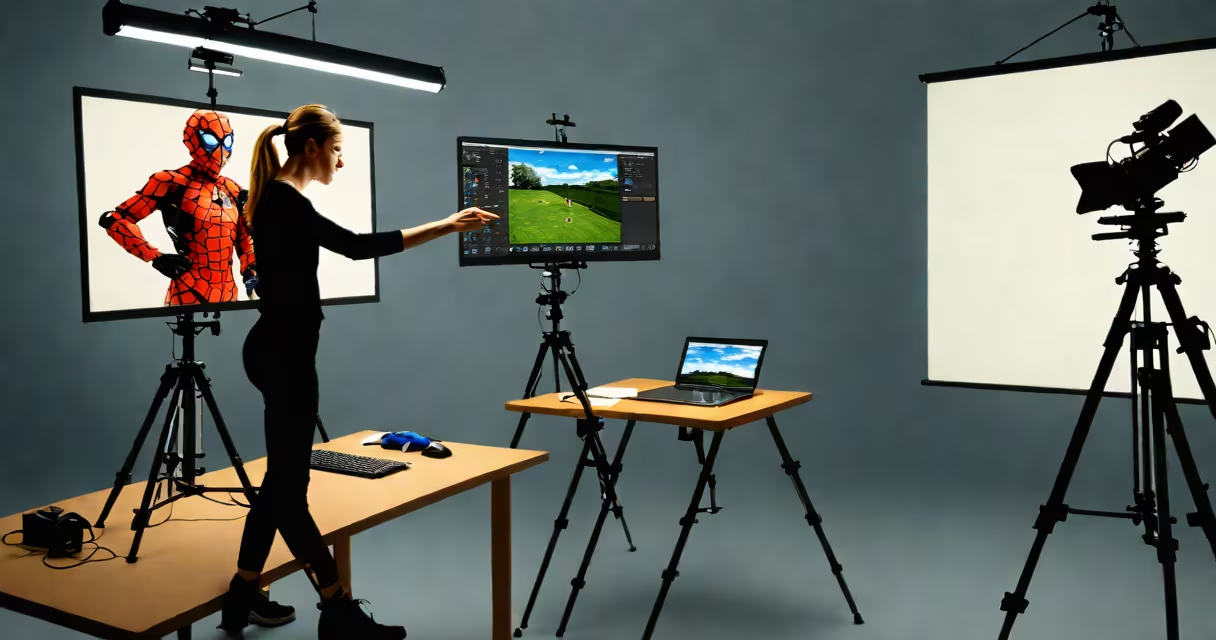
A digital media arts degree is an undergraduate or graduate academic program that integrates visual design, computer programming, sound production, and narrative development to create interactive and immersive media experiences. Students learn to produce digital content across platforms including video games, virtual reality environments, web-based animations, and multimedia installations.
This degree emphasizes hands-on creation using industry-standard tools such as Adobe Creative Set, Unity, Blender, and Max/MSP. Graduates emerge with portfolios demonstrating technical proficiency and artistic vision. The program blends theory and practice, covering topics like user experience design, digital ethics, and media history.
According to the National Association of Schools of Art and Design (NASAD), accredited digital media arts programs require a minimum of 120 credit hours, with at least 36 credits in studio courses. The U.S. Bureau of Labor Statistics reports that jobs in multimedia art and animation are projected to grow 11% from 2022 to 2032-faster than average for all occupations.
Digital media arts programs structure learning around four pillars: visual design, interactivity, audio integration, and narrative construction. These components are taught through project-based coursework rather than lectures alone.
Students begin with foundational classes in color theory, composition, and digital illustration. They progress to advanced modules in 3D modeling, motion graphics, and real-time rendering. For example, a typical sophomore course might involve creating a 90-second animated short using Maya and After Effects, with sound design done in Reaper.
Interactivity is central. Courses in game design or interactive installation teach students to use scripting languages like Python or JavaScript to control user behavior within digital environments. A capstone project often involves building a prototype for a mobile app or VR experience that responds to user input via sensors or touch interfaces.
Digital media arts degrees come in several forms, each tailored to different goals and entry points. The most common are the Bachelor of Fine Arts (BFA) and Bachelor of Science (BS), though some institutions offer combined bachelor's and master's tracks.
| Program Type | Focus | Typical Duration | Common Career Path |
|---|---|---|---|
| BFA in Digital Media Arts | Artistic expression, portfolio development | 4 years | Animator, concept artist, game designer |
| BS in Digital Media Arts | Technical skills, software engineering | 4 years | Software developer, UX designer, technical director |
| Graduate Certificate | Specialized training in VR, AI-driven media, or AR | 1 year | Media consultant, immersive experience developer |
Some schools offer hybrid models. For instance, the University of Southern California's School of Cinematic Arts offers a BFA with concentrations in Virtual Reality Storytelling or Interactive Narrative. Students take courses in cognitive psychology to understand how users perceive spatial environments.
One underappreciated distinction: a BFA focuses on aesthetic outcomes and creative agency, while a BS emphasizes systems thinking and scalability. A BFA student might build a poetic, nonlinear animation about memory loss. A BS student might develop a responsive interface that adapts to emotional states detected through facial recognition.
Graduates work across entertainment, education, healthcare, and advertising. In entertainment, they contribute to video games like *The Last of Us Part II* or films such as *Avatar: The Way of Water*, where digital artists create lifelike characters and environments.
In education, digital media artists design interactive simulations for science curricula. A biology class might use a 3D model of a human cell that students can rotate and explore layer by layer. These tools improve retention-research from Stanford's Graduate School of Education shows students using immersive media scored 23% higher on recall tests than those using textbooks alone.
Healthcare applications include therapy tools. A team at MIT Media Lab developed a VR environment for children with autism to practice social cues in a safe setting. The system uses facial tracking and adaptive feedback loops-features rooted in digital media arts training.
One common misconception is that digital media arts is synonymous with graphic design. While both involve visuals, digital media arts includes temporal elements (time-based media), interactivity, and often embedded code. A static poster is graphic design. An animated billboard that changes content based on weather or traffic patterns is digital media arts.
In 2023, a group of seniors at the Rhode Island School of Design created *Echoes of the Harbor*, a mixed-reality installation for a public art festival. The project combined live camera feeds, projection mapping, and spatial audio to simulate the historical voices of dockworkers from the early 20th century.
They used Unity to sync real-time video with pre-recorded audio clips triggered by motion sensors. Visitors walking through a warehouse space heard overlapping dialogues about labor strikes, immigration, and ship departures. The experience lasted 4 minutes per visitor and was designed to evoke emotional resonance, not just information delivery.
The team presented their work at the International Symposium on Mixed and Augmented Reality. Their project won first prize in the "Narrative Innovation" category. This outcome reflects how digital media arts programs prepare students not just for jobs, but for cultural impact.
When I taught a workshop at a community college, I saw a student who had never touched a computer before complete a simple interactive story using Scratch. By the end of the semester, she had built a game about climate change that players could customize with local data. Her confidence grew not from mastering software, but from realizing her voice mattered in digital spaces.
A digital media arts degree equips individuals to shape how people see, feel, and interact with the world through technology. It is not just about making things look good-it's about designing meaningful experiences that respond to human needs.