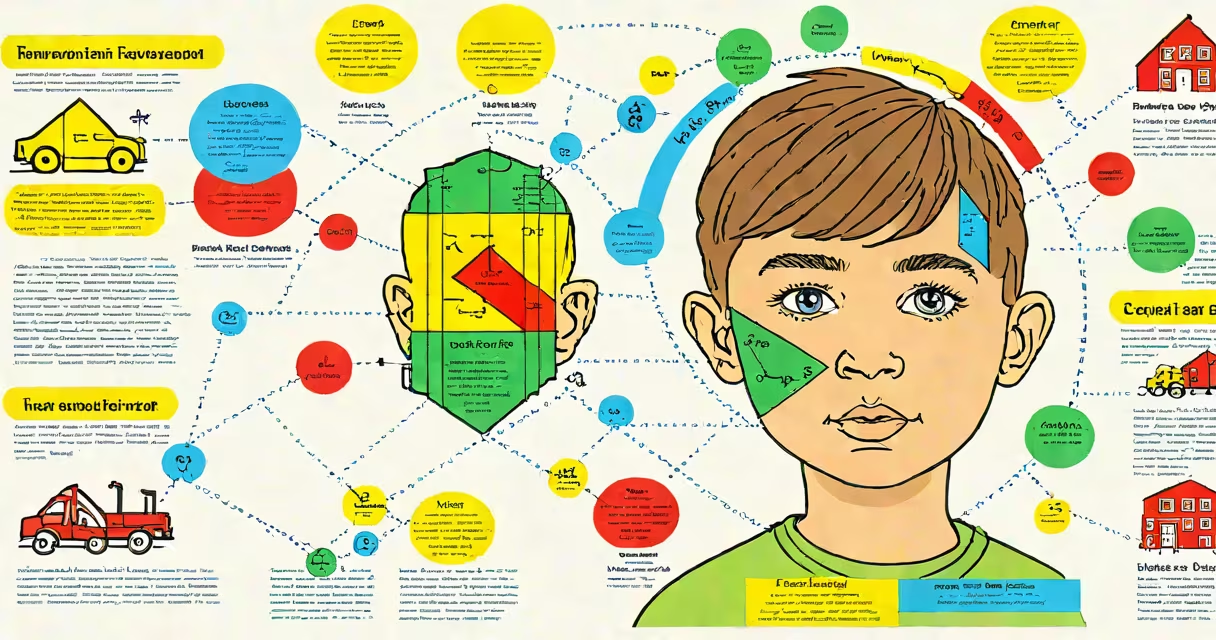
The zones of regulation is a structured social-emotional learning structure that uses four colored zones-blue, green, yellow, and red-to help children recognize and manage their emotions and behaviors. Each zone represents a range of feelings and energy levels, enabling students to name their internal state and choose appropriate responses.
Developed by Leah Kuypers, a licensed clinical professional counselor and occupational therapist, the system is grounded in research on emotional regulation and executive functioning. It's widely used in U.S. schools, particularly in early childhood and elementary education, to support students with attention, anxiety, sensory processing, and behavioral challenges.
Research from the American Psychological Association confirms that emotional regulation skills predict academic success and peer relationships. The zones model makes abstract emotional states visible and actionable through consistent visual cues and routine check-ins.
Each zone corresponds to a specific emotional state and associated energy level:
Students learn to self-assess using a "zone check-in" at the start of class or during transitions. They place a card or hand on a corresponding color on a chart. Teachers then respond with targeted support-such as offering a quiet corner for blue, or guided breathing for yellow.
A 2020 study published in the Journal of Child and Family Studies found that classrooms using the zones model reported a 37% reduction in disruptive incidents over six months compared to control groups. The system's effectiveness lies in giving children a shared language for emotions they often struggle to articulate.
The zones of regulation is not a single tool but a flexible system with multiple implementation layers. Schools adapt it based on grade level, student needs, and curriculum goals.
| Grade Level | Implementation Focus | Example Activity |
|---|---|---|
| Pre-K to Kindergarten | Emotion identification and naming | Sorting emotion cards into zones using pictures of faces |
| Grades 1-3 | Self-check-in routines and coping strategy practice | Daily morning circle: students show their zone and share one way they'll stay calm |
| Grades 4-6 | Problem-solving and cause-effect thinking | Role-playing scenarios: "I'm in yellow because my friend took my toy. What can I do?" |
Some schools integrate the zones into daily schedules. For example, a middle school in Portland, Oregon, added a five-minute "zone check-in" before math class. After one semester, teachers reported fewer outbursts and improved focus during instruction.
Special education programs use the zones to support students with autism spectrum disorder (ASD). A 2019 study in the journal *Autism Spectrum Quarterly* showed that students with ASD who used the zones had a 50% increase in self-regulation behaviors during unstructured times like recess.
Many educators assume the zones are a behavior management tool. That's incorrect. The zones are not about punishment or reward-they're about awareness and choice. Labeling a student "red" doesn't mean they're bad; it means they're experiencing intense emotion and need support.
Another misconception is that the zones apply only to negative emotions. In reality, green includes positive states like joy and confidence. The goal is balance-not eliminating red or blue-but helping students understand their full emotional range.
Some schools treat the zones as a one-time lesson. But research shows lasting impact requires consistent use. A longitudinal study by the University of California, Los Angeles (UCLA) found that schools implementing the zones with daily check-ins saw sustained improvements in emotional literacy over three years. Those using it sporadically saw no significant change.
In a third-grade classroom in Denver, Colorado, teacher Maria Lopez introduced the zones at the beginning of the school year. She created a large wall chart with four color sections and assigned each zone a symbol: a moon (blue), a smiley face (green), a sun (yellow), and a flame (red).
Every morning, students placed a small colored token on the chart. One student, Jamal, consistently chose yellow. Maria noticed he was fidgeting and speaking loudly during group work. She asked him, "What's happening in your brain right now?" He said, "I feel like I have too much energy."
Maria taught him a grounding technique: counting backward from 10 while touching his fingertips together. After two weeks, Jamal began checking in earlier and using the technique proactively. His teacher reported a 60% drop in off-task behavior during reading time.
This example illustrates a core principle: the zones aren't about fixing kids-they're about building their capacity to notice and respond to their inner state. The system empowers students to take ownership of their emotional experiences.
When used correctly, the zones of regulation becomes a shared language. Students stop saying "I don't like this," and start saying, "I'm feeling yellow-I need a break." That shift enables more respectful communication and reduces conflict.
The zones of regulation is not a quick fix. It's a long-term investment in emotional intelligence. With consistent modeling, routine check-ins, and access to coping tools, it helps children develop lifelong skills in self-awareness, self-management, and responsible decision-making.