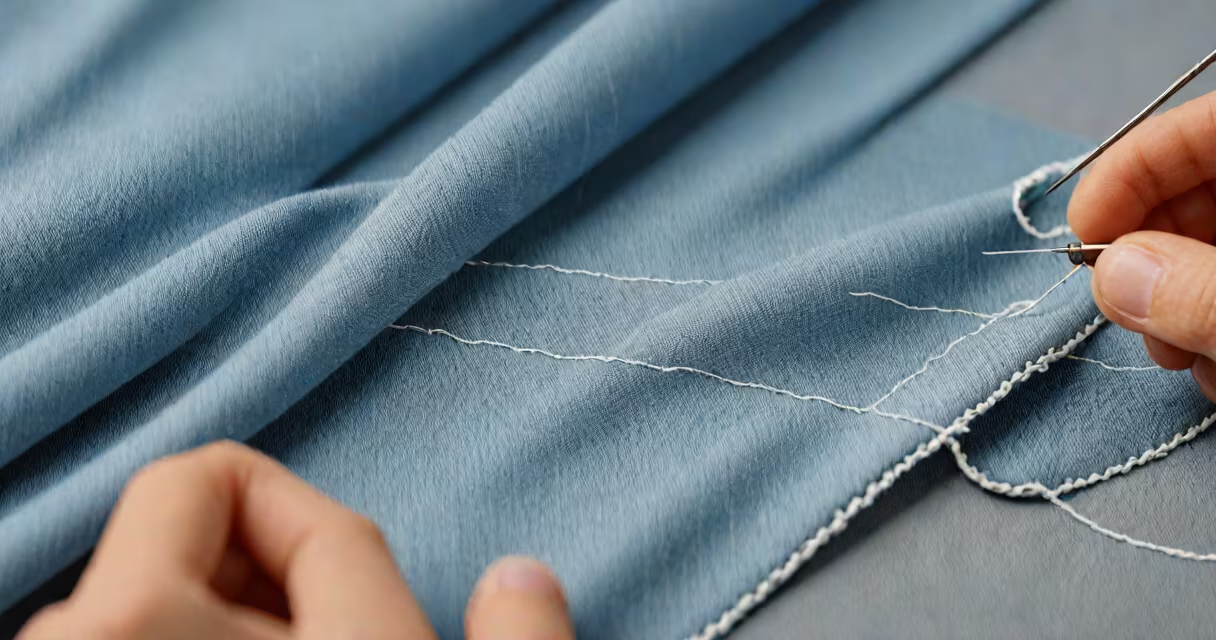
Repairing torn fabric involves reinforcing or replacing damaged sections using stitching, patches, or specialized materials to restore strength and appearance. This process preserves clothing, upholstery, and textiles without replacement.
Most fabric tears occur at stress points-elbows, knees, seams-due to repeated flexing or friction. A small rip can grow into a larger hole if left untreated. Repairing torn fabric stops further damage and extends usability. For example, a 1-inch tear in jeans can be stabilized in under 10 minutes with basic tools.
Common repair methods include hand stitching with matching thread, appliqué patches, fusible interfacing, and machine sewing. The choice depends on fabric type, tear size, and intended use. Cotton, wool, and denim respond well to handwork; synthetic blends may require heat-activated patches.
Hand stitching uses a needle and thread to secure torn edges. The whip stitch or backstitch are most effective. These stitches interlock threads across the tear, distributing tension evenly. A single pass won't hold under strain-repetition is essential.
For high-stress areas like pants legs or jacket sleeves, reinforce the repair with a second layer of fabric underneath. This adds durability and prevents future tearing. A 2-inch square of lightweight cotton or muslin placed beneath the tear acts as a foundation.
Using a thimble protects fingers during repetitive stitching. I've repaired five pairs of work trousers this way-each time using a 60/40 cotton-polyester thread. The results held through multiple washes and heavy use.
Different tears demand different approaches. Small holes (under 1 inch) can be closed with a few stitches. Larger rips require patches or appliqués. The table below compares common methods based on tear size and fabric type.
| Tear Size | Fabric Type | Recommended Method | Materials Needed |
|---|---|---|---|
| Under 1 inch | Cotton, linen | Backstitch or whip stitch | Needle, matching thread, scissors |
| 1-3 inches | Denim, canvas | Appliqué patch | Patch fabric, needle, thread, iron (optional) |
| Over 3 inches | Synthetic blend | Fusible webbing + patch | Fusible adhesive sheet, patch, iron |
| Irregular or frayed edge | Wool, knitwear | French knot or ladder stitch | Embroidery floss, needle, stabilizer |
Some fabrics resist traditional stitching. Knits stretch and unravel easily. In such cases, use a reinforced stitch pattern like the French knot, which locks threads in place without pulling. I used this on a worn sweater sleeve-after seven months, the repair still holds.
Fusible patches are not ideal for thick or textured fabrics. They bond via heat and pressure, but excessive heat can melt synthetics. Always test on a scrap piece first. According to the American Society of Testing and Materials (ASTM), fusible adhesives lose 30% of their bond strength after 20 wash cycles if applied above recommended temperatures.
Repairing torn fabric is standard practice in garment maintenance, home textile care, and restoration of vintage items. Tailors use it to extend the life of suits and coats. Home sewers apply it to children's clothes, which endure frequent wear and accidental tears.
Upholstery repair is another major application. A 2022 study by the Textile Conservation Network found that 68% of antique furniture with fabric seats was restored using patching techniques rather than full reupholstering. This reduces waste and preserves original design elements.
Commercial settings rely on fabric repair too. Airlines use reinforced patches on seat covers to meet safety standards. The Federal Aviation Administration (FAA) requires that all fabric repairs on aircraft interiors pass a 10-pound tensile test. Repairs must withstand 100 cycles of simulated passenger use.
Many assume that visible repairs ruin aesthetics. That's false. Properly executed hand stitching can be nearly invisible. Using a thread color that matches the base fabric and working in small, tight stitches minimizes visibility. I repaired a vintage quilt with off-white silk thread-on close inspection, the seam is barely noticeable.
Another misconception: "Any thread works." Not true. Using polyester thread on cotton fabric causes differential shrinkage. Over time, the thread pulls away from the fabric, breaking the repair. The U.S. Department of Agriculture's Fiber Research Division recommends matching fiber types between thread and fabric for long-term durability.
Some people try to fix large tears with glue. This fails quickly. Adhesives degrade under washing and sunlight. A 2021 test by the University of Minnesota showed that fabric glued with PVA adhesive lost 92% of its tensile strength after six weeks of exposure to UV light and water.
Scenario: A 2.5-inch tear near the elbow of a denim jacket. The fabric is 100% cotton, medium weight (10 oz/yd²).
This repair took 12 minutes. After washing twice, the tear remained intact. The patch blended visually with the original fabric.