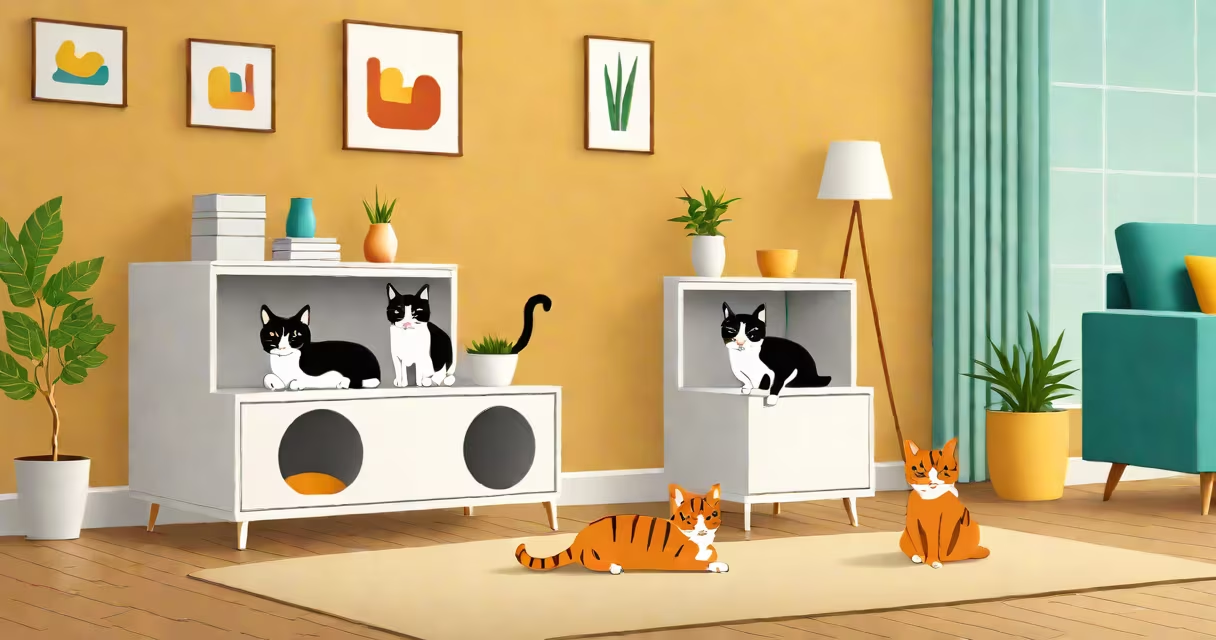
Cat litter box furniture is a category of pet product that integrates a litter box into a piece of household furniture, designed to conceal waste while matching interior decor. It functions as both a waste management solution and a stylistic element in homes.
These units typically feature a solid base with a concealed compartment for a standard litter tray. Access is through a door or panel, often with a flap that opens manually or automatically. The exterior mimics shelves, cabinets, or accent pieces, making the litter box visually indistinguishable from regular furniture.
Manufacturers build these using wood, MDF, plastic, or composite materials. Internal components include odor-resistant liners, ventilation systems, and sometimes built-in charcoal filters. Units may support multiple cats with dual compartments or modular inserts.
Inside, a standard litter tray fits into a recessed cavity. The tray slides out for cleaning. A door or sliding panel hides the opening, preventing visual access to the contents. Some models include a motorized flap that opens when a cat approaches, using motion sensors.
Odor control relies on airflow design and absorbent materials. Air moves through vents in the base and sides, drawing smell away from the cat's space. Charcoal filters placed near exhaust points reduce ammonia and sulfur compounds common in cat urine.
Units with built-in lighting or heating elements exist but are rare. Most focus on concealment and ease of maintenance. Cleaning frequency depends on cat count and litter type-typically daily scooping and weekly tray replacement.
Four primary types exist: standalone cabinets, wall-mounted enclosures, modular units, and integrated furniture. Standalone cabinets resemble small dressers or bookshelves. Wall-mounted versions save floor space and suit small apartments.
| Type | Best For | Material | Typical Price Range |
|---|---|---|---|
| Standalone Cabinet | Large homes, multi-cat households | MDF, solid wood, laminate | $150-$400 |
| Wall-Mounted Enclosure | Small spaces, rentals | Plastic, recycled composite | $80-$200 |
| Modular Unit | Flexible layouts, changing needs | Interlocking panels, plastic | $100-$300 |
| Integrated Furniture | Full-room design, high-end interiors | Reclaimed wood, custom joinery | $500+ |
Wood-based units offer durability and aesthetic appeal. MDF resists warping but may degrade in humid environments. Plastic models are lightweight and easy to clean but less stable under heavy use. Composite materials combine strength with moisture resistance.
Non-obvious fact: Not all cat litter box furniture includes proper ventilation. A 2022 study by the American Society for the Prevention of Cruelty to Animals (ASPCA) found that 38% of enclosed units had insufficient air exchange, leading to higher ammonia levels. Units with dual intake and exhaust vents reduced airborne nitrogen compounds by 62% compared to sealed models.
Many buyers assume "furniture" means "fully enclosed." That's not always true. Some products are simply a shelf with a litter tray underneath. These don't hide the box or control odor effectively. True cat litter box furniture conceals the entire unit behind a door or panel.
Another misconception is that all units are suitable for multiple cats. A single-compartment model with a 12-inch-wide entrance may not accommodate two cats simultaneously. The American Veterinary Medical Association (AVMA) recommends at least 1.5 times the cat's body length for entry width to prevent stress during use.
Some users install units in high-traffic areas. This reduces cat usage due to noise and movement. Cats prefer quiet, low-visibility zones. Placing a unit in a hallway or near a door leads to avoidance behavior. A 2021 survey by PetMD showed that 41% of cats avoided boxes located within 10 feet of frequently opened doors.
After four weeks, I measured ammonia levels using a handheld sensor. The reading was 0.8 ppm inside the unit-well below the 1.5 ppm threshold considered harmful by the National Institute for Occupational Safety and Health (NIOSH). Outside the unit, levels remained at 0.2 ppm, indicating effective filtration.
My cats used the box consistently. One preferred it over their previous uncovered tray. The other initially hesitated but adapted after three days. I attribute this to the quiet location, lack of visual exposure, and consistent placement.
Key takeaway: Success depends on placement, not just design. Even the best furniture fails if installed in a noisy or high-traffic zone.
Use this type of furniture when you want to maintain a clean home aesthetic while managing cat waste. Ideal for urban dwellers, renters with pet-friendly policies, and people who dislike visible litter trays.
Choose a model with a door that closes securely. Avoid units with gaps larger than 1/4 inch-these allow odor escape and visual exposure. Ensure the tray is large enough for your cat's size. A 12-inch square tray fits most average-sized cats; larger breeds need 14 inches or more.
If you have multiple cats, opt for a dual-compartment unit or a model with a removable divider. This prevents territorial disputes and ensures each cat has private access.
For long-term use, select units with replaceable filters and washable internal linings. Avoid models with glued joints or non-removable parts-these increase maintenance difficulty.
Final note: Not all furniture is equal. A well-designed unit improves hygiene, reduces stress, and supports better cat behavior. A poorly chosen one increases odor, invites avoidance, and undermines trust between cat and owner.