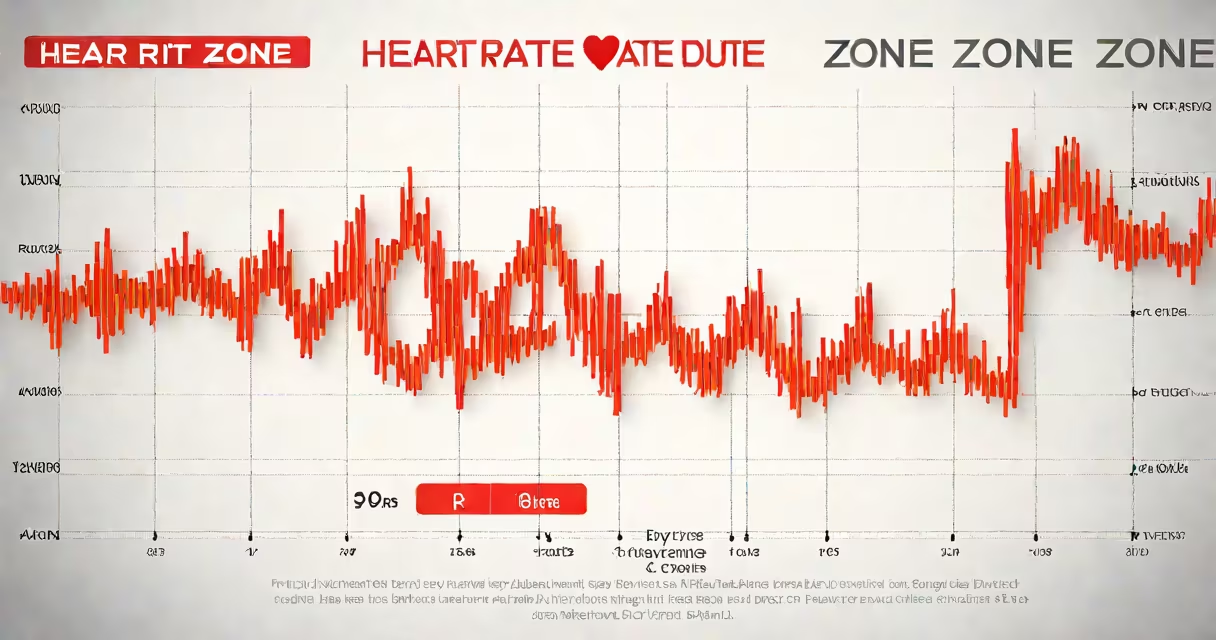
Heart rate zones by age are personalized training intensity ranges calculated using age-based maximum heart rate estimates, designed to guide effective cardiovascular exercise. These zones divide effort levels into distinct categories-resting, fat-burning, aerobic, anaerobic, and peak-each targeting specific physiological adaptations.
These zones are derived from the formula: maximum heart rate ≈ 220 minus age. For example, a 35-year-old has a predicted max heart rate of 185 beats per minute (bpm). From this, zones are set as percentages: Zone 1 (50-60%) for recovery, Zone 2 (60-70%) for endurance, Zone 3 (70-80%) for aerobic capacity, Zone 4 (80-90%) for threshold work, and Zone 5 (90-100%) for maximal effort. This structure ensures workouts align with fitness goals.
Using heart rate zones by age prevents overtraining and undertraining. A 25-year-old aiming to improve stamina should train between 60-80% of their max heart rate (132-192 bpm), while a 60-year-old (max ~160 bpm) should aim for 96-128 bpm in Zone 2. Without age-specific adjustments, someone may push too hard or not challenge themselves enough.
Maximum heart rate (MHR) is estimated as 220 minus age. This formula, widely cited by the American Council on Exercise (ACE) and the American Heart Association (AHA), provides a baseline for setting zones. However, individual variation exists-actual MHR can differ by ±10-15 bpm due to genetics, fitness level, and health conditions.
To determine your zones, first calculate your MHR. For a 40-year-old: 220 - 40 = 180 bpm. Then apply percentage ranges:
| Zone | Intensity | Percent of MHR | Target Range (40-year-old) |
|---|---|---|---|
| 1 | Recovery | 50-60% | 90-108 bpm |
| 2 | Fat-Burning / Aerobic Base | 60-70% | 108-126 bpm |
| 3 | Aerobic Capacity | 70-80% | 126-144 bpm |
| 4 | Threshold / Anaerobic | 80-90% | 144-162 bpm |
| 5 | Peak / Max Effort | 90-100% | 162-180 bpm |
For accurate results, validate your MHR through a supervised stress test. Self-testing via a treadmill or bike protocol can yield better data than relying solely on formulas. According to the AHA, field tests like the Rockport Walk Test offer reliable alternatives for estimating MHR without equipment.
As people age, maximum heart rate declines naturally. This decline is linear-about 1 bpm per year. A 20-year-old's max heart rate averages 200 bpm; a 60-year-old's drops to approximately 160 bpm. Ignoring this reduces training effectiveness and increases injury risk.
Older adults benefit from lower-intensity zones. A 65-year-old training for heart health should focus on Zone 2 (60-70% of max, ~96-112 bpm) to build endurance safely. High-intensity intervals (Zone 4-5) increase cardiac strain and are not recommended without medical clearance.
Non-obvious fact: Heart rate zones by age do not account for fitness level. A trained 50-year-old may have a higher functional MHR than a sedentary 30-year-old. Therefore, zone targets should be adjusted based on actual performance, not just age. The ACE notes that athletes often exceed predicted MHR values during competition.
Many assume heart rate zones by age are rigid. They are not. Zones are flexible tools-adjustments based on perceived exertion, breathing patterns, and real-time feedback are essential. A runner in Zone 3 may feel "easy" if well-trained, yet still be in the correct range.
Another misconception: All exercise should stay in Zone 2. This is false. Zone 3 and 4 training improve VO₂ max and lactate threshold. A 30-year-old cyclist aiming for a sprint event should include Zone 4 sessions twice weekly to build power. Over time, this increases performance and efficiency.
Some confuse resting heart rate with target zones. Resting heart rate is measured when awake and still-typically 60-100 bpm for adults. It reflects cardiovascular health, not training intensity. A low resting rate (e.g., 50 bpm) indicates good fitness but doesn't change zone calculations.
Consider a 45-year-old woman starting a running program. Her MHR: 220 - 45 = 175 bpm. She wants to build endurance. Her target zone is 60-70% of MHR: 105-122 bpm. She uses a heart rate monitor during runs and adjusts pace to stay within range.
After four weeks, her resting heart rate drops from 78 to 70 bpm. Her perceived exertion at 110 bpm feels easier. She increases duration gradually. After eight weeks, she completes a 5K at 115 bpm-within Zone 2-and finishes with less fatigue.
This progression shows how heart rate zones by age enable measurable progress. Tracking both heart rate and perceived effort prevents burnout and supports long-term adherence.
Alcohol consumption can improve heart rate independently of exercise. A single drink increases resting heart rate by 5-10 bpm on average, according to research published in Frontiers in Physiology. This affects zone accuracy-training after drinking may place you in a higher zone than intended.
Understanding heart rate zones by age enables precise, safe, and effective training. improving longevity, matching effort to your biological age improves outcomes. Use the formula, track your heart rate, and adjust accordingly.