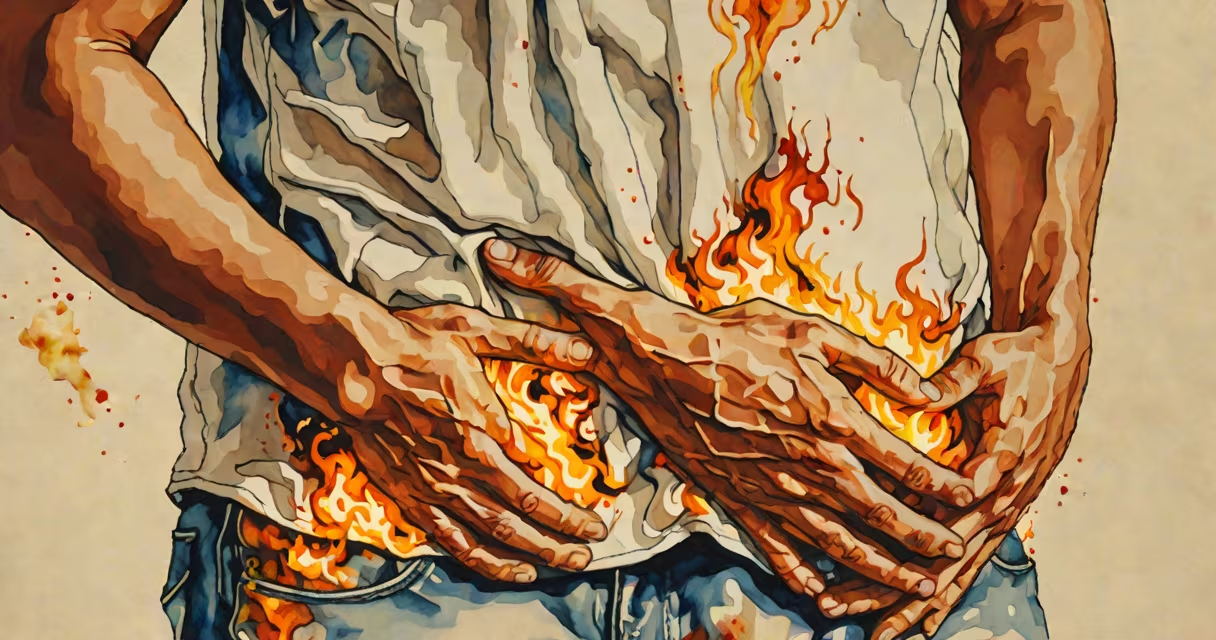
Burning pain in right side of abdomen is a symptom indicating irritation or inflammation in organs located on the right side of the torso, including the liver, gallbladder, appendix, right kidney, or parts of the large intestine. It often signals an underlying condition requiring medical evaluation.
This sensation typically arises from nerve irritation, organ swelling, or tissue damage. Unlike dull or cramping pain, burning pain suggests ongoing chemical or inflammatory activity-such as bile leakage from a blocked gallbladder or acid exposure in the digestive tract. It may start gradually or appear suddenly, often worsening after eating or lying down.
Common triggers include fatty meals (linked to gallbladder issues), dehydration (kidney stones), or infections (appendicitis). Pain localized to the right upper quadrant (RUQ) often points to liver or gallbladder problems. Lower right side pain may indicate appendicitis or intestinal inflammation. Persistent burning pain demands attention, especially if accompanied by fever, vomiting, or changes in bowel habits.
The abdomen contains multiple organs that communicate through nerves and fluid pathways. When one becomes inflamed or obstructed, pain signals travel via the autonomic nervous system to the spinal cord and brain. Burning pain results when nociceptors-sensory neurons detecting harmful stimuli-fire continuously due to chemical irritants like bile acids or inflammatory cytokines.
For example, in cholecystitis (gallbladder inflammation), bile leaks into surrounding tissue, irritating nerve endings. This causes a steady, burning ache in the RUQ, often radiating to the right shoulder. Similarly, a kidney stone moving through the ureter triggers intense burning pain along the flank, sometimes described as "colicky" or wave-like.
Neurological pathways explain why pain can feel distant from the source. A stone in the right ureter may cause burning pain in the groin or lower abdomen, even though the actual site of injury is near the kidney. This phenomenon-referred to as referred pain-is common in abdominal conditions and underscores why location alone doesn't confirm the diagnosis.
Burning pain in right side of abdomen stems from several distinct pathologies. The most frequent causes involve the gastrointestinal, genitourinary, and musculoskeletal systems.
| Condition | Location of Pain | Key Mechanism | Typical Triggers |
|---|---|---|---|
| Gallstones (cholecystitis) | Right upper quadrant (RUQ) | Bile buildup causes inflammation and nerve irritation | Fatty meals, fasting |
| Kidney stones | Flank, radiating to groin | Stone movement blocks urine flow, stretching renal capsule | Dehydration, high calcium diet |
| Appendicitis | Lower right abdomen (McBurney's point) | Obstruction leads to bacterial overgrowth and wall rupture risk | Constipation, infection |
| Diverticulitis | Lower right side, often with fever | Infection in small pouches of colon wall | Low-fiber diet, aging |
Each condition has unique diagnostic markers. For instance, gallstone pain typically begins 30 minutes after eating, especially fatty foods. Kidney stone pain often peaks in waves, lasting 20-60 minutes, and may be accompanied by blood in urine. Appendicitis usually starts around the navel and migrates to the lower right side within 12 hours.
A lesser-known factor is irritable bowel syndrome (IBS), which can mimic burning pain in the right side. However, IBS pain is functional-it lacks structural damage-and often improves with bowel movements. Distinguishing between organic and functional causes requires clinical testing, such as ultrasound or CT scans.
Burning pain in right side of abdomen is not a diagnosis-it's a symptom. Clinicians use it to narrow down differential diagnoses based on timing, location, and associated symptoms. For example, pain that worsens after a meal and localizes to the RUQ raises suspicion for gallbladder disease. Pain that starts mildly and escalates rapidly, especially with fever, suggests appendicitis.
One common misdiagnosis occurs when patients report burning pain and are told they have "gas." While gas can cause sharp or crampy sensations, it rarely causes persistent burning pain. A 2021 study in *The American Journal of Gastroenterology* found that 37% of patients with early-stage appendicitis were initially misdiagnosed as having gastrointestinal upset.
Another error is assuming all right-sided pain is gallbladder-related. The liver sits on the right side but rarely causes burning pain unless inflamed (e.g., hepatitis). A 2020 review in *Gut* noted that only 15% of right upper quadrant pain cases stem from liver pathology-most are gallbladder or intestinal in origin.
Burning pain in right side of abdomen is often mistaken for heartburn, muscle strain, or menstrual pain. Heartburn typically feels like a burning sensation behind the breastbone, not in the abdomen. It may radiate upward and worsen when lying down. True abdominal burning pain is deeper and localized to the belly area.
Muscle strain from twisting or lifting can cause sharp, localized pain that worsens with movement. But it doesn't typically burn or persist beyond 48 hours. Burning pain that continues past two days, especially with nausea or fever, indicates internal pathology.
Menstrual pain can mimic right-sided abdominal pain, particularly in women with endometriosis. Endometriotic lesions on the right ovary or fallopian tube may cause cyclic burning pain that aligns with the menstrual cycle. However, this pain often shifts sides or affects both sides over time. If pain persists outside the cycle, further investigation is needed.
One non-obvious distinction: burning pain from peptic ulcer disease usually occurs in the upper central abdomen, not the right side. Ulcers near the pylorus (where stomach empties into the duodenum) may refer pain to the right upper quadrant-but this is rare. Most ulcers cause gnawing or burning pain that improves with food or antacids.
A 34-year-old woman reported burning pain in her right upper abdomen after eating a cheeseburger. The pain began 45 minutes post-meal and lasted over two hours. She had no fever, but noticed yellowish skin (jaundice) and dark urine. An ultrasound revealed multiple gallstones and a thickened gallbladder wall. She was diagnosed with acute cholecystitis and underwent laparoscopic cholecystectomy. Her pain resolved completely within 48 hours post-surgery.
This case illustrates how burning pain in right side of abdomen can be a clear sign of gallbladder dysfunction. The timing after fatty meals, presence of jaundice, and imaging findings confirmed the diagnosis. Without timely intervention, complications like gangrene or perforation can occur.
Burning pain in right side of abdomen warrants medical evaluation if it lasts more than 24 hours, worsens over time, or occurs with any of the following:
If you experience severe pain that prevents standing or walking, seek emergency care immediately. These signs may indicate a ruptured appendix, bowel obstruction, or sepsis.
For less urgent cases, consult a primary care provider or gastroenterologist. They may order blood tests (liver enzymes, white cell count), imaging (ultrasound, CT scan), or endoscopy depending on suspected cause. Early diagnosis reduces hospitalization risk and improves recovery outcomes.
Burning pain in right side of abdomen is not a standalone diagnosis. It's a warning sign that should prompt timely evaluation. Ignoring it risks delayed treatment for serious conditions like appendicitis or gallbladder disease. Recognizing the pattern, understanding the mechanisms, and acting early improve health outcomes.