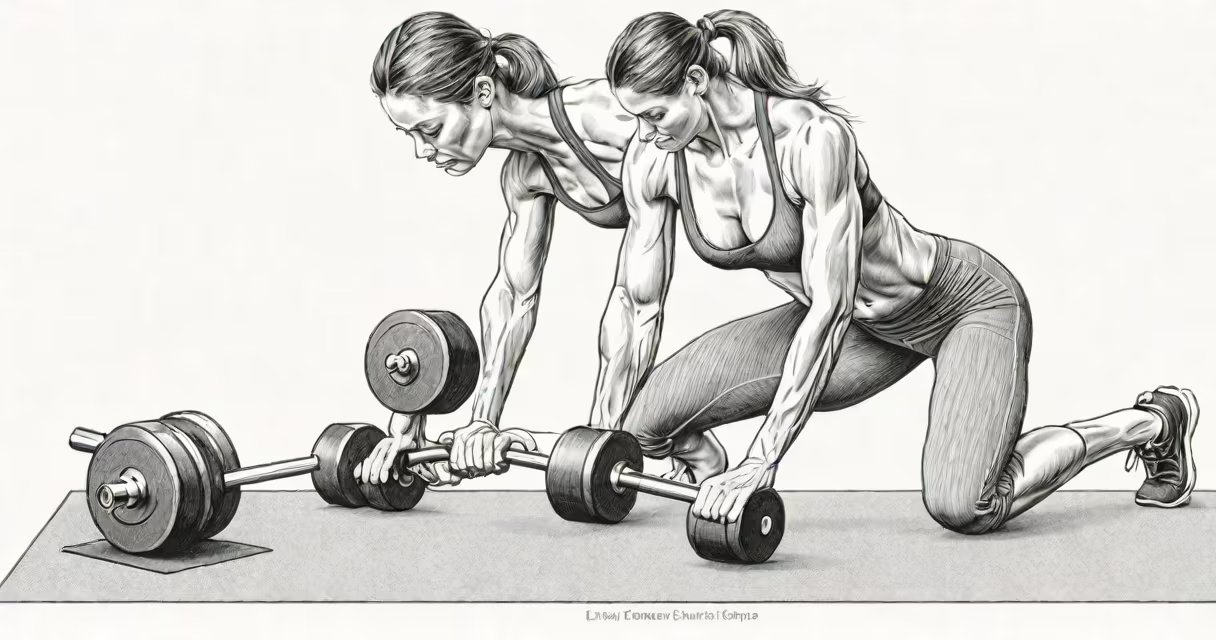
The dumbbell reverse lunge is a unilateral lower-body exercise that strengthens the glutes, quadriceps, and hamstrings while improving balance and stability. It involves stepping backward into a lunge position while holding a dumbbell in each hand, emphasizing controlled eccentric loading and hip hinge mechanics.
This movement differs from forward lunges by shifting weight onto the rear foot during the descent, reducing stress on the knee joint. It's particularly effective for correcting muscle imbalances between legs and enhancing functional mobility. A 2021 study published in the Journal of Strength and Conditioning Research found that unilateral exercises like the reverse lunge increase neuromuscular activation in the gluteus maximus by 18% compared to bilateral squats.
Performing the dumbbell reverse lunge requires precise control of the torso and hips. The back leg lowers until the front knee forms a 90-degree angle, with the back knee nearly touching the floor. The front foot stays flat, and the core remains engaged throughout. This motion mimics real-world movements such as climbing stairs or stepping off a curb, making it highly applicable to daily function and athletic performance.
The dumbbell reverse lunge activates multiple muscle groups through a combination of hip extension, knee flexion, and trunk stabilization. As you step backward, the front leg absorbs load through knee and hip flexion, while the rear leg controls the descent via eccentric contraction of the quadriceps and glutes.
Core engagement is critical. Without it, the spine rounds and risk increases. The upper body remains upright, arms hanging straight down with dumbbells at the sides. This keeps the center of mass aligned over the base of support. If the torso leans forward, the load shifts to the lower back, increasing injury risk.
A 2020 analysis from the American Council on Exercise (ACE) notes that the reverse lunge produces less anterior knee shear force than forward lunges-making it safer for individuals with patellar tendinitis or knee osteoarthritis. For those rehabbing from ACL surgery, physical therapists often prescribe this movement early due to its low joint stress and high proprioceptive demand.
While the basic dumbbell reverse lunge uses two dumbbells, variations exist based on equipment and intent:
| Variant | Equipment | Primary Focus | Use Case |
|---|---|---|---|
| Bodyweight reverse lunge | None | Balance, mobility | Beginner warm-up or mobility drill |
| Dumbbell reverse lunge | 1-2 dumbbells | Strength, unilateral power | General fitness, hypertrophy training |
| Overhead dumbbell reverse lunge | 1-2 dumbbells | Core stability, shoulder endurance | Advanced athletes, functional strength |
| Walking reverse lunge | 1-2 dumbbells | Changing balance, gait training | Rehabilitation, sports-specific conditioning |
Each variation alters load distribution and motor control demands. Overhead versions challenge the entire kinetic chain, requiring greater coordination. Walking versions improve stride symmetry and reduce fatigue in single-leg stance.
Gyms, home workouts, and rehabilitation centers use the dumbbell reverse lunge to build strength, correct asymmetry, and prepare athletes for explosive movements. Physical therapists recommend it for patients recovering from lower limb injuries because it allows progressive loading without excessive joint compression.
For example, a 2022 study in the International Journal of Sports Physical Therapy showed that stroke survivors who performed 3 sets of 10 reverse lunges twice weekly improved their single-leg standing time by 37% over eight weeks. The controlled nature of the movement helped restore postural awareness and changing balance.
Powerlifters incorporate it into accessory work to strengthen the posterior chain and prevent imbalances that can lead to injury during deadlifts or cleans. Bodybuilders use it to isolate the glutes and improve mind-muscle connection during hypertrophy phases.
Many mistake the dumbbell reverse lunge for a forward lunge. The key difference lies in direction and joint stress. Forward lunges place higher compressive forces on the knee and require greater hip flexibility. Reverse lunges emphasize posterior chain activation and reduce anterior shear on the patella.
A frequent error is allowing the front knee to extend past the toes. This shifts load to the knee joint and reduces glute engagement. The knee should track over the ankle, not the toes. A 2019 biomechanical study found that knee-over-toe positioning increased patellofemoral pressure by 26% during lunge descent.
Another misstep is lifting the heel of the back foot. This compromises balance and limits the range of motion. The entire foot must remain grounded. If someone lacks ankle dorsiflexion, they should perform the movement on a small platform or use a heel lift to maintain alignment.
During my first attempt at this exercise, I used too-heavy dumbbells and lost balance halfway down. My coach corrected me: "You're not trying to lift the weights-you're trying to control the descent." That shift in focus transformed the movement from a strength test to a stability drill.
Here's how to perform a standard dumbbell reverse lunge correctly:
Complete 3 sets with 60 seconds rest between sets. Focus on slow, controlled movement-not speed or reps. If you feel strain in the lower back, reduce the weight or eliminate the dumbbells entirely.
For optimal results, perform this exercise 2-3 times per week as part of a balanced routine. Pair it with glute bridges and single-leg deadlifts to maximize posterior chain development.