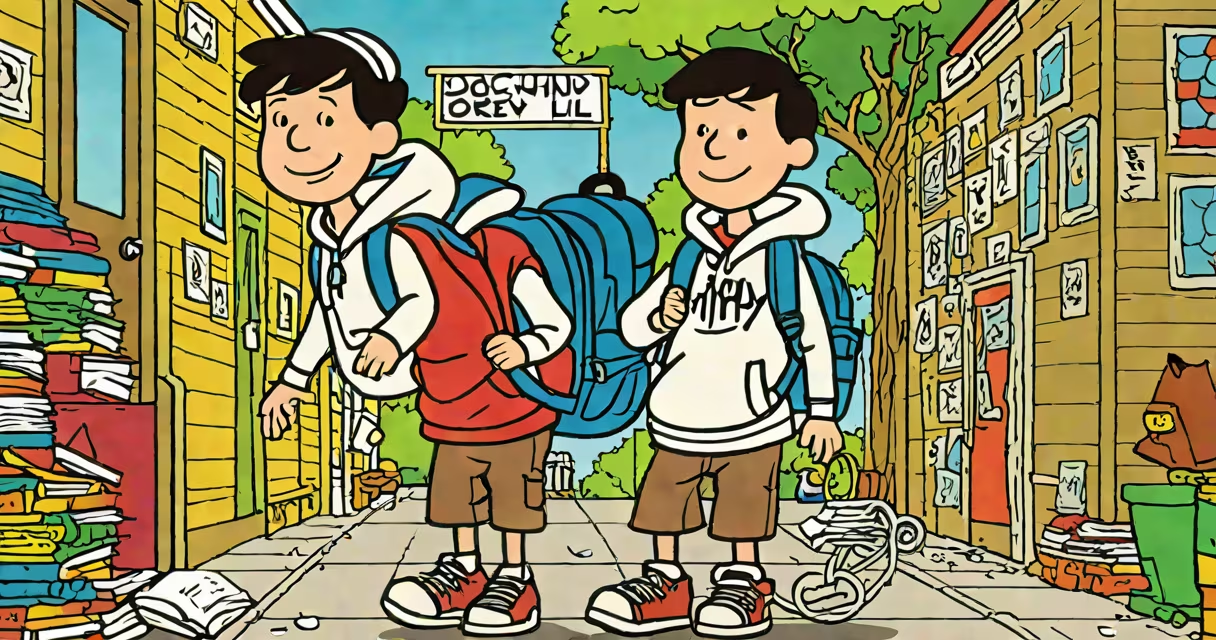
The Diary of a Wimpy Kid movie is a 2010 American family comedy directed by Thor Freudenthal, adapted from Jeff Kinney's 2007 illustrated novel of the same name. It follows Greg Heffley, a middle school student going through social anxiety, family dynamics, and failed schemes to gain popularity. The film uses a mock-diary format with hand-drawn sketches and captions, mirroring the book's visual style.
Based on the first book in a series that has sold over 200 million copies worldwide, the movie translates Kinney's diary-style storytelling into live-action footage. It blends awkward humor with everyday middle school struggles-bullying, cafeteria politics, and the pressure to fit in-while maintaining the original's tone of self-deprecating narration.
Released by 20th Century Fox, the film premiered on March 19, 2010, and earned $116 million globally against a $15 million budget. It launched a franchise with four sequels through 2021, including a 2021 reboot titled *Diary of a Wimpy Kid: The Long Haul*.
The narrative unfolds through Greg Heffley's first-person perspective, presented as a series of journal entries. Each entry is framed by animated comic panels that mimic the book's artwork. These visuals appear during scenes where Greg reflects on events, often contrasting his internal thoughts with reality.
For example, in a scene where Greg tries to impress his crush, he imagines himself as a confident, heroic figure in a dramatic panel. The actual footage shows him tripping while holding a tray of food. This contrast highlights his self-perception versus how others see him-a core theme of the story.
Sound design reinforces the tone. Greg's inner monologue is delivered in a dry, deadpan voiceover, often undercut by sudden sound effects like a record scratch or a cartoonish "boing" when he makes a mistake. This technique mimics the exaggerated reactions common in graphic novels.
The film was shot primarily on location in Vancouver, British Columbia, using real high schools and suburban neighborhoods to ground the story in authenticity. The production team replicated the look of Kinney's drawings by using soft lighting, muted colors, and frequent close-ups on Greg's face to emphasize discomfort.
Costume choices reinforce character identity. Greg wears a gray hoodie, baggy jeans, and worn sneakers-items associated with middle school anonymity. His brother Rodrick, portrayed by Devon Bostick, dresses in black band tees and leather jackets, visually signaling rebellion and contrast to Greg's anxious conformity.
One non-obvious detail: the film avoids showing Greg's face during certain key scenes. In the bathroom confrontation with Rowley, the camera focuses on the door, the floor, and Greg's hands. This choice forces viewers to interpret emotion through silence and movement, echoing the book's reliance on visual cues rather than dialogue.
The original film spawned a franchise with multiple sequels, each adapting a different book from the series. The table below outlines the official releases:
| Release Year | Book Adapted | Director | Box Office (Worldwide) |
|---|---|---|---|
| 2010 | Diary of a Wimpy Kid | Thor Freudenthal | $116M |
| 2011 | Rodrick Rules | Tom Brady | $68M |
| 2012 | The Last Straw | Tom Brady | $71M |
| 2017 | Wimpy Kid: The Deep End | David Dobkin | $103M |
| 2021 | The Long Haul | David Dobkin | $54M |
Each sequel maintains the same visual structure but shifts focus between characters. For instance, *Rodrick Rules* centers on Greg's older brother, exploring themes of sibling rivalry and artistic expression. The 2021 reboot, *The Long Haul*, features a new cast and updated setting, reflecting changes in middle school culture over a decade.
Many assume the film is purely for children. While marketed to ages 8-12, its humor appeals to adults through irony and satire. A scene where Greg lies about being sick to skip school is narrated with a caption: "I'm not sick. I'm just tired of pretending." This line resonates with adult viewers who recognize the emotional weight behind adolescent avoidance.
Another misconception is that the film is entirely faithful to the book. The movie omits several plot points, such as Greg's failed attempt to build a snow fort or his involvement in a school talent show. These changes were made to shorten runtime and improve pacing for younger audiences.
A lesser-known fact: the film's score was composed by John Debney, known for *The Passion of the Christ* and *The Jungle Book* (1994). His work on *Diary of a Wimpy Kid* uses playful piano motifs and light percussion to show Greg's internal chaos, creating a musical counterpoint to the visuals.
One key scene occurs when Greg and his friend Rowley enter a mud pit during a school field trip. Greg insists they jump in to prove their toughness. The moment is rendered in two parts:
This sequence illustrates the gap between Greg's self-image and reality. The film doesn't mock him-it shows how he misjudges situations due to insecurity. The scene ends with Greg silently walking away, mud dripping from his shoes, a single caption: "I'll never be cool."
I saw this film in a theater with a group of middle schoolers during a school field trip. Their laughter wasn't just at the jokes-it was recognition. One boy turned to me afterward and said, "That's exactly how I feel when I try to impress someone." That moment confirmed the film's lasting impact beyond entertainment.
While the original *Diary of a Wimpy Kid movie* remains the most iconic, its success led to a broader cultural presence. The book series has been translated into 40 languages, and the film's influence extends to classroom discussions on empathy, bullying, and self-image.